· By Ryan Solberg, Broker #BK3354351
Home Inspection Red Flags in Florida: What I'm Watching in Every Deal
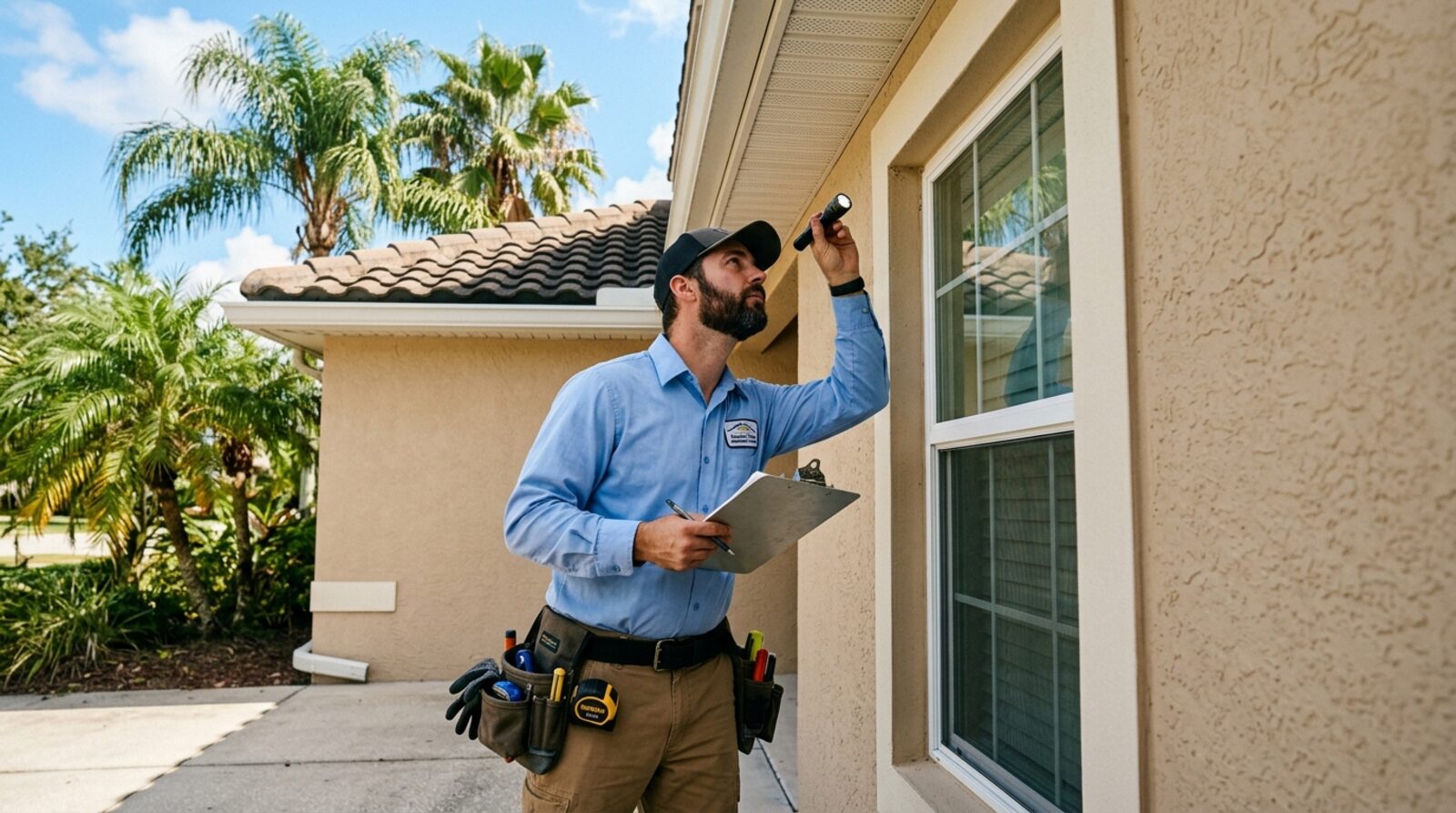
!A home inspector examining the exterior of a Central Florida stucco home with a flashlight
Florida Homes Fail Inspections Differently Than Homes Elsewhere
Redfin and Zillow have both published "home inspection red flags" content this spring. Most of it is nationally generic — roof condition, foundation cracks, HVAC age. Those matter in Florida too. But the specific failure modes in Central Florida homes are shaped by our climate, our geology, and our building eras, and that's where buyers from out of state consistently get surprised.
Here's what I'm watching in every deal and what I tell buyers before they waive contingencies.
1. Electrical Panels: The Insurance Problem Nobody Warns You About
This is the single most consequential inspection finding in Central Florida right now, and it's not on most buyers' radar.
Federal Pacific Stacker panels (common in 1960s–1980s construction) and Zinsco panels have been documented to fail to trip under overload — meaning they don't do what a breaker panel is supposed to do. Insurance carriers in Florida are increasingly refusing to write new policies on homes with these panels, or charging substantial surcharges. In a market where home insurance is already expensive and difficult to obtain, discovering a Federal Pacific panel at inspection can either kill a deal or create a $3,000–$6,000 replacement cost that someone needs to negotiate.
College Park, Maitland, and older parts of Winter Park have a lot of these. I flag them before we make an offer whenever I can see the panel on a walkthrough. The listing photos sometimes give it away.
What to do: Ask your inspector specifically to identify the panel manufacturer. Get an insurance quote before closing with that panel in place. Factor replacement cost into your offer if needed.
2. Moisture Intrusion and Mold — The Florida-Specific Concern
We have 50+ inches of rain per year and humidity that rarely drops below 60%. Moisture finds every gap in a building envelope and exploits it. The places inspectors find moisture intrusion in Florida homes that buyers often miss:
- Around window frames — especially on the south and west elevations where afternoon storms hit hardest. Look at the interior drywall below windows for discoloration or soft texture.
- In the attic — inadequate attic ventilation in Florida's heat causes condensation on sheathing and structural members. A good inspector goes into the attic on every inspection.
- At the base of exterior doors — threshold seals fail, water wicks in underneath, and the subfloor goes soft. Easy to miss if there's flooring over it.
- In crawlspace areas — less common in Central Florida's slab construction, but present in older pier-and-beam homes in neighborhoods like College Park and parts of Thornton Park.
What to do: Ask your inspector to use a moisture meter on interior wall surfaces near windows and at the bases of exterior walls. Any reading above ambient is worth investigating.
3. Roof Condition — Not Just Age, But Type
Florida's steep hail and wind environment makes roof condition one of the most important inspection items. But buyers focus on age when they should also focus on condition and material.
The 15-year insurance threshold: Most Florida carriers are now requiring roof replacement — or charging steep premiums — on roofs 15 years or older. On a 3-tab shingle roof, 15 years is also about when the warranty expires and real deterioration begins. A 16-year-old roof on an otherwise perfect house is a negotiating point and a financing concern on some loan types.
Tile roofs: Common in Dr. Phillips, Windermere, and most newer construction. Tile itself is durable — the issue is the underlayment beneath the tiles, which typically runs 20–25 years. A tile roof that looks fine from the street may have a failed underlayment that requires full removal and replacement. Your inspector needs to go into the attic to assess this properly.
Missing or damaged ridge cap, sealant failure at penetrations, and granule loss on shingles are what the inspector should be specifically citing in the report, not just "roof is X years old."
4. HVAC: Age and Sizing
In Central Florida, HVAC runs 10–11 months per year. A system that's 10–12 years old is approaching end of life under this load. Replacement cost runs $5,000–$12,000 depending on system size and configuration.
What's less obvious: undersized HVAC systems are common in older homes that had additions or Florida rooms added without recalculating the load. A system that's running 24 hours a day in July and still not keeping the house below 78°F isn't failing — it was never big enough. You won't discover this in an April inspection. Ask the seller for the last two Augusts of utility bills if you're buying a home in this category.
5. Sinkhole Zone Awareness
This is specific to Florida and almost never discussed outside the state. Parts of Central Florida — particularly in Hernando, Hillsborough, and Pasco counties but also in some Orange and Osceola ZIP codes — sit over soluble limestone bedrock. The Florida Geological Survey maintains a sinkhole risk database.
For most Orange County Orlando addresses, sinkhole risk is low. But if you're buying in areas with karst geology, your home inspector may not be the right person to evaluate this risk — you may need a structural engineer and a sinkhole-specific insurance endorsement.
What to do: Ask your agent if the property is in a documented sinkhole area. Pull the FGS database for the address. Standard homeowners insurance in Florida does not cover sinkhole damage unless you add the endorsement.
6. Pool Equipment and Structure
Florida homes with pools — which is a significant portion of the mid-range market — get inspected differently. Buyers often have pool inspections folded into the general inspection. What gets missed:
- Pool surface condition — marcite and plaster surfaces need resurfacing every 10–15 years. Cost: $5,000–$10,000. This is cosmetic but material.
- Pump and filter age — these are $500–$2,000 items that fail predictably. Asking the seller when they were last replaced is reasonable.
- Deck and bond beam cracks — structural vs. cosmetic is a judgment call that requires a pool contractor's eye, not just a home inspector.
- Safety barrier compliance — Florida law requires pool barriers (fence, alarm, or safety cover). Non-compliant barrier is an immediate correction item, not an optional repair.
How I Use This in Negotiations
A home inspection in Central Florida is a negotiating tool, not a pass/fail test. The objective isn't to walk away — it's to understand the actual condition of what you're buying and price it correctly.
When an inspection turns up a $6,000 electrical panel issue and a 14-year-old roof approaching the insurance threshold, that's a different conversation than the sellers are having about the listing price. Those numbers belong in the negotiation. That's why I don't recommend waiving the inspection contingency in this market — the leverage it provides is often worth more than whatever advantage you get by appearing more competitive.
If you want to talk through what you should be watching in a specific property, reach out. Due diligence is the most important part of buying a home in Florida, and it's not something to figure out after you're under contract.
How to Evaluate Home Inspection Red Flags in Florida
The Florida-specific inspection checklist — what to look for on roofs, electrical panels, plumbing, HVAC, foundations, and insurance-affecting systems in Central Florida homes.
Step 1
Evaluate the Roof Condition and Age First
Florida homeowners insurance is heavily driven by roof condition and material. A shingle roof older than 15–20 years or a tile roof with cracked tiles will either be uninsurable with major carriers or come with a massive surcharge. Before writing an offer, ask the listing agent for the roof age. During inspection, get the inspector's age estimate, remaining life opinion, and any evidence of prior repairs or storm damage.
Step 2
Inspect the Electrical Panel for Known Problem Types
Federal Pacific Stab-Lok panels (red breakers) and Zinsco panels are insurance-disqualifying with most Florida carriers. They are also fire hazards. Both were common in Florida homes built 1950s–1980s. Aluminum branch wiring (common in 1960s–1970s homes) is also an insurer concern. If an inspector calls any of these out, get a licensed electrician's assessment and a replacement quote before removing your inspection contingency.
Step 3
Check Plumbing Material for Polybutylene and Cast Iron Drains
Polybutylene supply piping (gray plastic, common 1978–1995) fails without warning and has been subject to class-action litigation. Replacement costs $5,000–$15,000. Ask the inspector to identify supply pipe material. Separately, original cast iron drain lines in older Florida homes corrode from the inside and can require full replacement — another $8,000–$20,000 repair. Scope the drains with a camera if the home is pre-1985.
Step 4
Assess HVAC System Age, Condition, and Capacity
Florida HVAC systems run nearly year-round, shortening their functional life to 10–15 years versus 15–20 in northern climates. A 12-year-old system is near end-of-life in Florida. Check the equipment age (on the manufacturer's nameplate), review service history if available, and ask the inspector whether the system is properly sized for the home's square footage. An undersized system runs constantly and still doesn't cool the house.
Step 5
Look for Moisture Intrusion, Mold, and Stucco Damage
Moisture is Florida's most insidious home problem. Look for water stains on ceilings (roof or plumbing leak), efflorescence on concrete or block walls (ground water intrusion), musty smell in closets or under sinks, and window seal failures (fogged double-pane glass). Stucco exteriors on homes built 1990s–2010s are prone to cracking and moisture penetration if maintenance has been deferred — inspect every elevation.
Step 6
Check the 4-Point Insurance Report Requirements
Florida insurers typically require a 4-point inspection for homes over 25 years old — covering roof, HVAC, plumbing, and electrical. Ask the seller for a recent 4-point report if available. If the home fails any of the four systems, it may be uninsurable with standard carriers, which means no conventional financing. Know this before you go hard on earnest money.
Step 7
Investigate Foundation and Slab Issues Specific to Florida
Most Central Florida homes are built on slab foundations over sandy soil. Slab settlement, caused by soil erosion (especially in areas with high water tables or near lake frontage), can result in sticking doors, cracked drywall, and visible floor cracks. Florida also has sinkhole risk in certain geologic areas, primarily east of Orlando toward Osceola County. If you see multiple sticking doors or large diagonal cracks at window corners, request a structural engineer's assessment before proceeding.
Frequently asked questions
- What are the biggest home inspection red flags in Florida?
- The most serious home inspection red flags in Florida homes are: roof age over 15 years (insurance risk), Federal Pacific Stab-Lok or Zinsco electrical panels (insurance-disqualifying fire hazards), polybutylene supply plumbing (failure-prone, $5K–$15K to replace), HVAC systems over 12 years old (near end-of-life in Florida's climate), and foundation or slab issues including diagonal door cracks or floor cracks (sinkhole or settlement risk in some areas). Florida's high humidity and storm exposure create unique deterioration patterns that inspectors and buyers need to specifically check for.
- What electrical panels disqualify home insurance in Florida?
- Federal Pacific Stab-Lok panels (identifiable by red breakers) and Zinsco panels are insurance-disqualifying with most Florida homeowners insurance carriers. Both were commonly installed in Florida homes built 1950s–1980s and are considered fire hazards due to breakers that fail to trip under overload. If a home inspection identifies either panel type, get a licensed electrician's replacement quote ($2,500–$5,000 for a standard panel swap) before removing your inspection contingency. Aluminum branch wiring — also common in 1960s–1970s Florida homes — is a separate concern that some insurers flag.
- What is polybutylene plumbing and why does it matter in Florida homes?
- Polybutylene is a gray plastic supply piping material used in Florida homes approximately 1978–1995. It was subject to a major class-action settlement due to failure rates and is considered a high-risk material by most insurers and buyers. Polybutylene pipes fail without warning, typically at fittings, causing interior flooding and water damage. Replacement costs run $5,000–$15,000 depending on home size. Florida pre-1995 homes may still have original polybutylene supply lines. Ask the home inspector to identify supply pipe material — copper, CPVC, and PEX are acceptable; polybutylene (PB) is not. Cast iron drain lines in pre-1985 homes are a separate concern.
- What roof age causes insurance problems when buying a home in Florida?
- Florida homeowners insurance carriers typically require roofs to be under 15–20 years old for standard coverage. A shingle roof over 15 years may be uninsurable with major carriers or carry a significant surcharge (sometimes $3,000–$8,000/year extra). Tile roofs are evaluated differently but cracked or broken tiles still create coverage issues. Roof replacement in Florida costs $15,000–$30,000+ for standard SFR depending on size and material. Before making an offer on any Florida home, ask the listing agent for the roof age. During inspection, get the inspector's remaining-life estimate and confirm insurance bindability — some buyers ask the listing agent for the current insurance carrier as a proxy for insurability.
- Does Florida have sinkhole risk and what should home buyers look for?
- Yes — Florida has the highest sinkhole incidence in the United States due to the carbonate rock (limestone) geology underlying much of the state. Sinkhole activity is most concentrated in Hillsborough, Pasco, Hernando, and Citrus counties (Tampa Bay area), but Central Florida including Osceola and parts of Orange County also have sinkhole risk zones. Signs of potential sinkhole or foundation movement in a home include: diagonal cracks at window corners, multiple sticking doors or windows, uneven floors, circular depressions in the yard. If these are present, request a structural engineer's assessment before proceeding and check the county sinkhole map for the property's location.
The next step
Thinking about a move?
Whether you're two months out or two years out, the right information now saves real money later. Let's talk — no pressure, no pitch.