· Updated · 6 min read· By Ryan Solberg, Broker #BK3354351
Will the Orlando Housing Market Crash? What the Data Actually Says
The data does not support a crash scenario for Orlando in 2026–2027. Prices are down 7% from the 2022 peak — a correction, not a collapse — and the structural factors that drove Orlando's run are still in place.
The Orlando housing market has already corrected. The crash — if you want to call it that — happened between mid-2022 and 2024, when the median sale price fell from approximately $465,000 to the low $430,000s — a decline of roughly 6–7%. As of August 2026, the single-family median was $436,456, essentially flat year-over-year (Orlando Regional REALTOR Association). A true crash — the kind of 25–50% collapse that occurred in 2008–2011 — requires conditions that are not present in Orlando's 2026 market. Here is what the data actually shows, and what would need to be true for a severe downturn to materialize.
What Has Already Happened
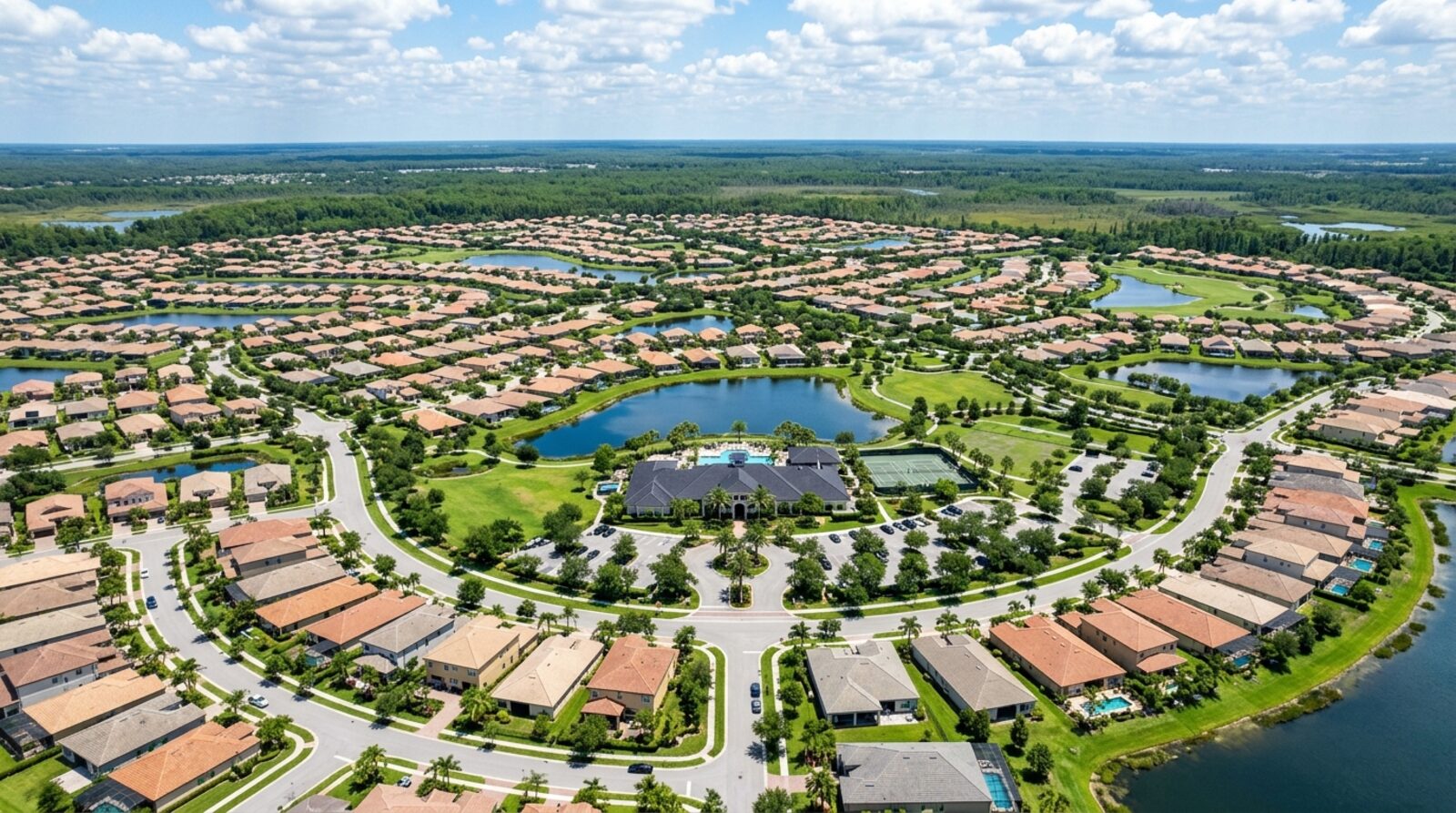
From the peak in mid-2022 to today:
- Median sale price: $465,000 → $436,456 single-family (-6%, ORRA, August 2026)
- Days on market: 14 days → 64-day average (ORRA, August 2026)
- Active inventory: Up ~35% from 2022 lows
- Buyer pool: Compressed by mortgage rate doubling from 3.25% to 6.5–7%
This is a textbook normalization after an abnormal pandemic-era run-up. Prices ran 35–40% above their pre-pandemic trajectory in less than two years, fueled by remote work migration, historically low rates, and constrained inventory. Some of that has unwound. Not all of it has, and the structural reasons are discussed below.
Why a Deep Crash Is Unlikely
1. Population Growth Creates Persistent Demand
Metro Orlando adds approximately 50,000–60,000 net new residents per year. This is not temporary migration — it is driven by Florida's structural advantages: no state income tax, a diversified and growing economy, year-round climate, and a cost of living that remains more attractive than coastal metros in California, New York, and even South Florida. People keep coming, and they need housing.
Population growth at that rate requires roughly 20,000–25,000 new housing units annually just to break even. The metro has not consistently delivered that volume. Demand is not a short-term factor here — it is baked into the demographic trajectory.
2. The Rate Lock-In Keeps Resale Supply Tight
Approximately 40% of Florida homeowners financed at sub-4% rates during 2020–2022. Selling means giving that rate up. On a $450,000 loan, the difference between a 3.25% and a 6.75% payment is over $1,200 per month. Most of these owners are not voluntarily making that trade, which means resale inventory remains below historical norms. Artificially suppressed supply does not produce price crashes — it provides a price floor.
3. Employment Is Diversified and Healthy
Orlando's unemployment rate sits near 3.4%. More importantly, the regional economy has diversified significantly beyond tourism and hospitality. The Lake Nona medical cluster, the defense and aerospace presence in Brevard County (SpaceX, Lockheed Martin, Boeing), the UCF research and tech ecosystem, and the growing financial services sector mean that a single industry contraction is less likely to produce the widespread unemployment that triggers forced selling cascades.
The 2008 crash in Orlando — prices fell 50% from peak — was driven by a specific combination: subprime mortgage products that put buyers into homes they could not afford under normal rate conditions, a speculative building boom that created massive oversupply, and a broad national recession that spiked unemployment. None of those three conditions are present in 2026.
4. Loan Quality Is Dramatically Better
The average credit score at mortgage origination during 2020–2023 was approximately 740–745 — the highest in the history of residential mortgage lending in the US. Buyers who purchased at peak prices did so with strong credit, meaningful down payments, and properly documented income. This is the opposite of 2005–2007, when stated-income loans, zero-down products, and negative amortization mortgages put buyers into homes they could not sustain.
When prices decline, buyers who put 10–20% down are not immediately underwater. When buyers are not underwater, they do not default en masse. When there is no mass default wave, there is no foreclosure flood to crater prices. The loan quality factor is the most important structural difference between 2026 and 2008.
5. Buildable Land in Desirable Corridors Is Constrained
Seminole County is essentially built out. Southwest Orange County — Dr. Phillips, Windermere, Bay Hill — has limited infill available. The lake-chain communities have physical land constraints. This geographic supply ceiling supports prices in the most desirable submarkets even during broader market softness. The areas with more land exposure (Osceola, south Lake County, Polk County expansion) face more price risk if demand softens.
What Would Actually Cause a Severe Decline
Honest analysis requires acknowledging the conditions under which a more serious downturn could occur:
Recession with significant unemployment increase. If Orlando unemployment climbed above 6–7% and stayed there, forced selling would increase, demand would contract, and the price floor would weaken. This is the primary tail risk, and it depends on the national economy.
Insurance market collapse. Florida's property insurance market is under structural stress. If major carriers exit and premiums continue climbing — already up 40–60% in recent years — at some point homes become effectively uninsurable at a cost buyers can absorb. This is a legitimate and underappreciated risk, particularly for older homes and coastal-adjacent properties.
A prolonged rate environment above 7.5%. Higher rates for longer suppress demand further, eventually forcing some rate-locked sellers to transact for life reasons (divorce, death, job relocation) into a thinner buyer pool. This would gradually erode prices, though not crash them.
Condo market specifically. Post-Surfside legislation (SB 4D) mandates structural inspections and full reserve funding for Florida condos built in 1980 or earlier. Special assessments are hitting owners hard, and some buildings are seeing prices drop 15–25% as the cost of compliance becomes clear. This is a specific, real problem for the condo segment — but it does not transfer to single-family.
The 2008 Comparison Is Not Applicable
Orlando fell 50% from its 2006 peak by 2011. That collapse required all of the following simultaneously: speculative buyers with no ability to service their loans, massive overbuilding of both condos and single-family, a national credit crisis that froze lending, and unemployment that peaked above 12% locally. Every one of those factors is absent in 2026. Using 2008 as the reference case for what a correction looks like in Orlando today is analytically wrong.
What to Actually Expect: 2026–2028
The most likely scenario is sideways-to-moderate appreciation: 2–4% per year through 2027–2028, with prices remaining in the $420,000–$460,000 median range. If mortgage rates normalize to 5.5–6%, expect a sharper re-acceleration in demand and price growth, because the rate lock-in effect reverses — locked-in sellers can move, and sidelined buyers re-enter simultaneously. The irony is that lower rates, while seeming like a "buyer's market" improvement, historically produce faster price growth as competition intensifies.
The crash narrative gets clicks. The data does not support it.
Ryan Solberg is a licensed Florida real estate broker with MaxLife Realty, based in Orlando. Data reflects market conditions as of April 2026. This is market analysis, not financial advice.
Frequently asked questions
- Will the Orlando housing market crash in 2026?
- The data does not support a crash scenario. The most likely outcome is sideways-to-moderate appreciation of 2–4% per year through 2027–2028, with the median price remaining in the $420,000–$460,000 range.
- How much have Orlando home prices dropped from the peak?
- Orlando's median sale price fell from approximately $465,000 at the mid-2022 peak to a single-family median of $436,456 in August 2026 — a decline of about 6%. Days on market expanded from 14 days to an average of 64 (Orlando Regional REALTOR Association, August 2026).
- Why won't Orlando real estate crash like 2008?
- The 2008 crash required subprime loans, massive overbuilding, a national credit freeze, and local unemployment above 12%. None of those conditions are present in 2026. Average credit scores at origination during 2020–2023 were 740–745, the highest in US mortgage lending history.
- Is Orlando real estate a good investment in 2026?
- Orlando adds 50,000–60,000 net new residents per year, unemployment sits near 3.4%, and approximately 40% of homeowners are rate-locked below 4%, which limits resale supply. These structural factors support prices even during periods of softer demand.
- What are the real risks in the Orlando housing market?
- The primary risks are a recession driving unemployment above 6–7%, a continued rise in property insurance premiums (already up 40–60% in recent years), and rates staying above 7.5% for an extended period. The condo segment faces specific pressure from post-Surfside inspection and reserve mandates.
The next step
Thinking about a move?
Whether you're two months out or two years out, the right information now saves real money later. Let's talk — no pressure, no pitch.