· 6 min read· By Ryan Solberg, Broker #BK3354351
Common Home Inspection Issues in Florida Homes
Florida's climate — heat, humidity, storms, and pests — creates a distinct set of inspection findings that buyers from other states often don't anticipate. Here's what shows up repeatedly in Central Florida inspections.
If you bought a home in Chicago, New York, or California, you probably walked through a general home inspection that flagged a cracked caulk line around a tub, an aging water heater, and a few outlets without GFCI protection. That experience is real — and largely useless preparation for buying in Central Florida. Florida's climate produces a different set of failure modes: persistent heat and humidity, an active hurricane window, year-round pest pressure, and soil conditions that don't exist in most of the country. The inspection findings that matter here are not the same ones that mattered there. Here's what shows up repeatedly in Orange County inspections and what buyers need to understand before they respond to a report.
Roofs: The Single Most Common Deal Issue in Orlando
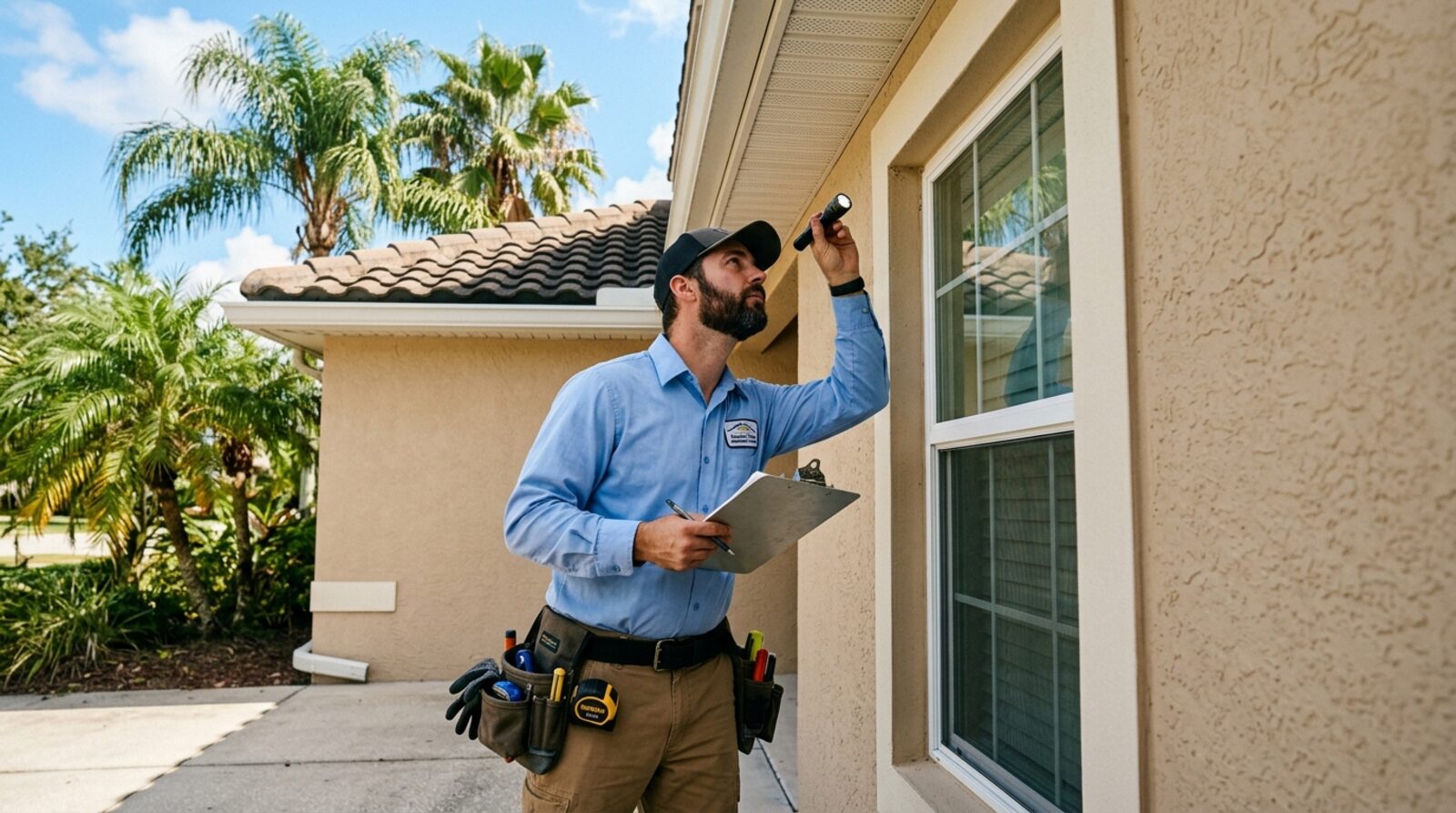
Ask any Orlando real estate attorney or title company what kills more contracts than anything else, and roofs will be near the top of every list. A standard asphalt shingle roof carries a 15–20 year rated life. Florida's UV intensity and storm exposure push real-world performance to the low end of that range or below it. What makes this a financial issue, not just a repair issue, is insurance: many Florida insurers will not write a new homeowner policy on a roof older than 15 years. Some carriers set the threshold at 10. If you're financing the home, you need insurance to close. No insurance, no loan.
Inspectors flag granule loss (shingles shedding their coating, leaving bare asphalt exposed to UV), improper or deteriorated flashing at roof penetrations and valleys, soft spots indicating damaged decking underneath, and failed pipe boots — the rubber collars around plumbing vents that are among the most common sources of slow interior leaks in Florida homes. Tile roofs, standard on most newer construction in Dr. Phillips, Windermere, and Lake Nona, last significantly longer but break when trees or debris hit them in a storm. A handful of cracked tiles is a repair, not a crisis; extensive field tile damage is a different conversation.
If the general inspector flags anything about the roof — and most will caveat their roof observations with "further evaluation recommended" — get a licensed roofing contractor up there before you respond to the inspection report. General home inspectors in Florida are not licensed roofers. Their opinion that a roof looks aged is not a repair estimate. A roofer's opinion costs $150–$300 and gives you an actual number to negotiate from.
HVAC: High Use, High Wear, High Stakes
A 15-year-old HVAC unit in Minnesota might have 10–12 real cooling seasons behind it. The same unit in Orlando has been running essentially nonstop since it was installed. Florida's cooling load is not seasonal — it's a year-round baseline with a brutal June-through-September peak. Systems age faster here than the nameplate ratings suggest.
Inspectors note the age of the unit, condition of the air handler and coil, refrigerant line insulation, and drain line condition — a clogged condensate drain is among the most reliable sources of water damage in Florida homes, and it costs almost nothing to prevent with routine service. They also note ductwork condition: flex duct, used in most homes built after 1980, deteriorates over time and can collapse or develop gaps at connections. Older homes sometimes have metal duct systems that can develop mold internally without obvious visible signs.
An undersized or poorly commissioned HVAC system creates moisture problems regardless of how new it is. If the unit can't keep indoor humidity below 60%, you'll have mold growth on surfaces, in closets, and inside walls whether or not the unit is cooling the air temperature adequately. Any HVAC over 12–15 years old should factor into your offer or your negotiation response. Replacement of a central system in Central Florida runs $6,000–$12,000 installed, depending on size and system type.
Water Intrusion and Mold
Moisture is the dominant long-term threat to Florida homes, and it enters through more routes than most buyers expect. Roofs account for some of it, but the more common sources in established neighborhoods are windows and sliding glass doors — particularly in homes built between the early 1980s and early 2000s, where weatherstripping and glazing sealants have often failed without any exterior signs of damage. Poor grading around the foundation is another: if the soil slopes toward the slab rather than away from it, you're directing every rain event at the perimeter of the house. Bathroom tile grout failure creates hidden moisture behind walls. The HVAC condensate drain, mentioned above, creates water damage near the air handler when it overflows.
Mold is not always visible. A musty smell in a bedroom with no water staining on the ceiling is a real finding, not imagination — and it warrants a separate mold assessment ($300–$500 from a qualified inspector, using air sampling) before you proceed. Contained mold remediation in a single room or small area typically runs $1,500–$3,500. Whole-house situations can reach $8,000 or more before you've addressed the water source that caused it.
Wood-Destroying Organisms: A Separate Licensed Inspection
This one surprises most buyers from out of state. The general home inspector does not inspect for termites or wood-destroying organisms in Florida. That is a separate licensed inspection, performed by an inspector licensed by the Florida Department of Agriculture and Consumer Services (FDACS). WDO inspections cost $65–$150 and should be ordered as a matter of course on every resale home in Orange County.
Both subterranean and drywood termites are active in Central Florida. Subterranean termites live in the soil and build mud tubes to reach wood; treatment involves soil treatment or bait stations and runs $500–$1,200. Drywood termites live inside wood members and require fumigation if the infestation is distributed throughout the structure — tent fumigation for a house in the 2,000–3,000 square foot range runs $1,500–$4,500. Florida sellers are required to disclose known WDO history, but disclosure requirements only cover what a seller actually knew. An active infestation in an attic the seller hasn't entered in three years is not unusual.
Electrical: Know the Vintage of the Home
Homes built in the 1960s through 1980s in established Orlando neighborhoods — College Park, SODO, Winter Park, Maitland, Delaney Park — are more likely to have electrical systems that create insurance problems or represent actual hazards. The two most common findings:
Federal Pacific and Zinsco panels are known fire hazards, documented in CPSC reports. Most Florida insurers will not write a new homeowner policy on a home with one of these panels in place. Replacement runs $2,000–$3,500. If you're buying a home with either panel, get that cost into the negotiation or price it into your offer.
Aluminum wiring in branch circuits (not service entry, which is fine — circuit wiring) was used in homes built roughly 1965–1973 when copper prices spiked. Aluminum wiring expands and contracts more than copper, loosens at connections, and is a fire risk at outlets and switches. Remediation involves either full rewiring or pigtailing at every connection point with approved connectors; whole-house cost runs $2,000–$5,000 depending on size and method.
Also common in inspections of older homes: double-tapped breakers (two circuits on one breaker terminal), open ground outlets, and reversed polarity — all fixable, all worth noting.
Plumbing: Know the Pipe Material
Three pipe materials show up in Florida resale homes that create either insurance or reliability problems:
Polybutylene (PB pipe) — gray plastic pipe used between roughly 1978 and 1995. PB reacts with chlorinated water over time and fails at fittings, often without warning. Insurers increasingly surcharge or decline homes with active PB plumbing. Repiping runs $5,000–$12,000 depending on home size.
Galvanized steel — used in homes built before about 1960. The pipe corrodes internally, restricting flow and eventually developing pinhole leaks. If your inspection notes galvanized supply lines, start budgeting for repipe.
Cast iron drain lines — used in homes built roughly through the 1980s. Cast iron under a slab eventually corrodes from the inside, leading to collapsed sections or chronic leaks beneath the foundation. If the inspector can't verify drain condition (common — they're buried), request a camera inspection of the sewer lateral. It costs $200–$400 and can save you from discovering a $15,000 slab plumbing repair six months after closing.
Sinkhole Indicators
Orange County sits in a moderate sinkhole risk zone; Hillsborough and Pasco counties to the west are rated higher. Home inspectors are not qualified to identify sinkholes, but they flag structural indicators that warrant geotechnical evaluation: stair-step cracking in concrete block walls, diagonal cracks at corners of door and window openings, doors or windows that have shifted out of square and won't close properly, or visible depressions in the yard. None of these individually is a definitive sinkhole indicator — settlement, expansive soil, and foundation issues can produce similar symptoms — but they all warrant further investigation before you close. A sinkhole investigation from a licensed professional geologist runs $1,500–$3,500.
Sinkhole coverage is separate from standard homeowner insurance in Florida and must be added as an endorsement or carried as a separate policy.
What the General Inspection Actually Covers
Florida home inspectors are licensed by the Department of Business and Professional Regulation (DBPR) and follow published standards of practice from InterNACHI or ASHI. They inspect visible and accessible systems: structural components, roofing (from grade or from a ladder, depending on pitch and conditions), electrical, plumbing, HVAC, and interior. They do not open walls, camera drains, test for mold, or make structural diagnoses. Their job is to document observed conditions — not to tell you the house is safe or to quantify repair costs.
Think of the general inspection as triage. It identifies the systems that need a closer look. From there, you bring in specialists: a roofer for roof concerns, an HVAC contractor for aging equipment, a WDO inspector as a matter of course, a plumber with a drain camera for older homes, and a geologist if the inspector notes cracking patterns consistent with soil movement. The general inspection costs $350–$600 for a typical single-family home in the Orlando area. Specialty inspections add another $200–$600 depending on what you need. That total, relative to the cost of buying a problem you didn't know about, is the most defensible money you'll spend in the transaction.
How to Evaluate a Home Inspection Report on a Florida Property
The Florida-specific inspection issues that matter most — roofs, electrical panels, plumbing, HVAC, WDO/termite, mold, and sinkholes — and how to prioritize findings for negotiation or cancellation.
Step 1
Assess Roof Condition and Age as the Top Priority
Roof issues end more Florida contracts than any other inspection finding — not because of repair cost alone, but because of insurance eligibility. Most Florida carriers won't write a new homeowner policy on an asphalt shingle roof older than 15 years; some set the threshold at 10 years. If you're financing the purchase, no insurance means no loan. On any home more than 10 years old, verify the roof's exact age through the permit history (available at the county building department), not the seller's disclosure. Common findings: granule loss (shingles shedding coating), failed flashing at penetrations and valleys, soft spots indicating damaged decking, and deteriorated pipe boots. Tile roofs last longer but crack from storm debris. A handful of cracked tiles is a repair; extensive field tile damage warrants a specialized roofer's assessment and a renegotiated price.
Step 2
Inspect the Electrical Panel for Federal Pacific or Zinsco Equipment
Federal Pacific Electric Stab-Lok panels and Zinsco panels are known fire hazards installed in hundreds of thousands of Florida homes built between the 1950s and 1980s. Both have documented histories of breakers failing to trip under overload conditions, increasing fire risk. Insurance carriers routinely refuse to write policies on homes with these panels or charge significant premium surcharges. Replacement cost: $2,500–$5,000 depending on the size of the panel and accessibility. If your inspector identifies a Federal Pacific or Zinsco panel, get an electrician's assessment and use it as a negotiation point — this is a definable cost item the seller can either credit or repair before closing.
Step 3
Check Plumbing for Polybutylene Pipe and Cast Iron Drain Lines
Two plumbing systems are common issues in Florida's existing housing stock. Polybutylene pipe (gray plastic, common in homes built 1978–1995) is prone to failure from chlorine interaction with municipal water — it becomes brittle and ruptures without warning, causing major water damage. Full repiping costs $8,000–$18,000 depending on home size. Cast iron drain lines under the slab (standard in pre-1980s construction) corrode from the inside, collapse, and fail — replacement requires breaking the concrete slab and can cost $15,000–$40,000. Your inspector should document plumbing material. If poly or cast iron is present, get a licensed plumber's assessment of current condition and a repair estimate before the inspection period ends.
Step 4
Verify HVAC System Age and Confirm Both Units Work in Florida's Climate
Florida HVAC systems run 10–12 months of the year at near-maximum load. A 10-year-old system in Florida has accumulated more operating hours than a 15-year-old system in a northern climate. Life expectancy for a central air system in Florida is 12–15 years with proper maintenance. Check the data plate on the air handler and condenser for manufacture date (first two digits of the serial number on most manufacturers are the year). Confirm both the air handler and condenser are functioning during the inspection — a system that appears to cool but has a failing compressor won't be obvious on a mild spring day. Replacement cost: $6,000–$12,000 for a standard split system. A WDO (Wood Destroying Organism) inspection for subterranean and drywood termites is separate from the general inspection and equally important in Florida's year-round termite environment.
Step 5
Look for Moisture Intrusion and Mold in High-Risk Locations
Florida's humidity makes mold growth fast — a slow plumbing drip behind a cabinet can produce visible mold within two weeks in summer months. Inspectors flag moisture with a moisture meter rather than visual inspection alone. High-risk areas: under all sinks, around the base of water heaters, behind dishwashers, in the attic (condensation from improperly sealed HVAC ducts), at window frames (especially aluminum windows with failed seals), and in closets on exterior walls. Stucco cracks on the exterior — especially diagonal cracks at window corners — are entry points for moisture. Mold remediation for a small area starts around $1,500; widespread mold behind walls runs $8,000–$20,000+. If your inspector finds active moisture or staining, require a specialized mold assessment before proceeding.
Step 6
Get a WDO Inspection for Termites and Wood-Destroying Organisms
Florida hosts two major termite threats: subterranean termites (Reticulitermes and Formosan species, which attack from the soil through mud tubes) and drywood termites (Cryptotermes species, which infest directly in wood without soil contact). Both can cause structural damage undetectable by a general home inspector. A licensed WDO (Wood Destroying Organism) inspection by a pest control professional costs $50–$150 and should be required on every Florida purchase. Active subterranean termite damage requires treatment ($500–$2,000 for tenting or spot treatment) plus structural repairs if damage is significant. Note: standard homeowners insurance does not cover termite damage — this is a buyer-assumes-all risk item.
Step 7
Understand Sinkhole Risk and When to Order a Geological Assessment
Central Florida's karst limestone geology creates genuine sinkhole risk, though it is concentrated in specific areas — most actively in Hillsborough, Pasco, Hernando, and parts of Marion County rather than Orange and Seminole Counties. In Orange County, sinkhole risk is lower but not zero, particularly near lake margins and areas with historical fill. Warning signs that warrant a geological assessment: cracks in the slab or interior walls in a step-stair pattern, sticking doors or windows, depressions in the lawn, and any disclosed sinkhole history. A geological assessment (GPR or standard penetration test) costs $500–$1,500. Florida requires insurers to offer catastrophic ground cover collapse coverage; full sinkhole coverage requires an additional rider. Never skip asking about sinkhole history on any Central Florida purchase, regardless of county.
Frequently asked questions
- What are the most common home inspection issues in Florida?
- The most common home inspection issues found in Central Florida homes: roof condition and age (15+ year shingle roofs are an insurance and replacement cost concern), HVAC system age and sizing (10–15 year lifespan in Florida's climate), moisture intrusion and stucco cracks (Florida's humidity and wind-driven rain create unique stucco failure patterns), polybutylene plumbing (gray supply piping from 1978–1995, failure-prone), cast iron drain corrosion in pre-1985 homes, electrical panel concerns (Federal Pacific Stab-Lok, Zinsco), and evidence of prior water damage at windows, doors, and roof penetrations. Florida-specific items require more detailed inspection than general national checklists cover.
- What does a Florida four-point inspection cover?
- A Florida four-point inspection is a simplified assessment of four major home systems required by most insurance carriers for homes over 20 years old before issuing or renewing a homeowners insurance policy. The four points are: roof (age, condition, material, remaining life), electrical (panel type, wiring material, condition), plumbing (material, condition, age), and HVAC (age, condition, type). A four-point inspection is not a full home inspection — it does not cover structural elements, appliances, windows, or many other items. It typically costs $125–$200 and is performed by a licensed home inspector. Buyers should order both a full inspection and a four-point inspection on any Florida home over 20 years old.
- How much does a home inspection cost in Florida?
- A general home inspection in Florida costs $350–$600 for a standard single-family home (up to approximately 2,500 sq ft), with larger homes costing more. Specialty inspections are additional: WDO (termite/wood-destroying organism) inspection $75–$150, four-point insurance inspection $125–$200, wind mitigation inspection $100–$150, sewer scope $200–$350, plumbing camera inspection $200–$350, mold testing $300–$600. Buyers in Central Florida should budget $600–$1,000+ for a comprehensive due diligence inspection package. The inspection contingency in the Florida contract allows buyers to cancel for any reason during the inspection period — the cost is well worth the protection.
- What are wind mitigation inspections and do they save money in Florida?
- A wind mitigation inspection in Florida documents specific construction features that reduce hurricane wind damage risk: roof covering type, roof deck attachment, roof-to-wall connection type, opening protection (impact windows/shutters), and roof shape. Insurers use this report to calculate premium discounts. A positive wind mitigation report — common in newer Florida homes built after 2002 when stronger wind codes took effect — can reduce homeowners insurance premiums by $500–$2,500/year depending on the features present. The inspection costs $100–$150 and pays for itself in the first year if strong features are documented. Buyers should order a wind mitigation inspection on any Florida home under 20 years old.
- Should I waive the home inspection contingency in Orlando?
- Waiving the home inspection contingency in Orlando is a high-risk strategy that is rarely justified. The AS-IS Florida contract already places the burden of discovery on the buyer — waiving the inspection contingency eliminates the ability to cancel based on findings, not the inspection itself. Buyers can still inspect, but lose cancellation rights. In Orlando's 2026 market — which is more balanced than 2021–2022 — there are very few situations where waiving inspection is necessary to be competitive. Offers with short inspection periods (7–10 days) and clean pre-approval letters are far more effective than waiving inspection, and they protect you from post-closing discovery of undisclosed problems.
The next step
Thinking about a move?
Whether you're two months out or two years out, the right information now saves real money later. Let's talk — no pressure, no pitch.