· 9 min read· By Ryan Solberg, Broker #BK3354351
How to Buy New Construction in Orlando in 2026: Builder Incentives, Traps, and Tactics
Buying new construction in Orlando? Learn how builder incentives, preferred lenders, CDDs, and representation really work—before you sign anything.
Buying a new construction home in Central Florida should feel exciting—and it is. But it's also one of the most misunderstood real estate transactions buyers face. The process looks simple: walk into a model home, pick your lot, sign a contract. What's actually happening underneath that process is more complicated, and knowing how it works before you sign is worth real money.
This is the guide I wish every new construction buyer read before walking into a sales office.
The Most Important Thing to Understand First
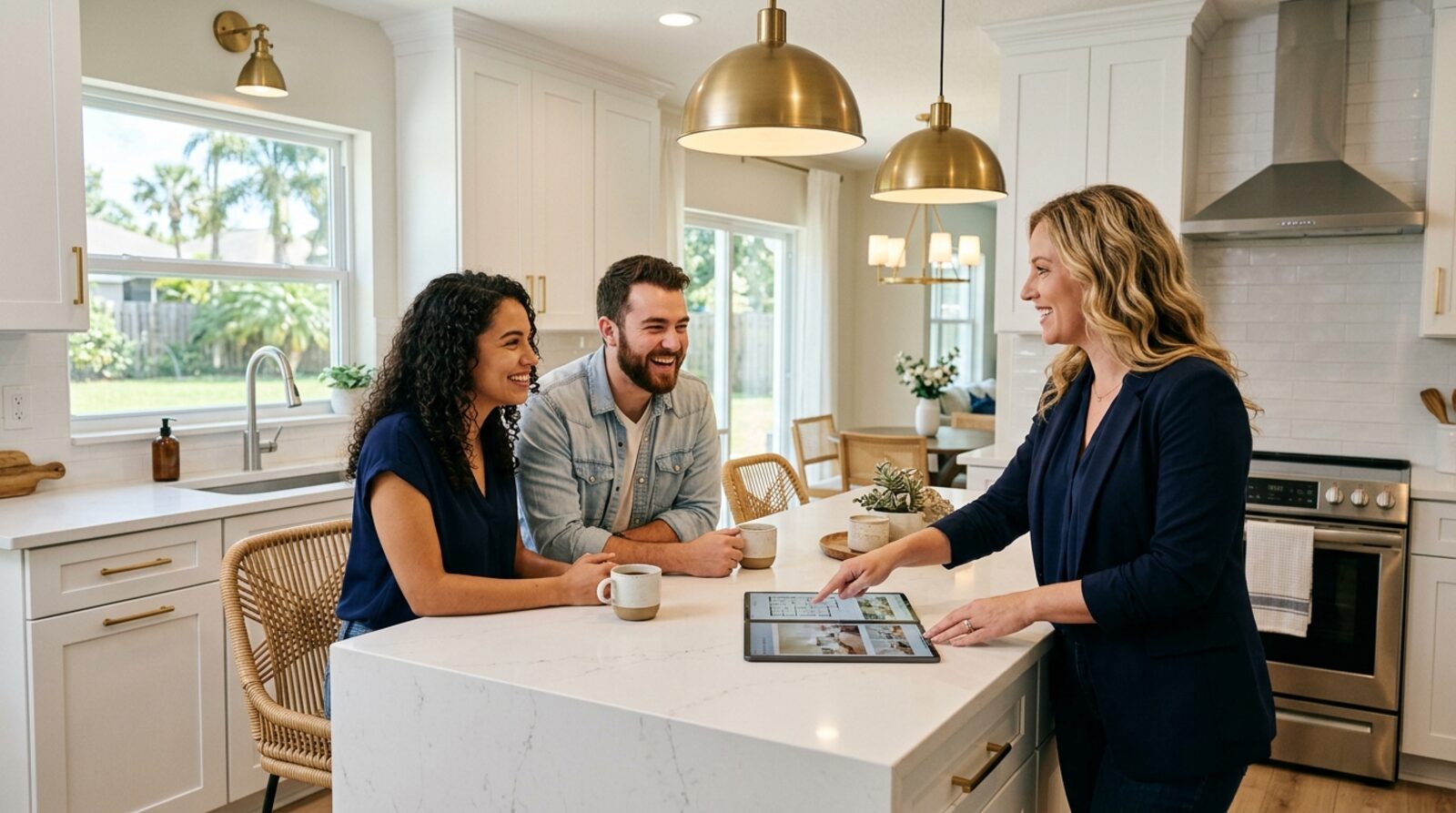
The builder's on-site sales agent is not your agent. They are the builder's agent, on the builder's payroll, with a legal duty to represent the builder's interests. They are friendly, knowledgeable, and genuinely helpful in many ways—but their job is to sell you a home at the highest price with the fewest builder concessions.
This is not a criticism. It's just how the structure works, and understanding it changes how you approach every conversation in that sales office.
Do You Need Your Own Buyer's Agent?
Yes—and it costs you nothing.
Builder contracts already include a buyer's agent commission. If you don't bring your own agent, the builder doesn't lower the price or improve your deal. They simply keep the commission. You lose representation without saving a dollar.
Your buyer's agent can be present at every conversation, review the builder's contract (which is always written to favor the builder), push for better incentives, flag issues before you're locked in, and attend inspections with you. If you're buying new construction anywhere in Central Florida, bring your own agent from day one—before you register at the sales office.
Builder Incentives in 2026: What's Real and What to Watch
The current incentive environment in Central Florida is genuinely good for buyers. Builders are motivated, inventory has built up in some communities, and they're packaging incentives to move homes.
What you'll typically see from major builders right now:
- Rate buydowns: Most major builders are offering below-market rates—4.99%–5.99%—through their preferred lender. On a $450K home, a 1-point rate difference saves roughly $280/month.
- Design center credits: $10K–$40K toward upgrades, depending on the community and price point. This is real money you can apply toward flooring, cabinets, countertops, and fixtures.
- Closing cost contributions: $5K–$15K paid by the builder toward your closing costs.
- Lot premium waivers: In slower communities, builders are occasionally waiving $10K–$30K lot premiums to move specific inventory.
These incentives are tied to current market conditions. If rates drop significantly, builders pull them—there's no reason to buy down your rate if the market rate is already attractive. If you're in the market now, lock in current incentive packages rather than waiting for rates to fall further.
The Preferred Lender Trap
Every major builder has a captive mortgage company or preferred lender relationship. They push you toward this lender, and they tie incentives to using it. This creates a real tension: the incentives can be worth $30K–$60K on a large purchase, but you're being steered away from shopping the loan.
Here's the honest breakdown:
Sometimes the preferred lender is genuinely competitive when you factor in the incentive package. Sometimes they're not—they make up the margin in inflated origination fees, points, or closing costs that aren't obvious when you're dazzled by a low rate.
Always get a quote from an outside lender before committing. Compare the full closing cost disclosure, not just the rate. If the preferred lender wins on total cost, great—use them. But you need the outside quote to know.
Your buyer's agent can help you understand how to read these comparisons.
What to Negotiate on New Construction
Most buyers assume new construction isn't negotiable. That's the builder's preferred mindset—it's not accurate.
Base price is genuinely difficult to move. Builders protect appraisable values across the community and rarely discount base pricing on the record. But almost everything else is a conversation:
- Lot premium waiver or reduction: Premium lots (water view, cul-de-sac, larger size) carry surcharges of $10K–$50K. In slower communities, these can often be reduced or waived.
- Design center upgrade credit: Ask for more. The starting offer isn't always the final offer.
- Closing costs paid by builder: Even if it's not on the standard sheet, ask.
- Extended rate lock: Construction timelines slip. Get a 120-day rate lock minimum. Some builders offer 180 days.
- Home warranty extensions: Builder structural warranties are typically 1/2/10 (1 year workmanship, 2 years systems, 10 years structural). Push for extended coverage on appliances and HVAC.
- Final walkthrough punch list: Any items identified at final walkthrough should be in writing with a completion deadline before you close.
Get an Independent Inspection—Even on New Construction
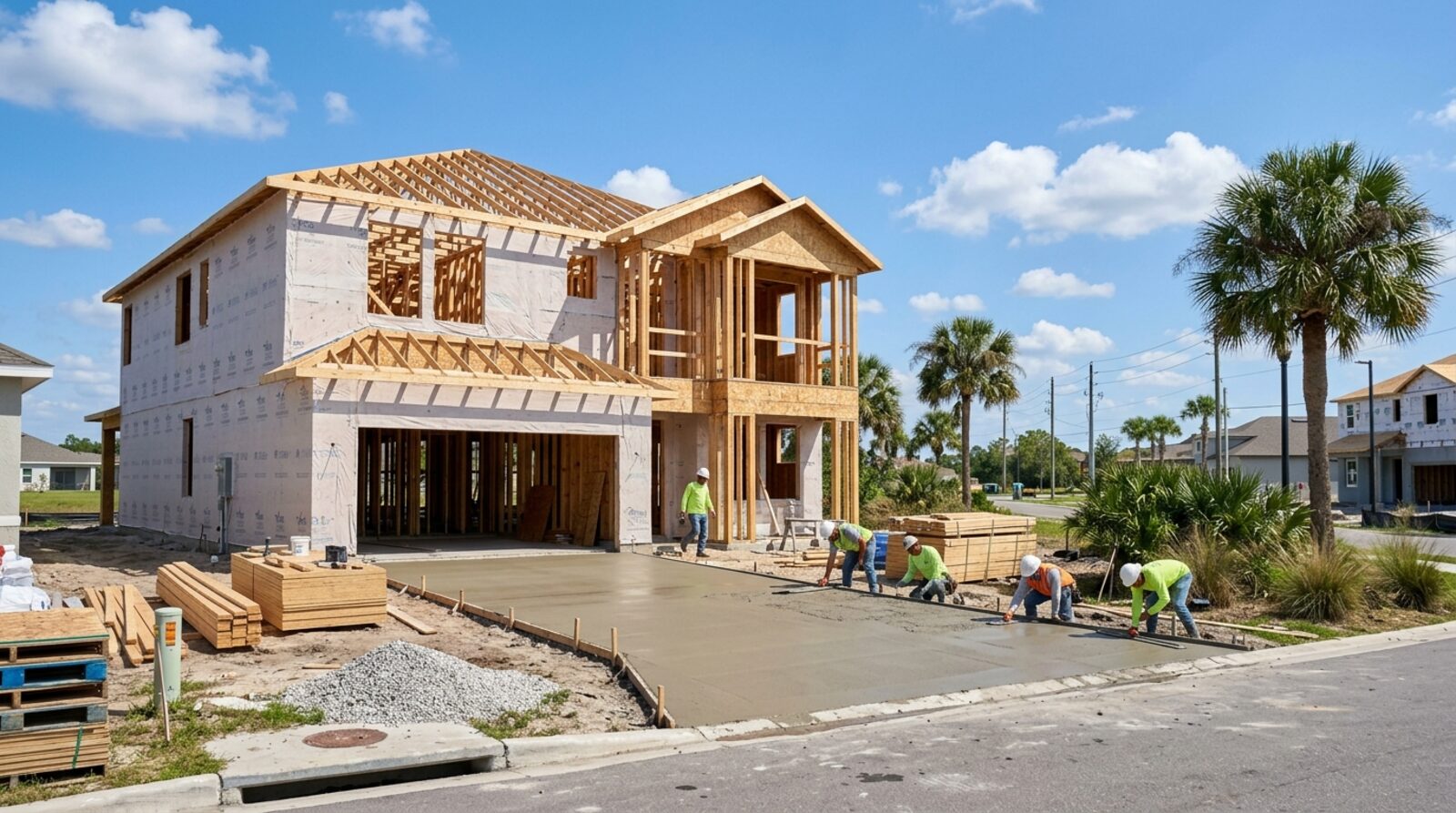
This surprises a lot of buyers: new construction homes fail inspections regularly.
Builder quality control is imperfect. Subcontractors work fast, superintendents oversee dozens of homes at once, and things get missed. Hidden framing issues, improper electrical wiring, HVAC installation errors, and plumbing problems all show up in new construction inspections—and are far cheaper to fix before drywall goes up than after.
Schedule two inspections:
- Pre-drywall inspection: After framing, rough electrical, rough plumbing, and HVAC installation are complete but before drywall covers everything. This is your one chance to see what's inside the walls.
- Final walkthrough inspection: Before closing, with a licensed inspector who will go through the home systematically.
Both inspections together typically cost $500–$800. It's one of the best-value purchases in the entire process.
Central Florida Builders to Know
The builder landscape in Central Florida covers a wide range. Here's a quick orientation:
- D.R. Horton: Volume leader, entry-level to mid-range. Express Homes brand for most affordable. Quality is adequate; don't expect custom finishes.
- Lennar: Known for the "Everything's Included" model—standard package includes features others charge extra for. Good value at entry-to-mid price points.
- Pulte / Centex: Centex is entry-level, Pulte is mid-range with strong quality reputation. Good floor plans.
- KB Home: Entry to mid-range, some customization flexibility.
- Meritage Homes: Strong focus on energy efficiency and indoor air quality. Good choice for buyers prioritizing utility costs.
- Taylor Morrison: Mid-to-upper range, solid quality.
- Toll Brothers: Luxury end. Highest quality standards, highest price.
- David Weekley: Quality mid-to-luxury, strong customer satisfaction reputation.
- Dream Finders: Growing Florida presence, mid-range, good value.
- Minto Communities: Active in Horizon West, known for Arden and Westside communities.
Where New Construction Is Active in 2026
Central Florida's new construction activity is concentrated in specific corridors:
- Horizon West (Villages I and J): Still the hottest active master-planned growth area west of Orlando. Heavy activity from multiple builders.
- Groveland (Independence, Legacy Park area): More affordable alternative to Horizon West with easy Turnpike access.
- Lake Nona: Laureate Park final phases still active; Randal Park is essentially built out.
- Davenport / Polk County: High STR-permitted inventory. Popular with investors and primary buyers priced out of Orange County.
- Kissimmee / Poinciana corridor: Entry-level options, strong rental demand nearby.
- Apopka / Wolf Lake area: Growing with new communities, good access to 429 corridor.
- Hunter's Creek: Limited new construction; mostly resale market now.
The CDD Fee Disclosure: Read This Before You Sign
This is the item that catches the most buyers off guard post-closing.
A Community Development District is a special-purpose local government entity, not a homeowners association. Developers use CDDs to finance the infrastructure costs of new communities—roads, utility systems, amenity centers, stormwater management. The money is borrowed via bonds, and those bonds are repaid by homeowners over 20–30 years through an annual assessment on your property tax bill.
CDD fees in Central Florida typically run $1,500–$4,000 per year, sometimes more in high-amenity communities. They are non-negotiable, non-optional, and survive the sale of the home—the next buyer inherits them too.
Some communities also have an HOA on top of the CDD. That's two separate fees.
Before signing any new construction contract, ask directly: "Is there a CDD on this community, and what is the current annual assessment amount?" Get it in writing. Your buyer's agent should confirm this before you proceed.
For a deep dive on evaluating CDDs, see our comprehensive CDD fees guide—it includes bond payoff timelines, comparison tactics, and how to factor CDDs into your long-term exit strategy.
Buying new construction in Central Florida is genuinely a good move for the right buyer in 2026. The incentive environment is favorable, the product quality from major builders has improved, and communities like Horizon West and Lake Nona offer long-term value. Just go in with your eyes open, bring your own representation, and don't skip the inspection.
Ready to explore what's available? Browse our new construction listings or connect with Ryan to discuss which communities make sense for your timeline and budget. You can also start with our complete buyer's guide if you're earlier in the process.
Frequently asked questions
- Do I need a buyer's agent to purchase a new construction home in Florida?
- Yes, and it costs you nothing. Builder contracts include a commission that goes to the buyer's agent. Without your own agent, the builder simply keeps that commission—you lose representation without saving money.
- Can I negotiate the base price on a new construction home?
- Rarely. Builders maintain pricing discipline to protect appraisals and comps within the community. What you CAN negotiate: lot premium waivers, design center credits, closing cost contributions, extended rate locks, and warranty upgrades. Focus there instead.
- What are builder incentives actually worth in dollars?
- In 2026, major Central Florida builders are packaging rate buydowns (saving $200–$500/month on a typical mortgage), $10K–$40K in design center credits, and $5K–$15K in closing cost contributions. On a $400K home, total incentive value often runs $30K–$60K—but only through their preferred lender.
- New construction vs. resale—which is better for a buyer in 2026?
- It depends on your priorities. New construction offers modern finishes, energy efficiency, warranties, and incentivized financing. Resale offers established neighborhoods, faster delivery, and more pricing negotiability. New construction typically wins on cost-per-feature; resale wins on location and lot size.
- What is a CDD fee and do I have to pay it?
- A Community Development District (CDD) is a special taxing district used to finance community infrastructure—roads, amenities, utilities. The annual CDD assessment appears on your property tax bill and is NOT optional. It typically runs $1,500–$4,000/year in Central Florida and lasts 20–30 years. Always confirm CDD status before signing any new construction contract.
The next step
Thinking about a move?
Whether you're two months out or two years out, the right information now saves real money later. Let's talk — no pressure, no pitch.