· 6 min read· By Ryan Solberg, Broker #BK3354351
Home Improvements That Add the Most Value in Orlando (and the Ones That Don't)
Orlando buyers have specific priorities that differ from national averages — the climate, the buyer mix, and the price bands all shape what gets rewarded at resale. Here's what the market actually pays for.
Every year, Remodeling Magazine publishes its Cost vs. Value report, and every year I watch sellers use it to justify spending money on improvements that won't move the needle — or worse, spending it in the wrong places entirely. The report is a national average. It weights markets from Minneapolis to Phoenix together. It has almost nothing to do with what a buyer in the $450K–$750K range in Orange County is going to pay for.
Orlando isn't a national-average market. Our buyer pool is heavily weighted toward buyers coming from the northeast and Midwest, international buyers (particularly from Brazil, Canada, Colombia, and the UK), and move-up buyers relocating from within Florida. Our climate is aggressive — 90-degree summers, 50+ inches of rain, a six-month hurricane window. And our insurance market punishes aging systems in ways that don't exist in most of the country. All of that changes the math on what's worth doing before you list.
Here's what I've seen actually work across hundreds of listings in this market.
The Highest-ROI Improvements in Orlando
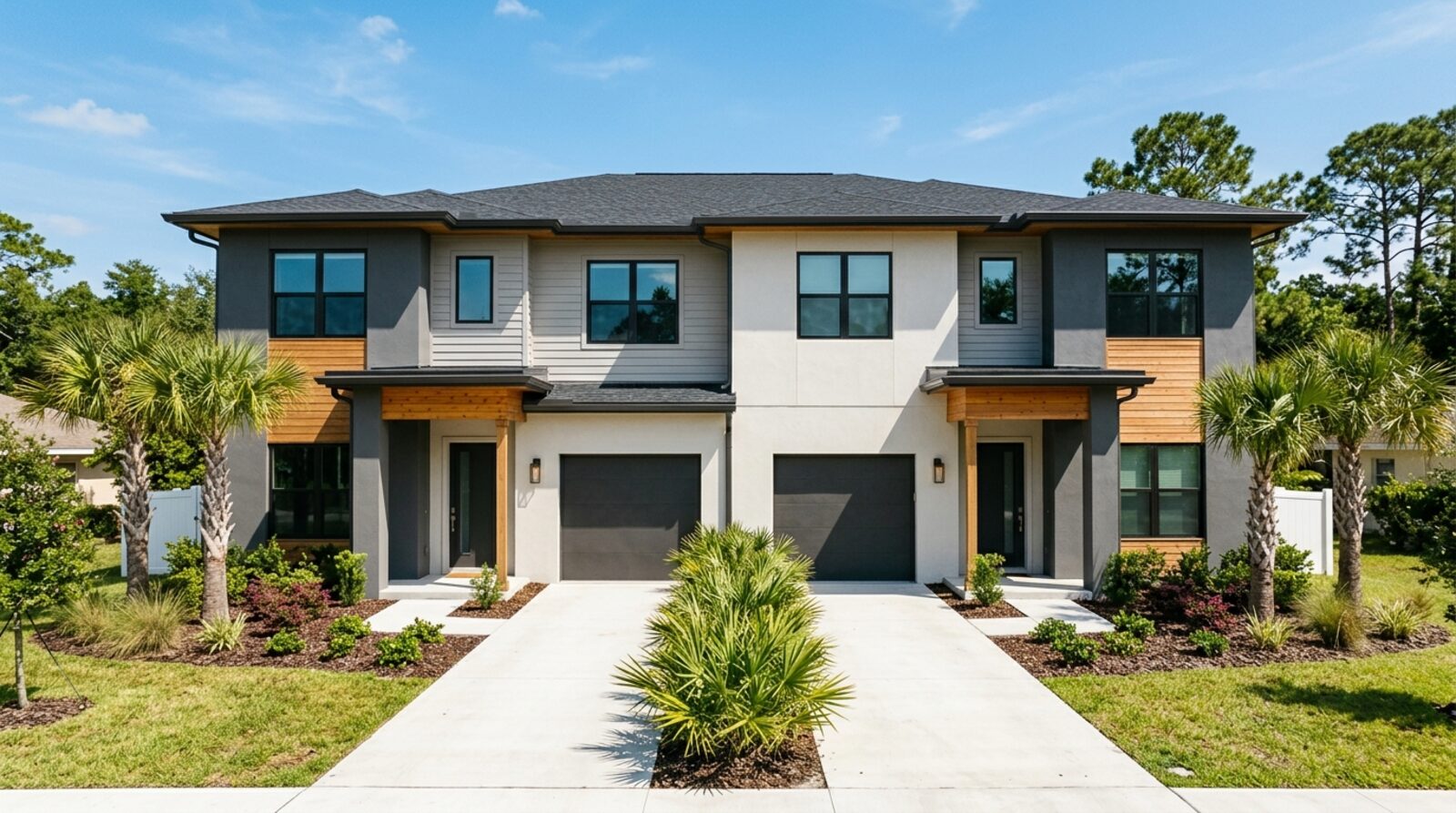
HVAC Replacement
If your system is more than 12 years old, replace it before you list. Full stop.
In Florida, an aging HVAC isn't just a negotiating point — it's a deal killer. Buyers get inspection reports that flag systems approaching end of life, and they either walk or they come back with a concession request that exceeds what the unit would have cost you to replace. A new 2-ton split system with installation runs $6,000–$9,000 in the Orlando area. In my experience, a 15-year-old system gives a buyer justification to knock $10,000–$15,000 off their offer. You're not replacing the unit to add value — you're replacing it to stop losing value you already have.
Florida buyers also understand that AC isn't optional here the way a second bathroom might be optional in Ohio. When they see a system with three years of warranty life left, they are pricing in the replacement themselves. And they are pricing it at retail plus inconvenience.
Roof
Same principle, higher stakes. A roof past 15 years doesn't just create concession requests — it creates lender problems. Many insurance carriers in Florida won't write a policy on a home with a shingle roof older than 15 years without a surcharge, and some won't write it at all. When insurance becomes unavailable or unaffordable, the buyer's financing falls apart. I've seen closings die on roofs that were "fine" by any visual inspection but were simply too old.
A new 30-year architectural shingle roof on a typical 1,800–2,400 square-foot Orlando home runs $15,000–$22,000 depending on pitch, complexity, and current labor costs. That is a large number. But if your roof is at 17 years and you're listing in a neighborhood of $550K homes, you are choosing between spending $18K now or watching your first three offers evaporate and eventually cutting the price by more than that to close with a cash buyer who's already priced in the roof.
Fresh Exterior Paint and Landscaping
In Florida, buyers tour the exterior before they ever contact an agent. They drive neighborhoods on weekends. They look up listings on Zillow, see the front photo, and either click or don't. Curb appeal is not a soft concept here — it's the first gate.
A fresh exterior paint job runs $3,000–$6,000 for a standard Orlando home. Landscape cleanup — edging, fresh mulch, trimmed hedges, color annuals at the entry — runs $1,500–$3,000 if you hire it out. Together, that $4,500–$9,000 investment consistently moves homes faster and at better prices in the sub-$700K range. Not because buyers think "the house is worth more" — because buyers want to see a home that's been cared for, and nothing signals neglect faster than chalky paint and overgrown shrubs.
Flooring: Carpet Out, LVP In
Carpet ages an Orlando home faster than almost anything else. In a climate with this much humidity and dust, carpet in the main living areas is now actively a liability — it signals deferred maintenance, it photographs badly, and buyers in the $400K+ range have come to expect hard surface flooring throughout.
Luxury vinyl plank installed in the Orlando market runs $3–$5 per square foot all-in. A whole-house replacement in a 2,000-square-foot home — removing carpet, installing LVP, keeping existing tile in wet areas — typically costs $8,000–$15,000. In my experience, homes that go to market with LVP throughout sell faster and with fewer concession requests than identical homes with original carpet. This is a days-on-market improvement as much as a price improvement. In a market where every extra week on MLS costs you leverage, that matters.
Moderate ROI: Where the Price Band Matters
Kitchen: Update, Don't Gut
A full kitchen remodel in a $500K home does not return in value. I've had sellers spend $65,000 gutting a kitchen — custom cabinets, quartz waterfall island, pro-range — and the appraiser gives them $15,000 of it back. Full remodels make financial sense on homes in the $900K+ range where the price band can support elevated finishes and buyers are comparing against other fully renovated properties.
Below that, the move is targeted: new appliances if the originals are dated, cabinet refinishing or painting instead of replacement, a countertop swap from laminate to quartz or granite. That package runs $10,000–$20,000 and returns meaningfully better than a gut job. Buyers in the $400K–$700K range want a kitchen that's clean and functional, not a kitchen that looks like a magazine.
Bathroom Refresh
Same principle applies. A cosmetic bathroom refresh — new vanity, updated tile, modern fixtures, fresh lighting — costs $5,000–$12,000 and reliably returns. A gut bathroom remodel at $20,000–$35,000 rarely recoups fully in homes priced below $700K. If the bathroom is dated but structurally sound, refresh rather than rebuild.
Screened Lanai
This is uniquely Floridian. In the $450K–$700K price range, a screened outdoor space is baseline expectation — not a luxury feature. If your home doesn't have one and every comparable in the neighborhood does, you are selling a home with a perceived deficiency. Adding a screened lanai runs $18,000–$30,000 depending on size and whether you're enclosing an existing slab.
The ROI math is not "I spent $25K and the home is worth $25K more." The ROI math is "without it, buyers were discounting by $20K–$30K because they'd have to add it themselves." It's a catch-up play in neighborhoods where lanais are universal. If your neighborhood is mixed — half the homes have them, half don't — the calculus is less clear and I'd evaluate it case by case.
Low to No ROI in Orlando
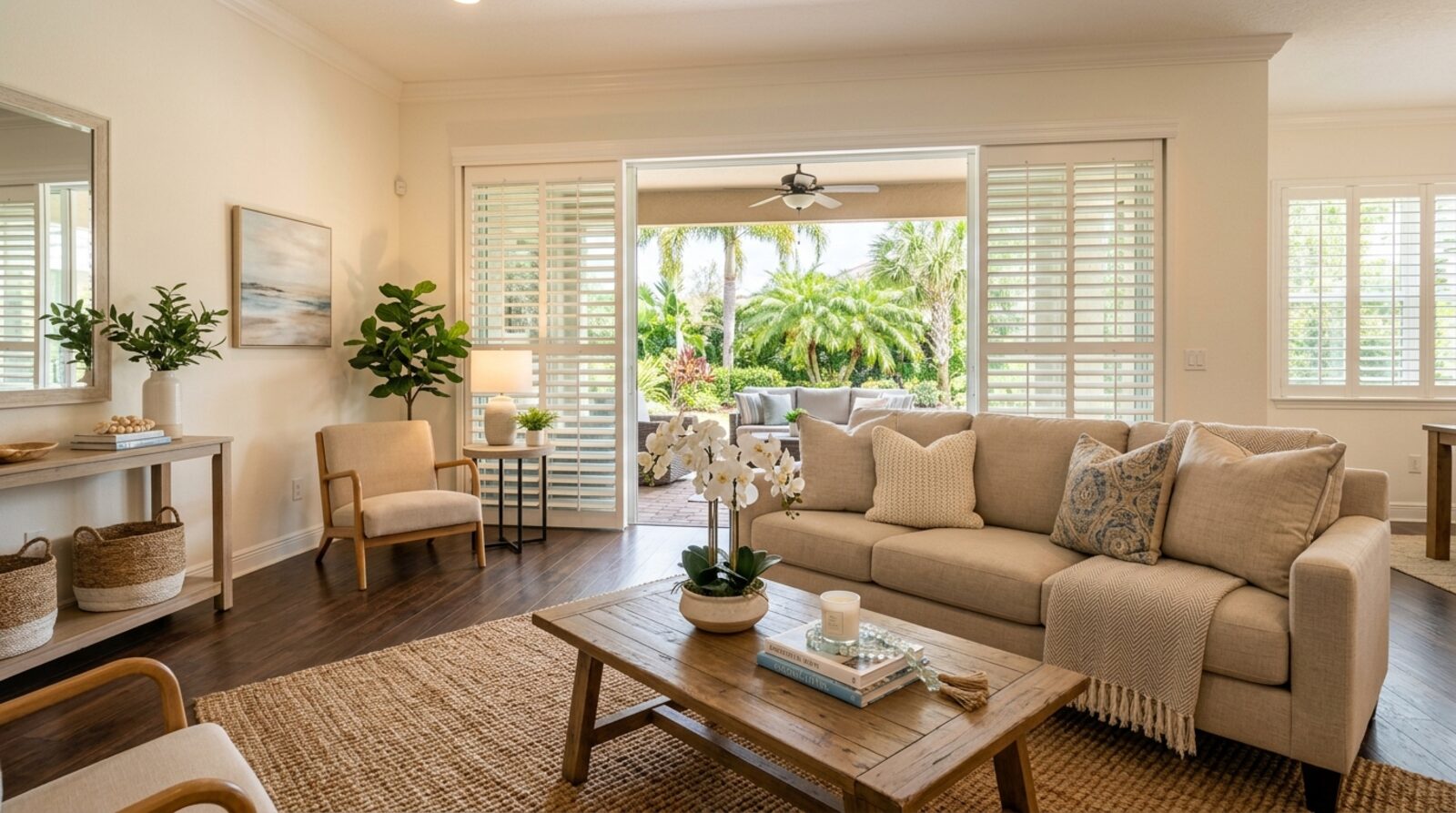
Luxury Pool Addition
I'll say this carefully: pools have value in the Orlando market. Buyers want them. But the cost of adding a pool — $60,000–$100,000 for a quality gunite pool with screen enclosure — almost never recoups fully at resale in the sub-$600K range. Buyers factor in future maintenance costs and are rarely willing to pay dollar-for-dollar for a pool they didn't choose.
The exception: Dr. Phillips, Windermere, and Lake Nona, where nearly every comparable home in the $700K+ range has a pool with a screen enclosure and a summer kitchen. In those communities, a home without a pool is the outlier, and the discount for not having one can be significant.
Room Additions and Sunrooms
Permitted additions add square footage on paper, but construction costs in the current Orlando market — $200–$350 per square foot for quality work — often run far ahead of the price-per-square-foot the market will pay for the added space. Sunrooms and Florida rooms frequently appraise at a fraction of cost because they're not climate-controlled livable space. I've seen homeowners spend $80,000 on an addition and recover $30,000 in appraised value. Think very carefully before adding square footage as a pre-listing strategy.
Highly Customized Finishes
The math is simple: customized finishes appeal to a narrow slice of buyers and offend a wider one. Purple accent walls, built-in media rooms with fixed equipment, custom murals, niche tile patterns — these features make 5% of buyers excited and give 40% of buyers a reason to hesitate. Before listing, neutralize. The cost of a professional interior repaint in neutral tones ($3,000–$6,000 for a 2,000 sq ft home) returns more than almost any other cosmetic investment, precisely because it stops scaring buyers away.
The Pre-Listing Priority List
If you're working with a finite budget and a listing date approaching, here's the sequence I recommend to sellers in this market:
- Roof and HVAC first — if either is past its effective life, address it before anything else. These are the items that kill deals or force deep discounts.
- Exterior paint and landscaping — your first impression is set before buyers walk in the door.
- Interior paint in a neutral palette — fresh, consistent, and inoffensive.
- Flooring — pull the carpet if you can afford to, especially in main living areas.
- Appliances — if the kitchen appliances are original to a home built in 2008, replace them. Stainless matching set, nothing fancy.
- Staging over renovation — a well-staged home with dated but clean finishes will consistently outperform a partially renovated, vacant home. Spend money on staging before you spend it on a partial kitchen remodel.
The goal before listing is not to transform the home — it's to remove every reason a buyer has to discount their offer or hesitate. The big-ticket items (roof, HVAC) remove the deal-killers. The cosmetic items (paint, flooring, landscaping) remove the hesitation. Everything else is secondary.
Ryan Solberg is a licensed real estate broker in Florida and the founder of MaxLife Realty, specializing in luxury and move-up properties throughout the greater Orlando area. If you're thinking about listing and want to talk through what makes sense for your specific home and neighborhood, reach out directly.
How to Choose Home Improvements That Add Value When Selling in Orlando
How to prioritize pre-sale improvements for maximum ROI in Orlando's market — what the data shows buyers actually pay for and what to skip.
Step 1
Replace or Service the HVAC System First
HVAC is the #1 inspection and insurance issue in Florida homes. A system 10+ years old will be flagged by the inspector and may trigger a buyer concession request. A new system costs $5,000–$12,000 installed and provides a near-dollar-for-dollar return in avoided concessions. If the system is 8–12 years old and functional, have it professionally serviced and cleaned — a service report reassures buyers more than a seller credit.
Step 2
Address the Roof Before Any Cosmetic Work
A roof with less than 5 years of estimated life remaining will generate buyer repair requests, affect insurability, and in some cases kill deals entirely. In Orlando's 2026 insurance market, buyers and their lenders are acutely aware of roof age. If the roof is under 15 years old and in good condition, a $400 professional cleaning dramatically improves first-impression photos. If it needs replacement, get a contractor quote and decide whether to replace or offer a credit — replacement typically returns 80–100% of cost in avoided concessions.
Step 3
Deep Clean, Repaint Neutrals, and Replace Dated Fixtures
The highest-ROI cosmetic investments in Orlando are the most boring ones: a professional deep clean ($300–$600), neutral interior repaint throughout ($2,500–$5,000 for an average home), and replacing dated light fixtures and cabinet hardware ($500–$1,500 total). These changes produce professional-quality listing photos and signal to buyers that the home has been cared for — both are worth multiples of their cost.
Step 4
Improve Curb Appeal and Pool/Outdoor Area Presentation
Florida buyers spend significant time outdoors. Fresh mulch, trimmed shrubs, and pressure-washed driveways and pool decks make the first-impression photo dramatically better. Pool resurfacing ($5,000–$9,000) and screen enclosure repair ($1,000–$3,000) pay well when the alternative is buyer credit requests. Outdoor kitchen and lanai improvements produce good returns in the $600K+ range where outdoor living is a key differentiator.
Step 5
Make Kitchen Updates Selectively — Don't Over-Improve
Full kitchen renovations have a national ROI of 60–70% on resale. In Orlando's $400K–$750K range, buyers want updated kitchens but not custom kitchens — there's a point of diminishing returns above which your investment doesn't translate to price. The highest-return kitchen moves: new countertops (granite or quartz, $2,500–$5,000), painted or refaced cabinets ($800–$3,000), and new appliances if the current ones are over 10 years old. Skip custom cabinetry, exotic stone, and professional-grade appliances unless you're pricing above $1M.
Step 6
Fix Deferred Maintenance Before the Inspection Finds It
Buyers' inspectors in Florida are thorough. Every deferred maintenance item becomes a negotiating chip. Walk through the house before listing and address: minor roof penetrations or damaged flashing, soft spots around plumbing fixtures, window seals or glazing failures, garage door springs and opener function, and any electrical outlet or GFCI issues. A $500–$1,500 handyman pass before listing prevents $3,000–$8,000 in inspection repair credits.
Step 7
Skip Improvements That Don't Pay Back in This Market
The following improvements consistently underperform in Orlando's resale market: luxury bathroom renovations (returns 50–65%), home offices added from bedrooms (you're reducing bedroom count), swimming pool additions on homes that don't already have one (pools cost $50K–$100K and don't add that to resale in most submarkets), and high-end landscaping above basic curb appeal. If you're pricing above $1M, the calculus changes — but for the $400K–$900K range, stick to condition improvements over luxury upgrades.
Frequently asked questions
- What home improvements add the most value in Orlando?
- In Orlando's $400K–$900K market, the highest-value pre-sale improvements are: fresh interior and exterior paint ($3,000–$8,000 combined), refinished or replaced flooring ($5,000–$15,000 for hardwood or LVP throughout), updated kitchen with new hardware, faucet, and repainted cabinets ($2,000–$6,000 minor refresh vs $25,000+ full renovation), bathroom refresh (new vanity, toilet, fixtures: $2,000–$5,000 per bath), and curb appeal improvements (landscaping, power washing, fresh mulch: $500–$2,000). These produce consistent dollar-for-dollar or better returns. Major renovations (full kitchen gut, room addition) rarely pay back fully at resale.
- Does a swimming pool add value to a home in Orlando?
- A swimming pool adds value to some Orlando homes but not universally. In communities where pools are the norm (Dr. Phillips, Windermere, Bay Hill), a home without a pool may sell at a discount relative to pooled comparables — here, adding a pool closes a negative gap rather than creating a premium. In communities where pools are less common, adding a pool ($40,000–$80,000) rarely produces a dollar-for-dollar increase in sale price. For buyers purchasing with plans to add a pool, verify the yard size and setback requirements with the county before closing. For sellers considering a pool addition before listing, run the cost-benefit math carefully — the ROI depends heavily on your specific neighborhood and price tier.
- Does a new roof increase home value in Orlando?
- A new roof adds approximately $8,000–$15,000 in sale price in Orlando, compared to a roof replacement cost of $15,000–$30,000 for most SFRs — meaning the seller typically does not recoup full cost. However, a new roof eliminates the roof age objection that buyers use to negotiate price reductions and inspection credits, and it makes the home insurable with standard carriers (critical in Florida's current insurance market). Sellers with roofs over 15 years should get a quote for replacement before listing and decide whether to replace proactively or price for the roof age — pricing for it is often more cost-effective than replacing.
- How much does kitchen remodeling add to home value in Orlando?
- A kitchen remodel in Orlando adds approximately 60–80% of its cost to home value at resale, according to consistent data across the Central Florida market. A $30,000 kitchen renovation typically adds $18,000–$24,000 to sale price — not a dollar-for-dollar return. A minor kitchen refresh ($3,000–$8,000 for hardware, paint, faucet, and appliance cleaning/replacement) often produces better ROI per dollar spent than a full remodel. The exception: a kitchen that is functionally obsolete or visually jarring compared to neighborhood comparables — here, renovation may be necessary to compete, and the ROI calculation changes.
- What is the ROI on bathroom remodeling in Orlando?
- Bathroom remodeling in Orlando typically returns 60–75% of cost at resale. A primary bath renovation at $15,000–$25,000 adds $9,000–$18,000 in value; a half-bath update at $5,000–$8,000 adds $3,000–$6,000. Minor bathroom improvements — new vanity ($500–$1,500), new toilet ($200–$400), reglazing or replacing the tub/shower surround ($500–$1,500), and new fixtures ($300–$600) — produce better ROI per dollar than full gut renovations. For sellers, the goal is a bathroom that photographs cleanly and doesn't give buyers a negotiating chip, not a luxury renovation that buyers won't pay a premium for.
The next step
Thinking about a move?
Whether you're two months out or two years out, the right information now saves real money later. Let's talk — no pressure, no pitch.