· 5 min read· By Ryan Solberg, Broker #BK3354351
What Is the Due Diligence Period in Florida Real Estate?
Florida uses an inspection period — not a due diligence period — and the distinction matters. Here's exactly what you can do, what you can request, and what happens if you want to walk away.
When buyers moving to Florida from other states ask about the "due diligence period," I know immediately what's coming next: they've been reading generic real estate content that doesn't reflect how Florida contracts actually work. Florida has its own terminology, its own default timelines, and its own rules around cancellation rights — and if you go into a transaction assuming it works like North Carolina or Georgia, you'll be surprised at the worst possible moment.
Here's the complete picture.
Florida Calls It the Inspection Period
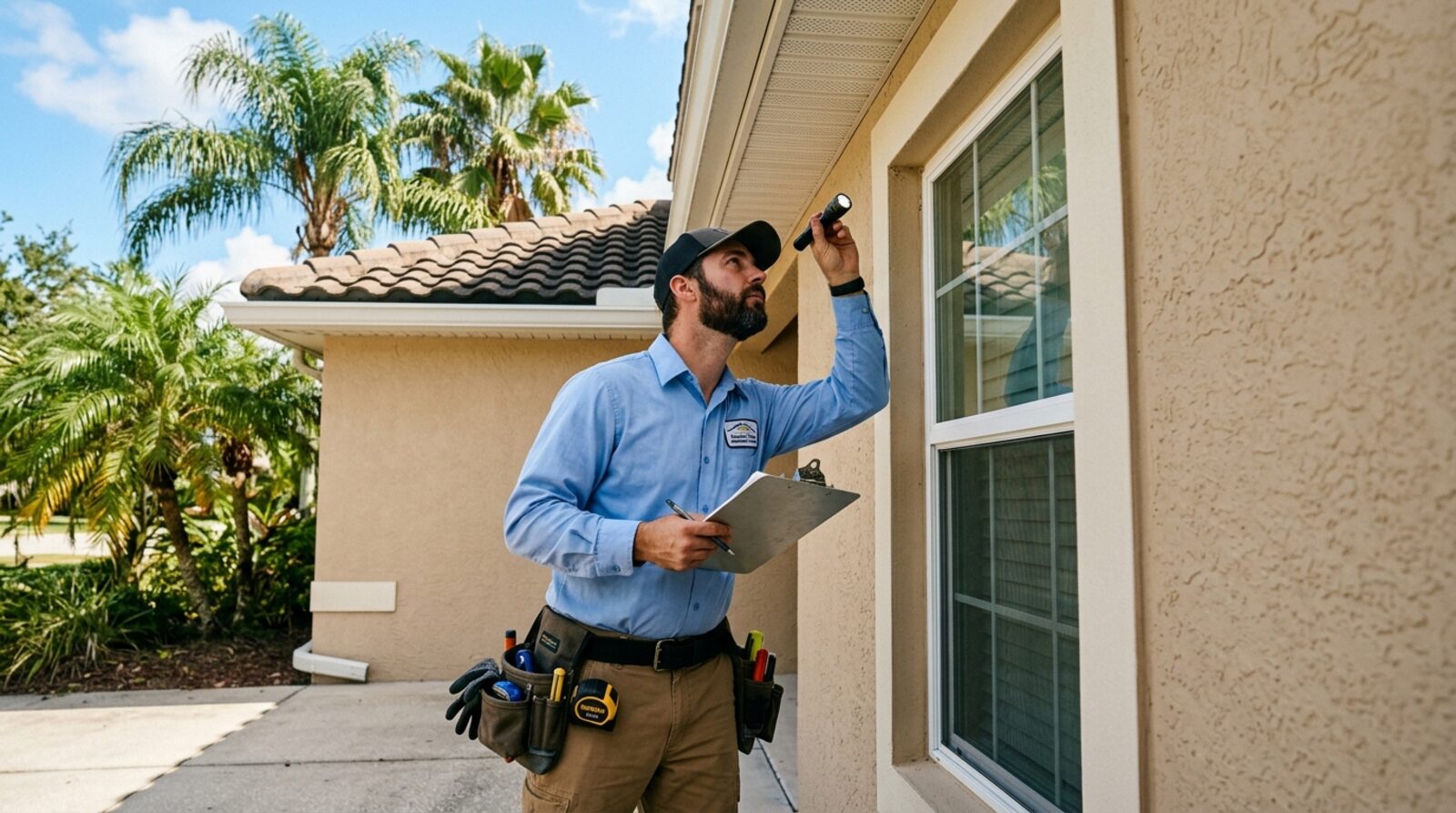
Florida's standard residential purchase contract — the FR/BAR Residential Sale and Purchase Contract, used by the vast majority of residential transactions in the state — does not use the phrase "due diligence period." It uses inspection period.
The default length is 15 calendar days from the effective date of the contract (the date the last party signs). That's calendar days, not business days, so weekends and holidays count. In a competitive market or on a tight timeline, that distinction matters — if your contract goes effective on a Thursday, your 15-day clock doesn't pause for the weekend.
During the inspection period, the buyer has the right to:
- Conduct any inspection of the property they choose
- Review any documents related to the property
- Cancel the contract for any reason, or no reason at all
- Receive their full earnest money deposit back if they cancel in writing before the deadline
That last point is the most important one to internalize. The inspection period is a clean exit window. If you decide within that window — for any reason — that you don't want to proceed, you send written notice to the seller before the deadline and your deposit comes back in full. No explanation required.
"Any Inspection" Means More Than You Think
Most buyers picture a home inspector walking through the property with a flashlight. That's one inspection. Florida's inspection period covers far more.
During those 15 days, buyers commonly conduct:
WDO/termite inspection — Florida requires a separate, licensed wood-destroying organism inspector for this. Your general home inspector cannot sign a WDO report. If a lender is involved, they'll likely require one anyway. Schedule it early because WDO inspectors book up.
Roof inspection — General inspectors walk roofs, but a dedicated roofing contractor can give you a more precise remaining-life assessment and a repair estimate. On a home with a roof that's 12-15 years old in Florida, this is worth the $150.
Mold screening — Not always necessary, but if you see water staining or the property has been vacant, worth adding. A full mold assessment with lab results can take several days, so don't wait until day 12 to order it.
Survey — If the seller isn't providing a survey (and many don't), you can order one during the inspection period. Boundary surveys, elevation certificates for flood zone properties, and tree encroachments all come from this.
HOA document review — For properties in planned communities, you'll receive a document package (rules, bylaws, financials, meeting minutes, pending assessments). Florida law gives buyers a right of rescission specifically for HOA/condo document review, but that right operates on its own timeline — read those documents carefully during your inspection period regardless.
Insurance quotes — This one is critical and more buyers skip it than you'd believe.
Get Your Insurance Quote Before the Inspection Period Ends
Florida's insurance market in 2024-2026 is not a footnote — it is a material deal factor. Properties in flood zones, homes with older roofs, and properties near the coast can carry insurance premiums that fundamentally change the economics of ownership.
I've had buyers discover that the home they agreed to purchase at $450,000 could not be insured for less than $9,000 per year — nearly double what they'd budgeted. If they had learned this during the inspection period, they could have canceled and received their full deposit back. Instead, they found out after the inspection period expired, at which point their earnest money was at risk.
Get an insurance quote the first week of your inspection period. Give the insurance agent the property address and the 4-point inspection results (HVAC, electrical, roof, plumbing) as soon as your home inspector completes the report. If the quote is unworkable, you still have time to act.
What Happens When the Inspection Period Ends
Three possible outcomes as your inspection period deadline approaches:
You do nothing. In most Florida contracts, if you don't send written notice to cancel, the inspection period simply expires and the transaction moves forward. There's no affirmative "I want to proceed" notice required — silence means proceed.
You want to cancel. Send written notice to the seller before the deadline. Your deposit is returned in full. After the deadline passes, that automatic cancellation right is gone, and any cancellation puts your deposit at risk.
You want to negotiate repairs or credits. This is separate from the cancellation process, and the distinction matters enormously.
Repair Negotiations Are a Separate Conversation
After your inspector delivers a report, it's common to submit a repair request or ask for a closing credit. In Florida, this is typically handled through a separate FARBAR Repair/Treatment Addendum or through a simple credit negotiation written into an amendment.
Here's what many buyers don't understand: the seller has no obligation to agree to repairs or credits, and their refusal does not automatically give you a new right to cancel.
The inspection period governs your exit right. The repair negotiation is a separate commercial negotiation between two parties. If the seller rejects every item on your repair list, your options are: accept the property as-is, propose a different number, or — if you haven't let the inspection period expire — use the inspection period cancellation right you still have available.
The sequencing matters here. If you're going to use repair negotiations as leverage, you need to be active in those conversations before your inspection period ends, so that if the seller refuses entirely, you still have the option to walk away cleanly.
Common Mistakes That Cost Buyers
Letting the inspection period expire before getting an insurance quote. Already covered above, but it bears repeating — this is the single most avoidable mistake I see.
Verbal communication. Cancellation notice must be in writing. A text message to your agent the night before the deadline does not protect you unless it's formally transmitted to the seller's side. Work with your agent on the exact process.
Not knowing the default is negotiable. In competitive offer situations, buyers often reduce the inspection period to 7 or 10 days to make their offer more attractive to the seller. That's fine, but it means you have less time to complete everything — including that insurance quote. Know what you're agreeing to.
Assuming inspection findings create automatic leverage. Finding a $15,000 roof issue during inspection doesn't mean the seller will credit you $15,000. It means you have information. What you do with that information — negotiate, accept, or exit during the inspection period — is a strategic decision, not an automatic outcome.
A Note on Commercial Contracts
If you're buying commercial property in Florida, the FR/BAR Commercial Contract does use the term "due diligence period" explicitly, and it's more expansive in scope. Commercial due diligence periods commonly run 30 to 60 days and include financial review, tenant estoppel certificates, environmental assessments, zoning analysis, and lease audits — well beyond physical inspection. If you're crossing from residential to commercial, the terminology shift is real and the timelines are different.
The inspection period is your most powerful consumer protection in a Florida residential purchase — a clean, unconditional exit right that expires on a hard deadline. Use it fully. Schedule every inspection early, get that insurance quote in week one, and make sure your cancellation or repair requests are in writing before the clock runs out.
Questions about a specific contract or transaction? Reach out directly — this is the kind of detail that matters.
How to Use the Inspection Period in a Florida Real Estate Contract
A step-by-step guide to using Florida's inspection period (not due diligence period) effectively — scheduling inspections, submitting repair requests, and making your go or walk decision.
Step 1
Identify Your Inspection Period Length in the FR/BAR Contract
Florida uses an inspection period, not a due diligence period. The standard FR/BAR As-Is contract defaults to 15 days from the effective date. This is negotiated — competitive situations often compress it to 7–10 days. Know your deadline; it does not automatically extend, and missing it means you cannot cancel for inspection reasons and recover your earnest money.
Step 2
Schedule Your General Home Inspection Within the First 3 Days
Book a licensed Florida home inspector on day one or two after going under contract. Quality inspectors in the Orlando market book out 3–5 days. A full general inspection of a 2,500 sq ft home takes 2.5–4 hours and costs $350–$600. Attend the inspection if possible — reading a report later is not the same as seeing issues in person.
Step 3
Schedule Specialty Inspections for Florida-Specific Risks
Based on the general inspection, consider: wind mitigation inspection (required by insurers for discounts), 4-point inspection (roof, HVAC, plumbing, electrical — required by many insurers for older homes), pool inspection (for any home with a pool), seawall/dock inspection (waterfront homes), and mold or air quality testing (if any moisture signs are found). Schedule these early — specialty inspectors also book out.
Step 4
Review the Inspection Report and Prioritize Findings
Inspection reports in Florida commonly run 50–150 pages. Not every finding is material. Prioritize: roof condition and age, HVAC condition and age, electrical panel (Federal Pacific or Zinsco panels are major insurance concerns), plumbing material (polybutylene or original cast iron drain lines), and foundation or slab issues. Minor maintenance items are expected and not worth the negotiation friction.
Step 5
Submit a Repair Request or Credit Request Before the Deadline
Under the FR/BAR As-Is contract, sellers are not obligated to make repairs — but buyers can request a credit or price reduction. Draft your request carefully: lead with material issues (items affecting habitability, safety, or insurability), not a list of every maintenance item. A targeted request is more likely to succeed than a comprehensive punch list. Submit before your inspection period deadline.
Step 6
Negotiate the Seller's Response
Sellers typically respond in one of three ways: agree to all requests, offer a partial credit, or decline. If declined and the items are material, evaluate whether to cancel (and recover your full earnest money under As-Is within the inspection period) or proceed with the home as-is. Your agent should advise on whether the seller's position is reasonable given comparable transaction norms.
Step 7
Make Your Go or Walk Decision Before the Deadline
You must act before the inspection period expires. If you want to cancel, your agent submits written notice to the seller before the deadline — your earnest money is returned in full under the FR/BAR As-Is contract. If you proceed without submitting a cancellation notice, the inspection period expires and you are committed to closing. Silence equals acceptance in Florida real estate.
Frequently asked questions
- What is the due diligence period in Florida real estate?
- Florida real estate contracts use the term 'inspection period' rather than due diligence period, but they function similarly. Under the standard Florida AS-IS Residential Contract (FR/BAR), the inspection period is a negotiated window — typically 7–15 days — during which the buyer can conduct inspections and cancel the contract for any reason with full deposit refund. Unlike some other states' due diligence periods, Florida's AS-IS contract gives the buyer the right to walk away for any reason (or no reason) before the inspection period expires, as long as they deliver written notice by the deadline.
- How long is the inspection period in Florida?
- The inspection period in Florida is negotiated between buyer and seller in the contract — it is not fixed by law. Standard practice in Central Florida is 7–15 days. In competitive seller's markets, buyers often agree to shorter periods (7–10 days) to make offers more attractive. In slower markets or for properties with more complexity (older homes, waterfront, unique systems), buyers may negotiate 14–15 days. The period begins on the day after contract execution. Days are typically counted as calendar days, not business days — verify the specific calculation with your agent based on the contract version used.
- Can you back out of a Florida real estate contract after inspection?
- Yes — under the Florida AS-IS Residential Contract (the most commonly used form), buyers can cancel the contract for any reason during the inspection period and receive their full deposit refund, as long as written cancellation notice is delivered to the seller before the inspection period deadline. After the inspection period expires, the AS-IS contract does not allow the buyer to cancel due to inspection findings — the buyer accepted the property as-is when the inspection period passed without cancellation. If you have concerns from an inspection, you must raise them and negotiate (or cancel) before the deadline.
- What inspections should Florida home buyers get during the inspection period?
- Florida home buyers should order during the inspection period: a general home inspection ($400–$600 for a standard SFR), a WDO (wood-destroying organism/termite) inspection ($75–$150), a four-point insurance inspection if the home is older ($125–$200 — often required by insurers for homes over 20 years old), and a wind mitigation inspection if the roof is less than 15 years old ($100–$150 — produces a report that reduces insurance premiums). For older homes, add: plumbing camera scope ($200–$350), sewer scope if applicable, and a roof certification if age is borderline. For homes near known sinkhole areas, a geological assessment may be warranted.
- What happens if you miss the inspection period deadline in Florida?
- If you miss the inspection period deadline in Florida without canceling, the contract moves forward under the AS-IS terms — meaning you have accepted the property in its current condition and can no longer cancel based on inspection findings. The inspection period is a hard deadline; once it passes, the AS-IS designation takes full effect. If issues are discovered after the deadline (during the loan appraisal or final walk-through), you may have limited options: renegotiate if the seller is willing, accept the condition, or attempt to cancel for a different contractual reason (appraisal contingency if applicable). Never let the inspection period expire passively — deliver a written go/no-go decision before the deadline.
The next step
Thinking about a move?
Whether you're two months out or two years out, the right information now saves real money later. Let's talk — no pressure, no pitch.