· 5 min read· By Ryan Solberg, Broker #BK3354351
Is Orlando a Good Market for House Flipping in 2026?
Orlando flipping in 2026 is harder than 2021–2022, but specific pockets still work for experienced operators who know how to find the deal. Here's the actual math.
The honest answer is: it depends on who's asking.
If you flipped houses in Orlando in 2021 or 2022, you already know the window has changed. ARV appreciation was doing a lot of the heavy lifting back then — you could buy mediocre product, do mediocre work, and still walk away with a solid return because the market moved 15–20% annually while you were in construction. That's over.
If you're an experienced operator with real deal flow, the right submarket knowledge, and the discipline to walk away from marginal acquisitions, Orlando still has pockets that pencil out. If you're a first-timer looking to replicate what you've seen on TV, 2026 is not your entry point.
Here's the actual math.
The Current Market Math
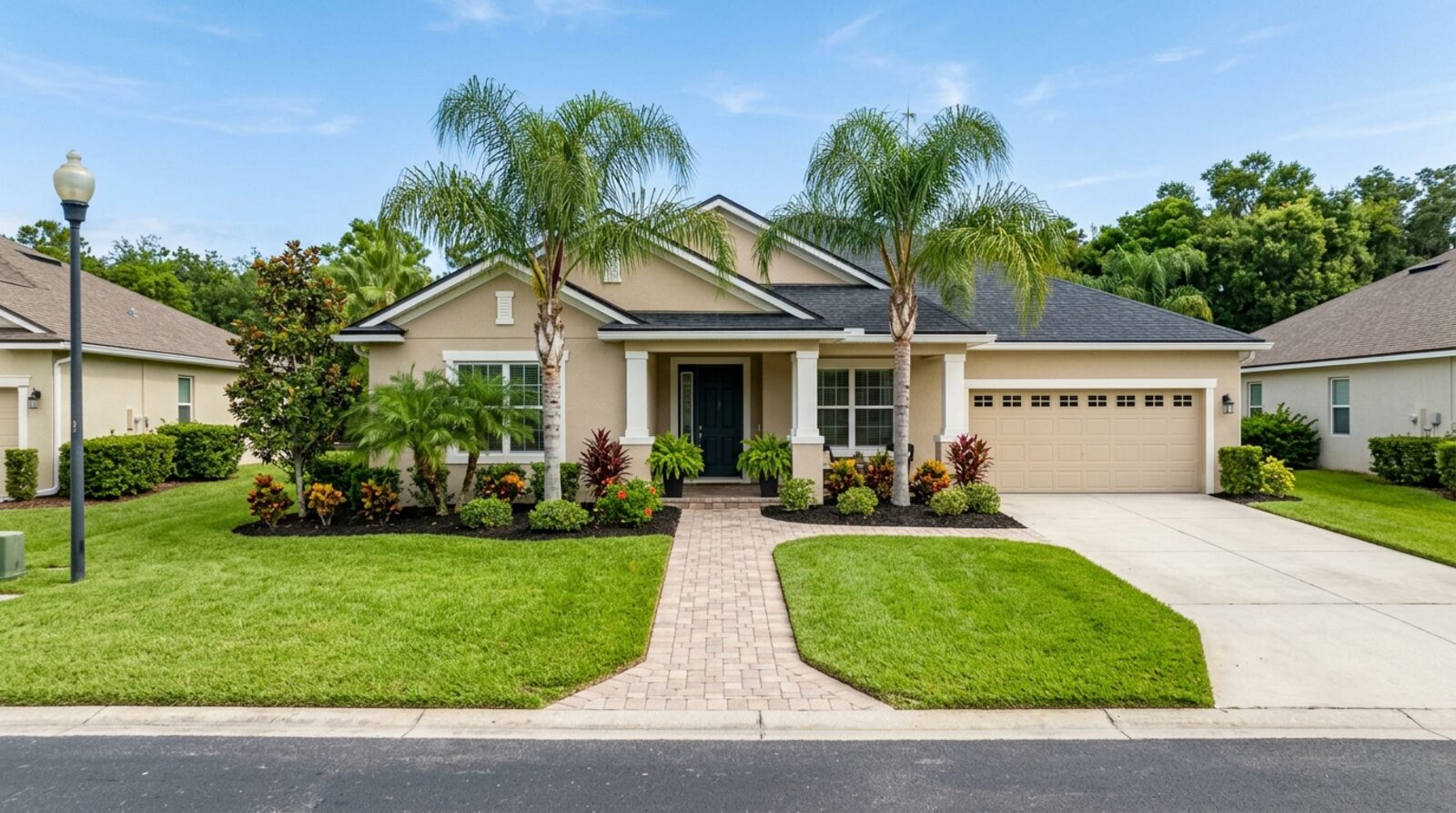
Orlando's median home price sits in the $378–415K range as of early 2026, off roughly 7.9% year-over-year as of February. That sounds like opportunity, and in some cases it is — but the broader market context cuts the other direction on flips.
Days on market have expanded. You're looking at 58–71 days average in most Orlando submarkets right now. That matters enormously for flips because your hard money clock doesn't stop when the sign goes in the yard. Every extra week is carrying cost.
Hard money rates are running 6–6.5%. On a $360K all-in position, that's roughly $1,800–1,950/month in interest alone, before insurance, taxes, and utilities. A flip that sits 4 months instead of 2 has absorbed an extra $3,600–4,000 before you've touched a paint brush.
ARV growth is 1–2% annually now. You cannot underwrite a flip today expecting the market to bail out an overpay on acquisition or an under-scoped renovation. What you buy it for and what you put into it are everything — the market is not going to make up for mistakes the way it did three years ago.
Renovation costs in Central Florida are running 15–25% higher than 2020 levels. Labor is tight, and material costs, while off their pandemic peaks, haven't retreated to pre-2020 baselines. A kitchen and bath renovation you could have done for $35K in 2019 is a $45–50K line item today. That has to be baked into your acquisition price.
Where Flips Still Pencil Out
The submarkets doing the most work for experienced flippers right now are those with older housing stock, strong buyer demand, and clear ARV ceilings that leave room after acquisition and renovation.
College Park / SODO / Colonialtown. The 1940s–1960s bungalow inventory here is the best flip canvas in metro Orlando when you can find the right deal. Buyers in these neighborhoods will pay a genuine premium for restored originals with period-appropriate finishes — not a wholesale flip job with builder-grade everything. ARVs on the right street in this range run $550–750K. The spread is there if your acquisition is disciplined.
Winter Garden / Ocoee. Older housing stock, strong school zones, and days-on-market that consistently run faster than the east side of the metro. The buyer pool is active and motivated by schools, not just price. That combination creates more pricing power at resale.
Apopka / Altamonte Springs. Lower acquisition costs than the urban core, and an active trade buyer pool that creates more exit options. If a retail flip takes longer than expected, you have rental backup in a market that absorbs inventory reasonably well.
East Orlando / Waterford Lakes area. Dated 1990s product — popcorn ceilings, brass fixtures, original kitchens — is abundant and sellable when properly updated. The submarket has a strong rental backstop if the retail sale doesn't move at your target price, which reduces downside risk.
What Doesn't Work Anymore
Some strategies that generated returns three years ago are actively losing money today.
Wholesale-to-retail on mediocre product in the $300–380K range. This is the most oversupplied tier in the Orlando market right now. Buyers at this price point have options, days-on-market are long, and there's no pricing power at resale. You need differentiated product.
Anything touching the tourism corridor without hospitality-specific renovation. The short-term rental market near Disney and International Drive has its own dynamics, regulations, and buyer profile. General residential flip logic doesn't transfer. If you're in this corridor and not building specifically for the short-term rental buyer, you're competing with a product you don't understand.
New construction adjacent at $400–500K. You cannot compete with builder incentives right now. Builders are offering rate buydowns, closing cost credits, and design center allowances that a flipped resale simply can't match at the same price point. If your exit strategy puts you head-to-head with new construction, reconsider the acquisition.
A Real Deal That Works
Here's what a viable 2026 flip looks like in College Park:
- Acquisition: $285,000 — distressed 3/2, cosmetically rough, functionally sound
- Renovation: $75,000 — kitchen, baths, roof, HVAC, exterior
- Carrying costs (6 months): $18,000
- Total in: $378,000
- Sale: $499,000
- Gross margin: ~$121,000
- Net after commissions and closing costs (6%): approximately $85,000–90,000
That's a real return — roughly 22–24% on capital deployed. But notice what it requires: an acquisition at $285K on a property that will appraise near $500K after renovation. That acquisition is the hard part. In a market with 58–71 days on market, fewer distressed sellers are panic-selling. Deal flow is the constraint, not execution. It's part of why I built MaxLife Realty's deals page - it scans active Central Florida listings every day and surfaces the ones currently priced below our comp-based estimate, which is exactly the kind of lead a flipper needs before a wholesaler or another investor gets to it.
Who This Market Is For
Experienced operators with established deal flow — direct mail programs, wholesaler relationships, probate pipelines — can still build a viable business flipping in Orlando in 2026. If you're already closing 6–10 deals a year and you know these neighborhoods, there's money to be made in the pockets described above.
First-timers face a different reality. The margin for error on acquisition price, renovation scope, and timeline is narrow. The deals that work require the pattern recognition to spot them — and the discipline to pass on everything else. That's a skill set built over years of transactions, not something you develop on deal one.
Precision Over Volume
The Orlando flip market in 2026 rewards precision. The operators winning right now are running tighter acquisition criteria, not more deals. They're passing on anything that doesn't fit the specific submarket and price point where they've established an edge.
If you're evaluating investment opportunities in Orlando — whether flipping, long-term hold, or short-term rental — I'm happy to walk through the current data for specific submarkets. The numbers look different depending on where you're looking and what your exit strategy is. That conversation is worth having before you're under contract.
How to Evaluate a House Flip Opportunity in Orlando
The actual math and process for evaluating fix-and-flip deals in Central Florida in 2026 — ARV methodology, rehab cost estimation, financing options, submarket selection, and the conditions under which flipping still works.
Step 1
Calculate ARV From Actual Closed Comparables — Not Zestimates
After-repair value (ARV) is the foundation of any flip analysis. ARV is what the property will sell for after a full renovation, derived from actual closed sales of comparable renovated homes. Use the MLS to find closed sales within 0.5 miles, 6 months, and ±15% of square footage for homes in renovated condition. Adjust for material differences: lot size, pool presence, garage configuration, and specific school zone. Do not use pending sales, active listings, or Zillow estimates — these are not closed market evidence. Get your buyer's agent to pull an investor comp set before you make an offer. An ARV error of 5% on a $500,000 property is $25,000 — often the entire margin on a marginal deal.
Step 2
Estimate Rehab Cost With Contractor Bids, Not YouTube Estimates
The single largest mistake in flip analysis is using rough estimates rather than contractor bids. Central Florida renovation costs in 2026 are substantially higher than pre-2021 baselines — material and labor inflation has driven costs up 25–40% since 2019 and has not fully reversed. Get at minimum two contractor bids before going under contract if the seller allows access, or build a 25–30% contingency into your estimated costs. Current market rates: full kitchen renovation $45,000–$85,000; full primary bathroom $15,000–$28,000; flooring throughout (1,800 sq ft) $9,000–$18,000; roof replacement $16,000–$28,000; HVAC replacement $8,000–$14,000. Whole-home renovation budgets for competitive flip product in the $400,000–$600,000 ARV range routinely run $80,000–$150,000.
Step 3
Calculate Maximum Allowable Offer Using the 70% Rule
The 70% rule is the standard flipper's initial screen: maximum offer = ARV × 70% − estimated rehab cost. This formula targets a gross margin of 30% on ARV to cover financing costs, holding costs, agent commissions on the sale, and risk buffer. On a $600,000 ARV property with $90,000 in estimated rehab: ($600,000 × 0.70) − $90,000 = $420,000 − $90,000 = $330,000 maximum offer. If the asking price is $390,000, the deal doesn't work at the 70% rule. In Central Florida's 2026 market with moderate appreciation expectations, disciplined operators are working with effective margins of 20–25% of ARV rather than the 30% the 70% rule targets — which means being selective and patient on acquisition.
Step 4
Secure Fix-and-Flip Financing Before Identifying Deals
Most experienced flippers use hard money loans: short-term (6–18 month), asset-based loans at 10–14% annualized interest, issued based on the property's ARV rather than your personal income. Hard money lenders typically loan 65–75% of ARV and require 20–35% equity at acquisition. Some lenders fund both the purchase and renovation draw in one loan (renovation funds are drawn against completed work milestones). Interest runs on the outstanding balance — on a $300,000 hard money loan at 12%, holding 6 months costs approximately $18,000 in interest alone. Add 2–3 points in origination fees ($6,000–$9,000) and the financing cost on a 6-month flip is $24,000–$27,000. This is a real line item that many first-timers exclude from their flip budget.
Step 5
Select the Right Orlando Submarket for 2026 Flip Conditions
Not all Orlando submarkets support flipping equally in 2026. The best flip conditions exist where: there is genuine buyer demand for renovated inventory, comparable sale prices support the ARV you're targeting, and distressed acquisition opportunities exist at meaningful discounts to ARV. Currently: College Park (32804), SODO, Maitland (32751), and parts of east Orange County in the $250,000–$450,000 ARV range are active flip markets. The mid-luxury range ($600,000–$900,000 ARV) in Dr. Phillips and Winter Park requires more sophisticated finish quality and has a longer holding period — not entry-level flip territory. Avoid Kissimmee and Davenport for residential flips: the STR-heavy investor buyer pool is saturated and renovation quality requirements are lower than the buyers who will pay premium prices.
Step 6
Build a Realistic Timeline and Manage Carrying Cost Actively
Every additional month of holding is direct margin erosion. Build a realistic construction timeline: contractor mobilization in Central Florida currently takes 4–8 weeks from contract signing (quality contractors are not immediately available). Permit review in Orange County runs 2–6 weeks for residential renovation permits. Active construction phase for a full flip typically runs 8–14 weeks. Marketing and sale after completion: 30–60 days in 2026's more normalized market. Total timeline from acquisition to closing on the sale: 6–9 months for a disciplined operator. Monthly holding cost: hard money interest + property taxes + insurance + utilities = typically $3,500–$6,000/month depending on loan size. Model a 9-month timeline as your base case and an 11-month timeline as your risk scenario.
Frequently asked questions
- Is house flipping profitable in Orlando in 2026?
- House flipping in Orlando in 2026 is profitable for experienced operators with contractor relationships and realistic ARV estimates, but significantly harder than 2021–2022 when market appreciation was doing much of the work. The current market requires genuine value creation through renovation — investors can no longer buy mediocre product, do minimal work, and rely on 15–20% annual appreciation to create returns. Experienced Orlando flippers targeting the $200K–$400K acquisition range with $40,000–$80,000 renovation budgets are generating 10–20% gross margins. First-time flippers are consistently surprised by renovation overruns and carrying costs.
- What is the average profit from flipping a house in Florida?
- Average gross profit from house flipping in Florida is approximately $50,000–$80,000 per transaction for experienced operators, based on ATTOM data for Central Florida markets. After transaction costs (buying and selling commissions, title, closing costs: approximately 8–10% of sale price total) and carrying costs (mortgage, taxes, insurance during renovation: typically $3,000–$6,000/month for 6–9 months), net profit on a $350,000–$500,000 flip in Orlando ranges from $20,000–$50,000. The margin varies significantly based on acquisition price discipline, renovation cost control, and market timing at resale.
- How long does it take to flip a house in Orlando?
- A realistic house flip timeline in Orlando in 2026 is 6–12 months from acquisition to resale closing. Purchase and due diligence: 3–6 weeks. Permitting (if required): 4–12 weeks depending on scope and municipality. Construction: 2–5 months depending on renovation depth. Listing and resale: 30–60 days in active markets, longer in slower segments. Total: 7–10 months is a realistic base case; budget for 11–12 months as a risk scenario. Carrying costs during this period are a major component of the economics — a $350,000 purchase with 70% hard money financing carries $3,500–$4,500/month in just interest, taxes, and insurance.
- What neighborhoods are best for house flipping in Orlando?
- The best Orlando neighborhoods for house flipping in 2026 are areas with strong comparable ARVs, established buyer demand, and available inventory of dated properties: Suntree/Viera (Brevard County) for the aerospace workforce buyer market, Winter Park and Maitland for the premium buyer segment, Dr. Phillips adjacent areas (32819) for the luxury-lite buyer, and established East Orlando neighborhoods (32817, 32825) for the move-up buyer market. Avoid areas with declining school ratings or significant new construction competition at your target ARV — new construction with builder incentives competes directly against renovated resale in many Orlando submarkets.
- Do you need a license to flip houses in Florida?
- You do not need a real estate license to flip houses in Florida as a principal (buying and selling your own property). You do not need a contractor's license to manage a renovation, but individual trades require licensed contractors for permitted work — electrical, plumbing, HVAC, and structural work must be done by licensed professionals in Florida. If you plan to flip multiple properties per year as a business, consult with a Florida real estate attorney about entity structure (LLC, S-corp) and tax implications. Flippers who use hard money loans typically need to demonstrate renovation experience and provide a project plan to the lender.
The next step
Thinking about a move?
Whether you're two months out or two years out, the right information now saves real money later. Let's talk — no pressure, no pitch.