· 8 min read· By Ryan Solberg, Broker #BK3354351
Selling an Inherited House in Lake County, FL: Probate to Sale
Inheriting a house in Lake County means navigating probate in the Fifth Judicial Circuit before you can sell — plus title questions, the stepped-up basis, and often several heirs. Here's how the process actually works, from Leesburg to Astor.
Inheriting a house is rarely simple, and in Lake County it usually starts with a question most people don't expect: before you can sell it, can you even transfer clear title to a buyer? The answer runs through Florida probate — and the good news is the path is well-worn and predictable once you know how the house passed to you.
Here's the honest, step-by-step version for a house anywhere in Lake County, from Leesburg and Mount Dora to Clermont, Eustis, Tavares, Fruitland Park, and the unincorporated areas like Astor, Okahumpka, and Yalaha.
Where probate happens in Lake County
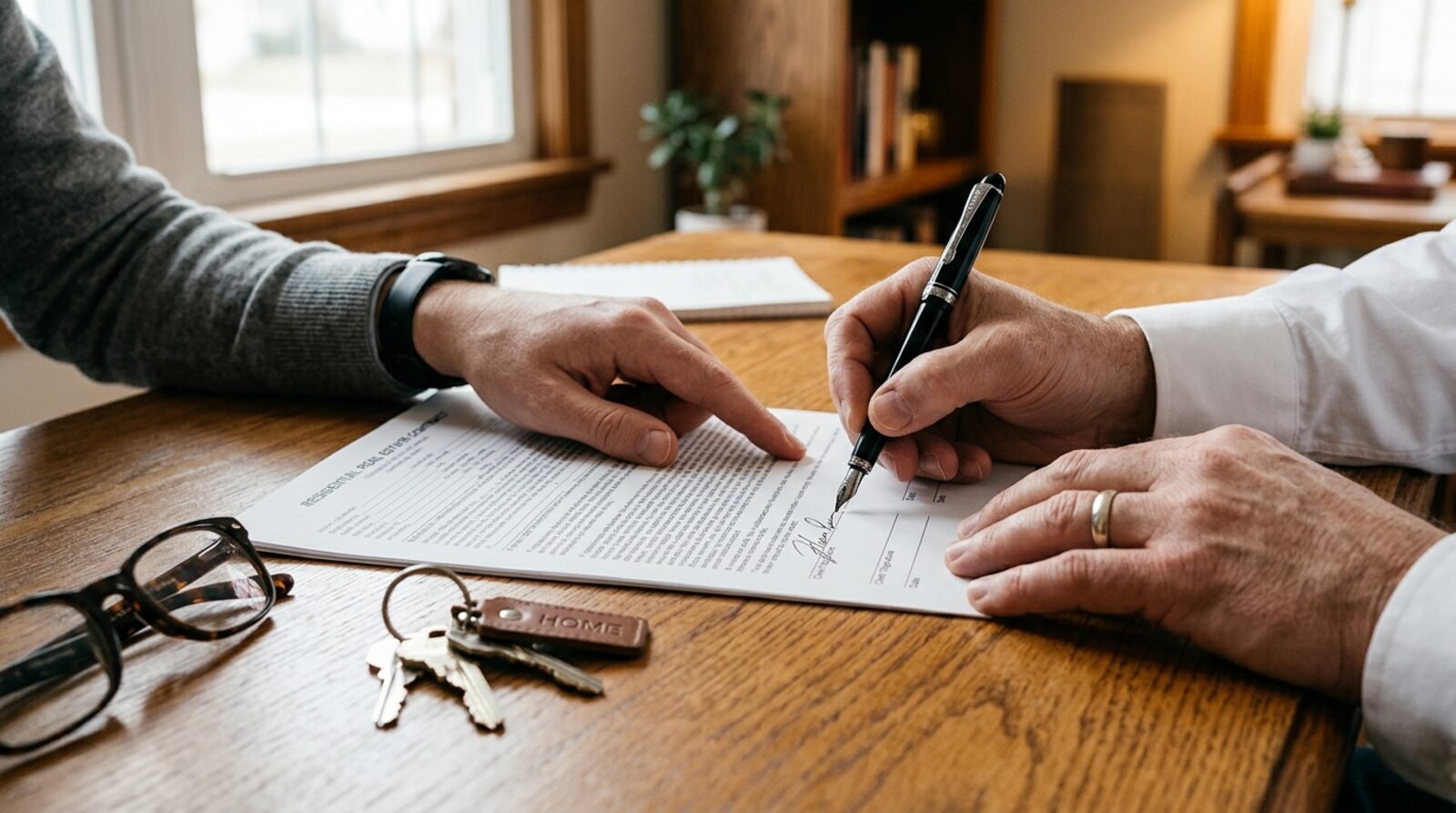
Lake County sits in Florida's Fifth Judicial Circuit (which also covers Citrus, Hernando, Marion, and Sumter counties). Probate is handled by the Circuit Court, Probate Division, and filings go to the Lake County Clerk of the Circuit Court and Comptroller at the Lake County Judicial Center, 550 W. Main Street, Tavares — the county seat.
It doesn't matter which town the house is in. A property in Mount Dora, a lake home in Astor, a villa in Clermont, or a ranch outside Umatilla all go through the same Lake County probate process, because Florida probate is filed in the county where the real estate is located.
First: how did the house pass to you?
Before anything else, you need to know how you received legal title, because it determines whether you need probate at all:
- Jointly owned with right of survivorship — if a surviving spouse or co-owner is still living, they take full title automatically and record an affidavit of survivorship with the county clerk. No probate.
- Revocable living trust — the trustee can sell the house under the trust's terms, outside of probate. Often the fastest path.
- Lady Bird deed (enhanced life estate deed) — the named beneficiary receives the property automatically at death, bypassing probate.
- Solely in the deceased's name — this is the common case, and it requires probate (or Florida's simplified Summary Administration) before you can sell.
Pull the deed and the death certificate first. If you're not sure how the property was titled, a title search — something we can help order — answers it quickly.
Do you need probate, and which kind?
If the house was solely owned, Florida offers two main paths, both filed with the Lake County Clerk:
- Summary Administration — the simplified, faster route. It's available when the probate estate is worth under $75,000, or when the owner has been deceased more than two years. Many inherited Lake County homes qualify, especially when time has passed.
- Formal Administration — the standard process for larger or more complex estates, which appoints a personal representative to manage and eventually convey the property. Florida requires an attorney for formal administration.
Either way, the objective is the same: get the court's authority to transfer clear, insurable title to a buyer. Until that's in hand, a sale can't close.
The tax picture: the stepped-up basis is your friend
This is the fact that surprises heirs the most, in a good way. When you inherit a house, your cost basis steps up to the property's value on the date of death — not the original purchase price. Combined with Florida having no state income tax and no state capital gains tax, that usually means little or no tax when you sell near the date-of-death value.
Order a date-of-death appraisal to document that number. It protects your basis if the IRS ever asks, and it gives every heir an objective starting point for pricing.
When several heirs inherit together
Inherited houses often land with two, three, or more siblings at once. If everyone agrees, selling is straightforward. If they don't, any single heir can file a partition action asking the court to order a sale and split the proceeds by ownership share. It works — but it's slow, costly, and adversarial.
The far better outcome is a cooperative sale where everyone sees the same honest valuation and the same net-proceeds math. That's a role a neutral local agent can play, and it's usually the difference between a clean six-week sale and an 18-month court fight.
Homestead and property taxes
Florida's homestead exemption and Save Our Homes cap end when the original owner dies and the property is no longer their homestead (unless a surviving spouse remains on title and in the home). For an inherited house you intend to sell, that mainly matters for the tax proration at closing. If instead an heir moves in and makes it their primary residence, they can apply for a new homestead exemption — but the Save Our Homes cap resets, which can mean a higher assessed value than the prior owner enjoyed.
Selling the house in Lake County
Once title is clear, you have the same options any seller has — with a few that fit inherited situations especially well:
- Sell as-is. Many inherited homes are dated or full of a lifetime of belongings. You do not have to renovate or even clean it out; as-is sales are common and buyers price accordingly.
- List on the market for the strongest price when the house shows reasonably well and time allows.
- Coordinate remotely. Many Lake County heirs live out of state. The probate, the cleanout, the sale, and the closing can all be handled without you flying back and forth.
Lake County values vary widely by town and by lake frontage — a Clermont townhome, a historic Mount Dora bungalow, and a St. Johns River home in Astor are three very different markets — so the right pricing and strategy is property-specific. Before you settle on a plan, it helps to know the number you're actually working with — get a free, no-obligation value estimate on the property.
Two guides that pair with this one: the statewide Selling an Inherited Property in Florida walkthrough for the full probate-and-tax detail, and, if the house is closer to the metro, Selling an Inherited House in Orlando.
Inherited a house in Lake County and not sure where to start? There's no rush and no pressure. Tell Ryan where things stand — probate status, whether there are other heirs, where the house is — and you'll get straight answers on the process and the simplest path to selling. Start a conversation or call 321-373-3536.
Frequently asked questions
- Where do I file probate for a house in Lake County, Florida?
- Probate for a Lake County property is filed with the Lake County Clerk of the Circuit Court and Comptroller, which serves the Circuit Court's Probate Division in Florida's Fifth Judicial Circuit. The courthouse is the Lake County Judicial Center at 550 W. Main Street, Tavares (the county seat). This applies whether the house is in Leesburg, Mount Dora, Clermont, Eustis, Fruitland Park, or an unincorporated community like Astor or Okahumpka — Florida probate is filed in the county where the property sits. Florida requires a licensed attorney for formal administration, so most heirs work with a probate attorney; the clerk's office and the Fifth Circuit self-help center can point you to the forms and process.
- Do I have to go through probate to sell an inherited house in Lake County?
- It depends entirely on how the house was titled. If it was in a revocable living trust, the trustee can sell it without probate. If it had a valid Lady Bird deed (enhanced life estate deed), it passed automatically to the named beneficiary. If it was jointly owned with right of survivorship and one owner is still living, the survivor takes title by recording an affidavit of survivorship with the Lake County Clerk. But if the house was solely in the deceased's name, probate — or Florida's simplified Summary Administration — is required before you can transfer clear title to a buyer.
- How does the stepped-up basis work when I sell an inherited Lake County home?
- When you inherit a house, your cost basis resets to the property's fair market value on the date the owner died — not what they originally paid. Example: a parent bought a Leesburg home in 1990 for $95,000, and it's worth $340,000 when they pass. You inherit it with a $340,000 basis. Sell it near that value and your capital gain — and your federal capital gains tax — is close to zero. Florida has no state income tax or state capital gains tax, so the stepped-up basis is often the single biggest financial fact for heirs selling an inherited Lake County home. Get a date-of-death appraisal to document that value.
- My siblings and I inherited a house in Lake County and can't agree — what happens?
- If co-heirs can't agree on whether to sell, the price, or timing, any one of them can file a partition action in the Circuit Court. The court can order the property sold and the proceeds divided by each heir's fractional interest. Partition works, but it's slow and expensive — typically 6–18 months and thousands in legal fees — and it takes the decision out of the family's hands. Reaching agreement and selling cooperatively almost always nets everyone more money. A neutral agent who can give all the heirs the same honest valuation often helps break the logjam.
- Is Astor (or Okahumpka) in Lake County?
- Yes. Astor is an unincorporated community in Lake County, on the west bank of the St. Johns River — the river is the county line, and the separate community of Volusia sits across it in Volusia County, so an inherited house in Astor is a Lake County probate matter. Okahumpka is also an unincorporated Lake County community, just south of Leesburg. Both file probate through the Lake County Clerk in Tavares like the rest of the county.
The next step
Thinking about a move?
Whether you're two months out or two years out, the right information now saves real money later. Let's talk — no pressure, no pitch.