· 9 min read· By Ryan Solberg, Broker #BK3354351
Selling a Home After the Death of a Spouse in Florida: A Gentle, Practical Guide
First — I'm sorry. If you're reading this, you've lost your husband or wife, and now there's a house full of memories and a stack of practical questions you didn't ask for....
First — I'm sorry. If you're reading this, you've lost your husband or wife, and now there's a house full of memories and a stack of practical questions you didn't ask for. This guide is meant to take some of the unknown off your plate, gently and clearly. There's no pressure here and no rush. When you're ready, here's what to understand.
You probably do not need probate — and that's a relief
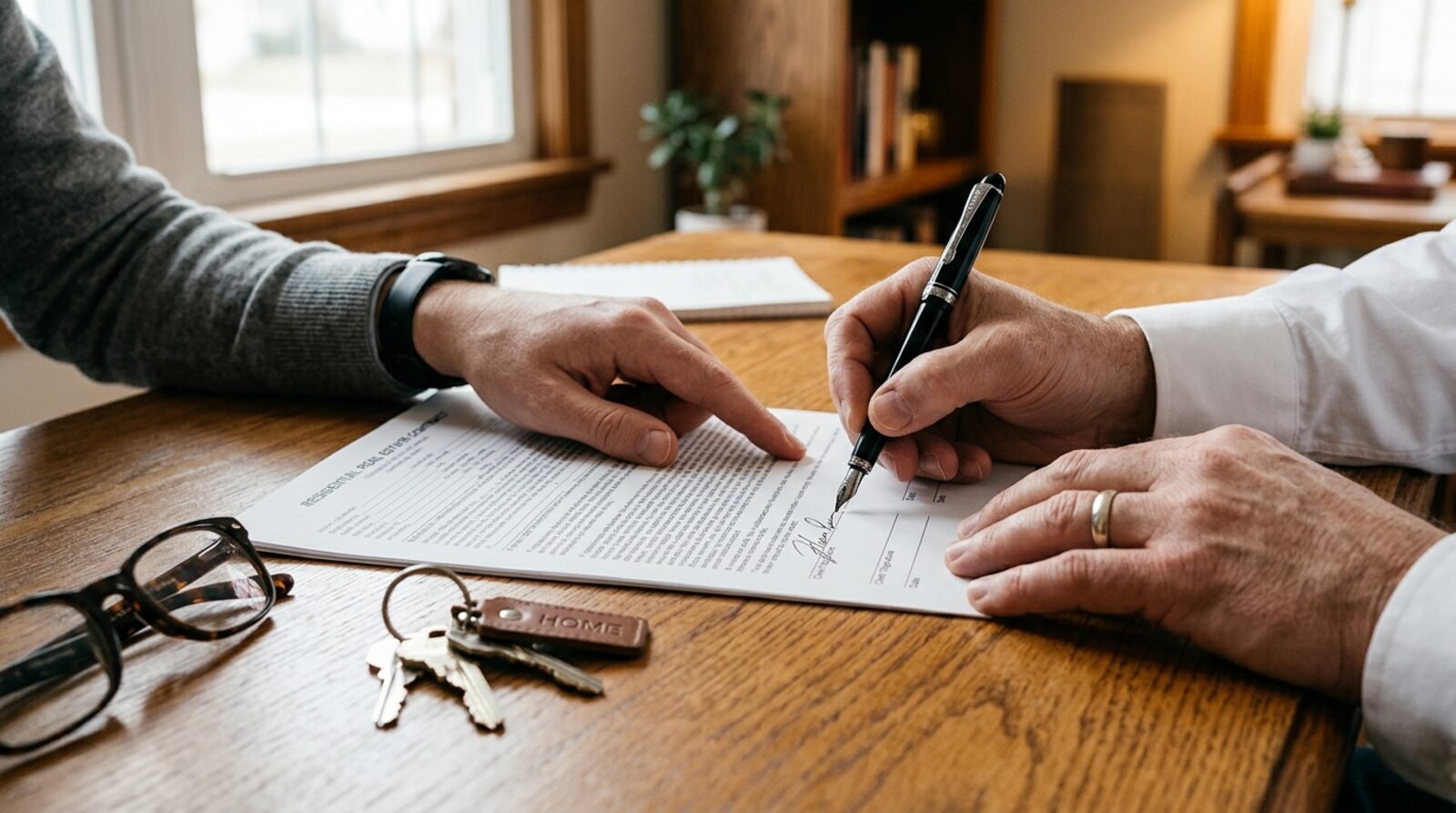
One of the biggest fears surviving spouses carry is that selling the home will mean a long, expensive court process. In Florida, that's usually not the case for a married couple's home.
Most Florida married couples own their home as tenancy by the entireties — a special form of joint ownership available only to spouses. Property held this way (and property held as joint tenants with right of survivorship) passes to the surviving spouse automatically upon death. No probate. The home is simply yours.
In practice, clearing title into your sole name is typically straightforward: you record your spouse's death certificate in the county records, often along with a short affidavit, and the title is updated. A Florida real estate attorney or your title company can handle this quickly and inexpensively.
Probate generally comes into play only if the home was titled solely in your deceased spouse's name (not jointly). If that's your situation, Florida's homestead descent rules add protections for surviving spouses, but you'll want an attorney to guide the process. Either way, the first step is simply to check how the deed is titled — that one fact determines everything that follows.
Take a breath on this one: for the large majority of married homeowners in Florida, the home is already, automatically, yours. The legal part is usually much smaller than people fear.
There is no legal rush
Let's say this plainly because it matters: there is no deadline forcing you to sell. The house can sit. You can grieve, think, talk to your kids, and decide in your own time whether to stay or sell. Many surviving spouses stay put for a while, and that's completely fine.
The only timing considerations — and they're planning advantages, not pressures — are the tax windows below. Knowing about them simply lets you make the decision on your terms instead of discovering a missed opportunity later.
The tax picture is often gentler than you'd expect
Here's where many surviving spouses are relieved. Two provisions in the tax code work in your favor.
1. The stepped-up basis
Your home's cost basis — the figure your eventual gain is measured against — gets a partial reset when your spouse passes.
Florida is not a community-property state, so the rule here is: your deceased spouse's half of the home steps up to its fair-market value at the date of death, while your own half keeps its original cost basis. Your new basis becomes roughly:
(½ of the original cost) + (½ of the date-of-death value)
A simple example. Suppose you and your spouse bought your home decades ago for $120,000, and it's worth $520,000 today.
- Your half keeps its basis: ½ × $120,000 = $60,000
- Your spouse's half steps up: ½ × $520,000 = $260,000
- Your new basis ≈ $320,000
If you sold for $520,000, your taxable gain would be measured from $320,000, not the original $120,000 — cutting the potential gain roughly in half before any exclusion is even applied.
Action step: get a professional appraisal of the home as of the date of death. This documents the stepped-up value for the IRS and protects you if the basis is ever questioned. Your attorney or CPA can coordinate it.
2. The surviving-spouse $500,000 exclusion — and the two-year window
Normally, a single person can exclude up to $250,000 of gain on a primary residence, while a married couple filing jointly can exclude $500,000. When you lose your spouse, the tax code gives you a grace period:
A surviving spouse can use the full $500,000 exclusion if the home is sold within two years of the spouse's death — provided the home qualified as your main home and the 2-year ownership-and-use test is met (you may count your late spouse's time of ownership and residence), you haven't remarried by the sale date, and neither spouse used the home-sale exclusion on another home sold within the prior two years.
Stack that on top of the stepped-up basis, and in our example above the remaining gain ($520,000 − $320,000 = $200,000) would be comfortably inside even the $250,000 single limit — meaning likely no capital-gains tax at all. And Florida has no state income or estate tax, so there's no state-level layer to worry about.
After the two-year window, the exclusion typically drops to the $250,000 single amount. That's the one date worth keeping loosely in mind — not as a pressure, but as information.
A gentle, practical sequence — when you're ready
There's no perfect order, and no need to do any of it before you feel up to it. But when the time comes, this is roughly how it goes:
- Confirm the title. Find the deed and check how the home was owned (likely tenancy by the entireties). An attorney or title company can confirm in minutes.
- Clear title into your name. Usually just recording the death certificate; probate only if the home was solely in your spouse's name.
- Get a date-of-death appraisal. This locks in your stepped-up basis. Do this even if you're unsure about selling.
- Gather documents. Mortgage info (if any), property tax bill, HOA details, homeowners insurance, and improvement records.
- Decide, without pressure, whether to stay or sell. A no-obligation home valuation can give you a clear number to weigh, with nothing owed for just looking. If you sell, the standard preparation applies — at your pace. (Our home selling checklist lays out the steps simply.)
- Talk to a CPA about the basis and the exclusion before closing, so the tax benefits are claimed correctly.
If there are children from a prior marriage, or the home was solely in your spouse's name, the picture can be more involved (Florida homestead descent rules can give children an interest in some cases). That's a conversation for a Florida estate attorney — and a good reason to ask early rather than wonder.
You don't have to figure this out alone
Selling the home you shared is as much an emotional decision as a financial one, and it deserves patience. When and if you're ready, I help surviving spouses through it with a soft touch — coordinating with your attorney and CPA, handling the heavy lifting of preparing and marketing the home, and never pushing a timeline. Sometimes the most helpful first step is just an unhurried conversation about your options.
If that would help, reach out whenever you're ready. There's no clock here but yours.
Talk through your options, gently · Find out what the home is worth, no pressure
Ryan Solberg | MaxLife Realty | Orlando, FL
This article is general information, not legal or tax advice. Title, probate, and tax outcomes depend on your specific situation — please consult a Florida estate attorney and a CPA.
Frequently asked questions
- Do I have to go through probate to sell my house after my spouse dies in Florida?
- Often not. Most Florida married couples own their home as 'tenancy by the entireties,' and homes held that way (or as joint tenants with right of survivorship) pass automatically to the surviving spouse outside of probate. You typically just record the death certificate to clear title into your name. Probate is generally only required if the home was titled solely in your deceased spouse's name. Check how the deed is titled, ideally with a Florida attorney, before assuming either way.
- What is the stepped-up basis for a surviving spouse?
- When your spouse passes, the home's cost basis is partially 'stepped up' to its fair market value at the date of death. In Florida (not a community-property state), the deceased spouse's half receives the step-up, while your half keeps its original basis — so your new basis is roughly half the original cost plus half the date-of-death value. This usually reduces your taxable gain substantially. Getting a professional appraisal as of the date of death documents this new basis for the IRS.
- How long does a surviving spouse have to sell to avoid capital gains tax?
- A surviving spouse can claim the full $500,000 capital-gains exclusion (instead of the $250,000 single limit) if the home is sold within two years of the spouse's death — provided the home qualified as your main home and the 2-year ownership-and-use test is met (you may count your late spouse's time of ownership and residence), you haven't remarried by the sale date, and neither spouse used the exclusion on another home sold in the prior two years. Combined with the stepped-up basis, this often means little or no capital-gains tax. After the two-year window, the exclusion typically drops to $250,000. Confirm the details with a CPA.
- Is there any rush to sell the home after my spouse passes?
- Legally, no — take the time you need. There's no deadline that forces a sale, and grief is not a good time to make a rushed decision. That said, two timing factors are worth knowing: the surviving-spouse $500,000 capital-gains exclusion applies for two years after the death, and the stepped-up basis is most valuable when you sell before significant further appreciation. So while there's no urgency, being aware of the two-year window helps you plan on your own terms.
The next step
Thinking about a move?
Whether you're two months out or two years out, the right information now saves real money later. Let's talk — no pressure, no pitch.