· 9 min read· By Ryan Solberg, Broker #BK3354351
Buying a Vacation Rental in Florida: What Investors Need to Know in 2026
Florida is one of the top vacation rental markets in the country — but buying a STR investment requires understanding permits, HOA restrictions, tax implications, and realistic occupancy expectations.
Florida's tourism economy makes it one of the most active vacation rental markets in the country — over 130 million annual visitors create the demand base that sustains an estimated 500,000+ short-term rental units statewide.
But buying a vacation rental in Florida requires significantly more due diligence than buying a primary residence. Here's what investors need to understand.
Is your target community STR-permitted?
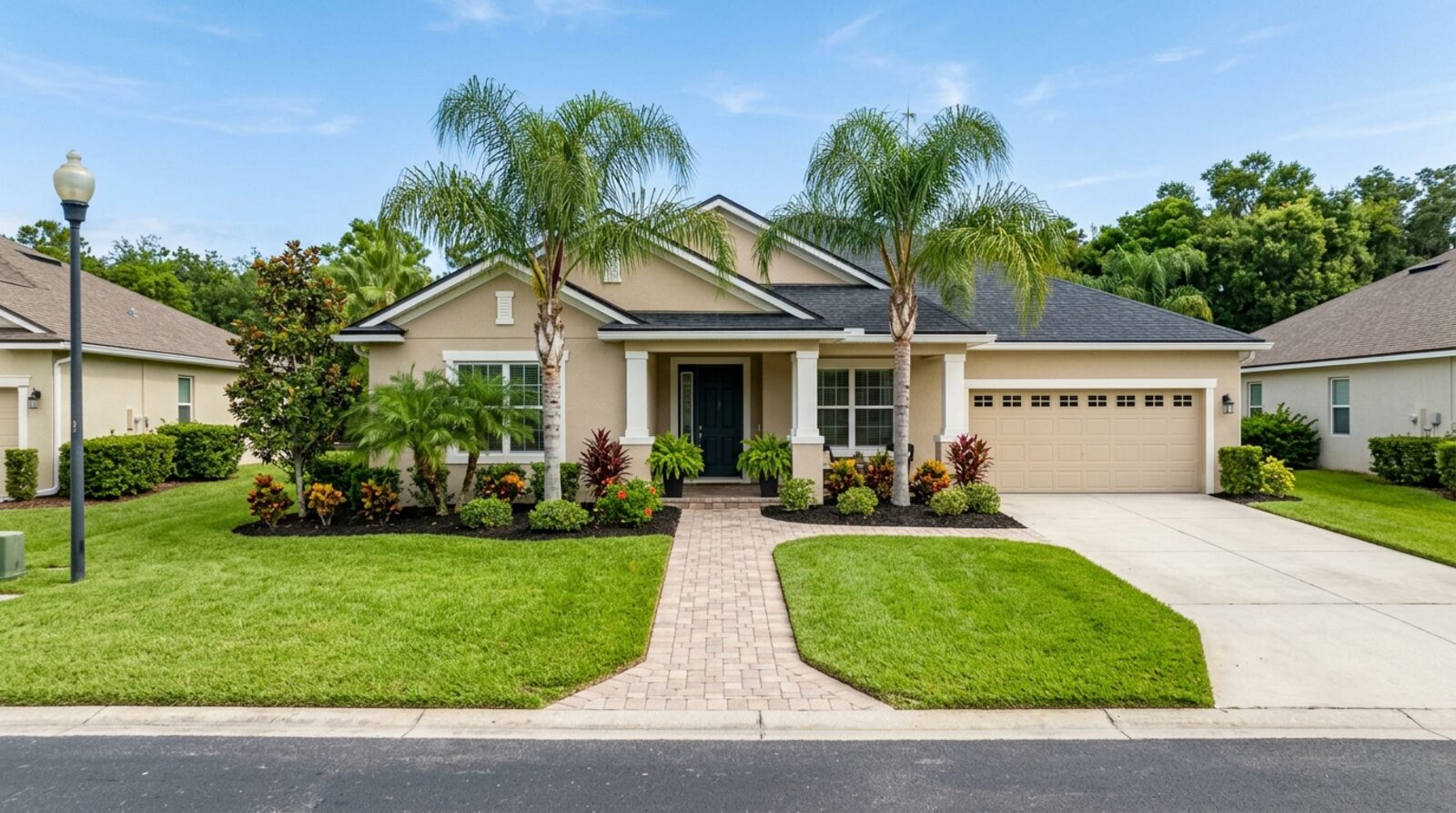
This is the first question to answer — before you fall in love with a property. Short-term rental permissions are determined by:
- Local government zoning/regulation: The city or county's STR ordinances
- HOA governing documents: The community's CC&Rs
- State licensing: Florida DBPR requirements
All three must permit STR use for a property to operate legally. A property that is legally zoned for STR in the county but sits in an HOA that prohibits STRs cannot be used as a vacation rental.
Where STRs are generally permitted in Central Florida:
Osceola County unincorporated: The most permissive STR environment in Central Florida — the vacation rental industry has operated here for decades with county support. Kissimmee, Davenport, Poinciana, ChampionsGate, Reunion, Reunion Resort, and other communities are specifically designed for vacation rental use.
Polk County unincorporated: Similar permissive environment — Haines City, Davenport (Polk side), and other communities accommodate vacation rental investors.
City of Kissimmee: Generally permissive with STR registration requirements.
Where STRs have become more restricted:
City of Orlando: Banned new STR licenses in most residential zones (Orange County unincorporated is separate). Existing licensed properties are grandfathered; new licenses are not available in most areas. Verify before purchasing any City of Orlando property for STR purposes.
Orange County unincorporated: Has implemented a registration system with operational requirements; the county is monitoring density of STRs in specific neighborhoods.
Osceola County incorporated cities: The City of Kissimmee has its own requirements separate from the county.
The HOA layer: critical due diligence
Even in permissive jurisdictions, the HOA is often the binding constraint. CC&Rs are enforced by the HOA privately — unrelated to county permits.
Questions to ask before contracting:
- Does the CC&R specifically permit short-term rentals?
- Is there a minimum rental duration (30 days? 7 days? 3 days)?
- Is there a maximum number of rentals per year?
- Are there registration or guest management requirements?
- What happens if STR rules are violated? (Fines + potential HOA foreclosure)
Communities purpose-built for vacation rentals (Stoneybrook South at ChampionsGate, Solterra Resort, Reunion Resort, Fantasy World Resort) have HOA documents that specifically permit and regulate STR use. In these communities, the HOA may even have a preferred management company relationship and resort amenities specifically designed for vacation guests.
Florida vacation rental licensing
State DBPR license: Required for any property rented for periods under 30 days more than 3 times in a 12-month period. The vacation rental license must be renewed annually and requires:
- Fire safety inspection (sprinklers, smoke detectors, extinguisher)
- Posted emergency contact information
- Property insurance meeting minimum requirements
- Compliance with Florida vacation rental laws (guest access, safety standards)
County/city registration: Many counties and cities require separate local registration in addition to the state license. Fees and requirements vary — budget $200–$600 total per year for licensing.
Transient Rental Tax: Florida charges a 6% state tax (Tourist Development Tax) on vacation rentals; most counties add a local Tourist Development Tax of 1–7%. Total combined tax can reach 12–13%. These must be collected and remitted to the state and county. Airbnb and VRBO handle this automatically for their bookings; direct bookings require manual remittance.
Realistic financial modeling
The biggest mistakes vacation rental buyers make are using gross revenue projections from the listing agent and underestimating ongoing expenses.
Revenue reality
Gross revenue depends on:
- Nightly rate (set by market conditions, not wishful thinking)
- Occupancy rate (seasonal — Florida vacation rentals peak October–April)
- Platform (Airbnb vs VRBO vs direct booking vs management company channel)
Realistic occupancy targets by market (well-managed, average property):
- Disney-area (ChampionsGate, Reunion, Kissimmee): 55–70%
- Daytona Beach: 45–60% (more seasonal)
- Space Coast: 45–55% (growing)
Tools to verify before purchasing:
- AirDNA: vacation rental analytics showing actual historical occupancy and revenue by market
- Rabbu: similar analytics platform
- Ask the seller for their actual 12-month revenue history (request platform statements, not their spreadsheet)
Expense reality
| Expense Category | Typical Range |
|---|---|
| Management fee | 20–30% of gross revenue |
| Cleaning fees (retained/excess) | 3–5% of gross revenue |
| Supplies, linens, consumables | 3–5% of gross |
| Platform fees (Airbnb 3%, VRBO ~5%) | 3–5% |
| HOA / CDD | $3,000–$8,000/year |
| Property taxes | 0.8–1.5% of value/year |
| Insurance (vacation rental policy) | $2,500–$6,000/year |
| Maintenance and repairs | 2–4% of property value/year |
| Utilities (owner-paid on vacant periods) | $1,500–$3,000/year |
| Marketing (if self-managing) | $500–$2,000/year |
A realistic total expense ratio runs 40–55% of gross revenue — not the 20–30% that simplistic models use.
Example model (conservative)
| Amount | |
|---|---|
| Purchase price | $550,000 |
| Gross annual revenue (65% occ × $225/night) | $53,000 |
| Total expenses (48%) | −$25,400 |
| Net operating income | $27,600 |
| Gross yield | 9.6% |
| Net yield (NOI / price) | 5.0% |
| Mortgage (20% down, 7%, 30yr) | −$29,500 |
| Annual cash flow | −$1,900 |
This model shows approximately break-even cash flow at 7% mortgage rates — a common outcome for 2026 purchases. Cash flow improves with higher occupancy, rate optimization, or equity position (larger down payment or all-cash purchase).
Tax treatment of vacation rental income
Short-term rental income is taxable: Vacation rental income is reported as ordinary income (Schedule E) on federal taxes.
Depreciation: The property (structure only, not land) can be depreciated over 27.5 years for residential rental property — a non-cash deduction that reduces taxable income significantly. A $550,000 property with $100,000 land value depreciates $450,000 over 27.5 years = $16,364/year in depreciation deductions.
14-day rule: If you rent for 14 days or fewer per year, the rental income is tax-free (Section 280A personal use exclusion). This only works for truly incidental rentals.
Personal use: If you use the property for more than 14 days or 10% of rental days (whichever is greater), expense deductions are limited proportionally. Many vacation home buyers use the property personally and need to account for this.
Florida no-income-tax benefit: Florida's no-income-tax status means rental income is not taxed at the state level — only federal. For investors coming from California, New York, or New Jersey, this materially improves after-tax returns.
Homestead exemption and STR
If you claim a Florida homestead exemption on a STR property, you risk losing the exemption — the homestead is for primary residences, not investment rentals. Most investors do not homestead vacation rental properties. Verify with a Florida CPA.
Ryan Solberg works with investors evaluating Central Florida vacation rental markets. If you want honest numbers — not rosy projections — contact Ryan before you make an offer on a vacation rental property.
Frequently asked questions
- What areas of Florida are best for vacation rental investment?
- The top Central Florida STR markets: (1) Osceola County — Kissimmee, ChampionsGate, Reunion, Davenport, Clermont — the Disney-area vacation rental epicenter; (2) Daytona Beach area — strong seasonal beach demand, more affordable acquisitions; (3) Brevard Space Coast — Kennedy Space Center tourism, growing tech worker population, improving short-term rental market. Orange County (Orlando proper) has become increasingly restrictive of STRs. Specifically, the City of Orlando banned new STR licenses in most areas. Always verify the current permitting status before purchasing.
- Do you need a license to rent on Airbnb in Florida?
- Yes — Florida requires a vacation rental license from the Department of Business and Professional Regulation (DBPR) for any property rented more than 3 times per year for periods under 30 days. The license application requires proof of insurance, compliance with local requirements, and an inspection for some property types. Additionally, Osceola County, Orange County, and other municipalities have their own licensing and permitting requirements layered on top of the state license. Budget $200–$500 for licensing and renewal costs annually.
- What are realistic vacation rental returns in Central Florida?
- Gross yields (annual gross rental income / purchase price) for well-positioned Central Florida vacation rentals run 6–10%. After all expenses — management fee (20–30%), cleaning, supplies, platform fees, insurance, taxes, HOA/CDD, utilities, maintenance — net yields are typically 3–6%. Cash-on-cash returns (cash flow / cash invested) depend heavily on financing. An all-cash purchase at 6% gross yield with 40% expense ratio nets approximately 3.6% cash-on-cash. A financed purchase at 6–7% mortgage rates may produce minimal or negative cash flow at today's price levels — model conservatively before purchasing.
- What is the Florida vacation rental local preemption law?
- Florida passed legislation in 2011 preempting local governments from banning vacation rentals entirely — but municipalities can regulate duration, frequency, and operational standards. The law has been amended multiple times. As of 2026, some municipalities (including Orlando) have succeeded in restricting new STR licenses while grandfathering existing ones. Always verify the current regulatory environment in your specific target municipality — regulations change, and purchasing an STR property without verifying current permits is a significant risk.
The next step
Thinking about a move?
Whether you're two months out or two years out, the right information now saves real money later. Let's talk — no pressure, no pitch.