· 10 min read· By Ryan Solberg, Broker #BK3354351
Short-Term Rental Investment in Orlando: A 2026 Buyer's Guide to STR Properties
Central Florida's STR market spans Airbnb condos near Disney to estate homes in Reunion Resort. Here's how to evaluate STR investments, which communities are actually STR-permitted, and what buyers miss.
Watch the video
Central Florida is one of the world's largest vacation rental markets — primarily driven by proximity to Walt Disney World, Universal Studios, SeaWorld, and Florida's theme park ecosystem. But "STR investment near Disney" is not one market — it's dozens of micro-markets with different rules, buyer profiles, and return profiles.
Here's how to approach Central Florida STR investment as a serious buyer.
The county matters first
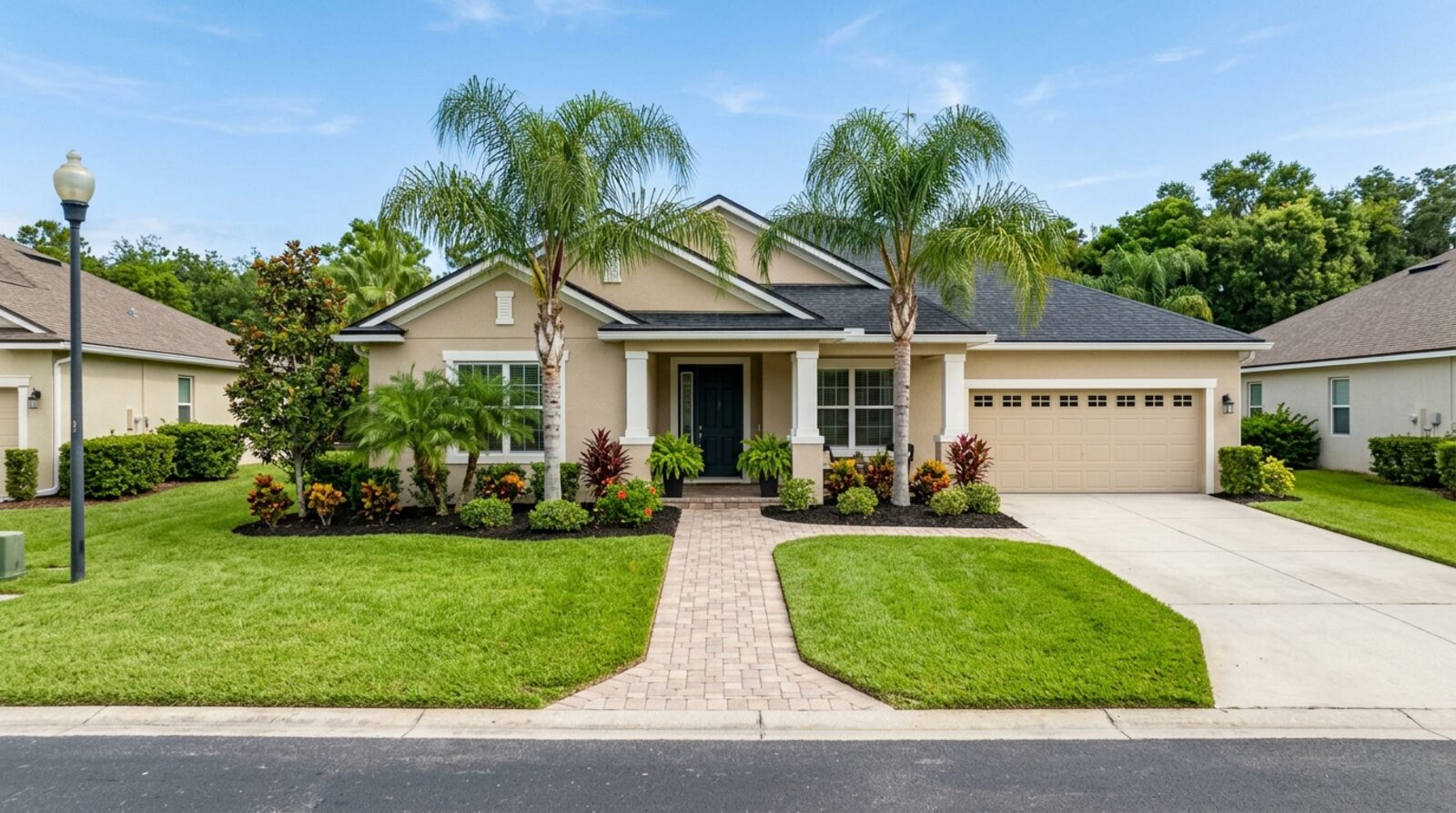
Osceola County is Central Florida's STR hub. Most of the communities marketed as "STR-permitted near Disney" are in Osceola County — Kissimmee, Davenport (the portion south of US-192 that crosses into Osceola), ChampionsGate, Reunion Resort, Windsor Hills, Solterra, and dozens of purpose-built resort communities. Osceola explicitly allows and taxes STR activity.
Orange County is much more restrictive. Most residential zoning in Orange County requires owner occupancy or limits rental duration. The major exception is certain commercial resort zones. Orange County communities like MetroWest, Dr. Phillips, and Lake Nona generally do not permit traditional STR operations in residential zones.
Polk County has moderate STR regulations — Davenport (the Orange/Polk portion), Haines City, and Auburndale have resort communities with STR allowances but require county registration.
Lake County has some STR-permitted areas but generally requires registration and has community-specific restrictions.
The county determination must be the first question — before you evaluate the community, the property, or the income projections.
HOA restrictions: the second filter
Even in STR-permitted counties, HOA CC&Rs frequently prohibit short-term rentals. This is the most common expensive mistake STR investors make:
- They confirm the county allows STRs ✓
- They assume the community allows STRs ✗
- They close on the property
- They discover the HOA CC&Rs explicitly prohibit rentals under 30 days
This happens. The solution is simple: read the CC&Rs before you make an offer. Your agent should pull them for any STR purchase. Look for language around:
- Minimum rental period (30 days, 6 months, etc.)
- Prohibition on transient or vacation rentals
- Owner-occupancy requirements
Major Osceola County STR communities that do allow short-term rentals in their CC&Rs: Windsor Hills, Windsor at Westside, Solterra Resort, Reunion Resort, ChampionsGate, Encantada, Festival, Emerald Island, Veranda Palms.
The cap rate framework
Investment buyers evaluate STR properties on cap rate: annual net operating income divided by purchase price. A cap rate of 6% on a $600,000 property means $36,000 net annual income after all operating expenses.
Net Operating Income (NOI) = Gross Rental Revenue − Operating Expenses
Operating expenses to model:
- Property management fees (20–35% of gross)
- HOA dues (monthly)
- CDD fees (annual)
- Homeowner's insurance (significantly higher for STR/vacation rental properties)
- Property taxes
- Utilities (typically paid by owner, recouped through rental pricing)
- Pool and lawn maintenance
- Cleaning and turnover costs
- Maintenance and repairs budget (2–3% of property value annually)
- Platform fees if owner-managed (3–5% of gross)
Common underwriting mistakes:
- Using gross income rather than net
- Using peak-season occupancy rates rather than annual averages
- Ignoring CDD fees in expense modeling
- Underestimating insurance costs (STR properties typically run 20–40% higher premiums than owner-occupied)
- Not budgeting for vacancy and seasonality (Central Florida STR occupancy averages 65–75% annually, with sharp peaks during school breaks and Disney events)
Central Florida's major STR community profiles
Windsor Hills: Long-established Osceola County gated resort community near US-192. Good income history, established management company, consistent demand. Pricing $450K–$750K for 4–7 bedroom villas. Cap rates 5.5–7%.
Windsor at Westside: Newer, larger resort community west of US-192. Contemporary design, larger floor plans, active management program. Pricing $550K–$950K+. Good for buyers wanting newer product.
Solterra Resort: Well-maintained community with amenity center, near I-4 south. Popular with European and UK buyers. Pricing $500K–$800K. Consistent occupancy.
ChampionsGate: Dual-purpose community — resort section (short-term rental permitted) and residential section (not STR-permitted). The Oasis Club provides resort amenities that increase rental appeal. Pricing $450K–$850K in the resort section.
Reunion Resort: Luxury tier — three championship golf courses, club membership, guard-gated. International buyer base. Pricing $400K–$2.5M+. Higher carrying costs (CDD, club, HOA) require higher rental rates for equivalent cap rates.
Kissimmee US-192 corridor: The original Central Florida vacation rental belt — older inventory, diverse quality, lower price points but also lower income potential. Best for buyers with tight budgets who understand they're buying the land/location more than the building.
Financing STR properties
STR financing is more complex than primary residence lending:
Conventional financing: Available for STR properties in most counties, but the lender may require documentation that the HOA permits short-term rentals. Some lenders have specific STR loan products; others use standard investment property terms (typically 20–25% down, 0.5–0.75% higher rate than primary residence).
DSCR loans: Debt Service Coverage Ratio loans underwrite based on the property's income rather than the borrower's personal income. Popular with investors who have multiple properties or whose personal income doesn't fully reflect their investment capability. Require documentation of the property's income potential (typically from market analysis or prior income history).
Second home financing: If you'll use the property at least 14 days per year, you may qualify for second home financing rates (lower than investment property rates). Rules are strict and occupancy requirements must be genuinely met.
Cash: A significant advantage in competitive STR markets — eliminates lender approval of the community, financing contingency, and appraisal risk. Many active STR investors are repeat cash buyers who recycle equity from prior properties.
The management decision
Resort management programs: Communities like Reunion, ChampionsGate's Oasis Club program, and Windsor Hills all have on-site management companies. Benefits: built-in booking infrastructure, resort amenity access for guests, professional check-in, local maintenance. Cost: 35–45% of gross revenue is common. This is often worth it for remote investors who don't want to manage guest communications across time zones.
Owner-managed (Airbnb/VRBO direct): Saves 25–30% in management fees but requires 15–20 hours/month of owner involvement remotely — guest communication, review management, pricing optimization, coordinating cleaners and maintenance. Works well for local or semi-local investors; difficult for remote buyers without a reliable local coordinator.
Third-party property management: Full-service managers at 20–30% of gross who are not tied to a specific resort. Better price than resort programs; may have less booking volume in community-specific channels. Research management companies with established track records in your target community.
Ryan Solberg has represented STR investors in Reunion Resort, Windsor Hills, ChampionsGate, Solterra, Kissimmee corridor communities, and owner-managed Airbnb properties throughout Central Florida. STR investment evaluation requires understanding cap rates, county regulations, HOA restrictions, and management economics — contact Ryan before any vacation rental purchase. To see what's currently listed below our comp-based estimate in the Osceola County STR corridor and beyond, check our deals page.
Frequently asked questions
- Which Orlando communities allow short-term rentals?
- Osceola County communities are the primary STR market in Central Florida: Kissimmee, Davenport (specifically the ChampionsGate/Reunion area in Osceola portion), Reunion Resort, Windsor Hills, Windsor at Westside, Solterra Resort, Encantada Resort, Festival Resort, and many other resort communities along US-192 and I-4 south. Orange County has much more restrictive STR zoning — most residential communities in Orlando proper and Orange County suburbs require an owner-occupancy component or prohibit STRs. Lake County, Polk County, and Volusia County have their own rules that must be researched property by property.
- What is a good cap rate for an Orlando STR in 2026?
- Realistic cap rate targets for Central Florida STR properties in 2026 are 5–8% net cap rate depending on community, quality, and management approach. Economy/value properties (smaller Kissimmee villas, townhomes) in the 5–6% range. Mid-tier Disney-proximity properties (ChampionsGate, Windsor Hills, Reunion standard villas) in the 6–7.5% range. Luxury properties (Reunion Estate homes, larger private-pool villas) in the 5–7% range due to higher carrying costs. These are net cap rates — after management fees, HOA, CDD, insurance, property tax, and maintenance. Gross rental income numbers frequently cited by sellers must be converted to net for accurate analysis.
- Do I need a license to run an Airbnb in Orlando?
- In Florida, you need a Tourist Development Tax (TDT) registration with the county (Osceola, Orange, Lake, Polk, etc.) for any property you rent for periods under 6 months. Florida also requires a vacation rental license from the Florida Department of Business and Professional Regulation (DBPR) for properties with more than one unit or that are part of an owner-absent rental program. Platform operators (Airbnb, VRBO) collect and remit TDT in many Florida counties automatically since 2020 agreements. Confirm your specific county's current requirements — they evolve frequently.
- What management fees should I budget for an Orlando STR?
- Orlando STR property management fees range from 20–35% of gross rental income for full-service management (marketing, guest communication, cleaning coordination, maintenance oversight). Some resort communities (Reunion, ChampionsGate resorts) have on-site management programs at 35–45% but provide check-in staff, resort amenities access, and booking volume that owner-managed properties can't replicate. DIY management (owner-managed via Airbnb/VRBO) can reduce fees to 3–5% (platform fees only) but requires significant time investment, especially remotely.
The next step
Thinking about a move?
Whether you're two months out or two years out, the right information now saves real money later. Let's talk — no pressure, no pitch.