· By Ryan Solberg, Broker #BK3354351
Your Zestimate Isn't Your Sale Price — Here's Why
Zillow's algorithm doesn't know about your renovation, your lot, your view, or what sold on your street last month. That's why it's often wrong.
Every week I talk to sellers who tell me what their home is worth — and then give me Zillow's number. I understand why. It's right there, it's updated regularly, and it comes from a company with a lot of data and a lot of engineers. It must know something.
It does know some things. It just doesn't know the most important things.
How the Zestimate Actually Works
Zillow builds its estimate using public records (county tax data, ownership history, property characteristics) combined with MLS sold data when it's available. The algorithm weighs factors like square footage, bedroom and bathroom count, year built, and recent sale prices in the surrounding area.
The key word there is "surrounding area." The algorithm is looking at patterns across many homes to estimate the value of your specific home. It's a statistical model, not an appraisal.
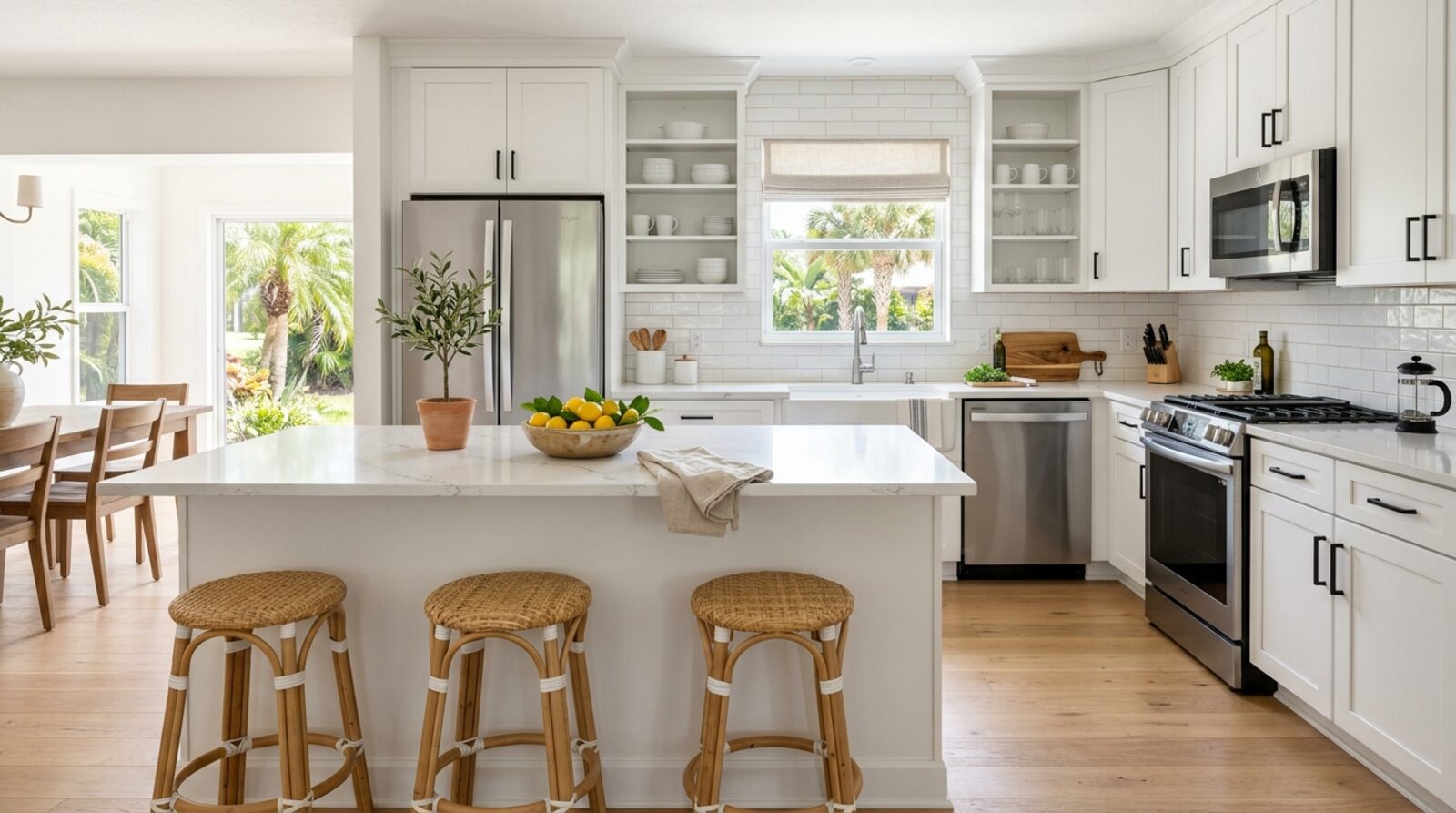
Zillow does not send anyone to your house. It doesn't know if your kitchen was renovated in 2023 or if it still has the original 1987 cabinets. It doesn't know you added a pool and screen enclosure. It doesn't know your lot backs to a conservation area with no rear neighbors, or that the lot next door is a commercial property that generates noise. It knows what the public record says about your home's characteristics, and it fills in the rest with averages.
Where Zestimates Go Wrong
Renovated homes. The Zestimate is based on bed count, bath count, and square footage — not your specific finishes. If you've put $80,000 into a kitchen and master bath renovation, your Zestimate almost certainly doesn't reflect it. The algorithm might know you have 3 bedrooms and 2 bathrooms; it doesn't know one of those bathrooms now has a freestanding soaking tub and heated floors.
Lot differences. Two homes in the same subdivision can have dramatically different lot values — a corner lot, a waterfront lot, a premium wooded lot, or a lot that backs to a highway. The algorithm uses average lot size and may not distinguish between a $50,000 lot premium and a $5,000 one. In communities where lot position is a major value driver — lakefront communities in Central Florida being an obvious example — this blind spot can translate to six-figure errors.
Lag in market data. MLS sales data takes time to appear in public records after closing. In a fast-moving market, the Zestimate is always looking backward. If comparable homes in your neighborhood have been selling for more in the last 30 days than they did 60–90 days ago, the Zestimate is behind. If the market is softening, the same lag can make it too high.
Off-market homes. Zillow's own accuracy disclosures show significantly higher error rates for off-market homes (homes not actively listed for sale) than for listed homes. The stated median error rate for listed homes is roughly 2–3%. For off-market homes, it climbs considerably higher — sometimes 5–7% or more, depending on the area. In a market with thin data, the error rate can be much higher than that.
Unique and luxury properties. Statistical models need data to work. When your home is in a price range with very few comparable sales — luxury properties, unique architectural styles, custom builds — the algorithm has almost nothing to anchor to. It will extrapolate from what it knows, which is often not much. I regularly see Zestimates on unique luxury properties that are off by 15–20% in either direction.
The Case Study That Says Everything
In 2021, Zillow launched Zillow Offers — their iBuyer program where Zillow itself was buying homes directly from sellers, then reselling them. They were essentially betting their own money on the accuracy of their pricing algorithm.
They lost over $500 million and shut the program down.
The reason given internally and to investors: their own algorithm had been mispricing homes. They were buying at prices that were too high relative to what the homes would sell for. The company that built the Zestimate bet $500M on its accuracy and got it wrong at scale.
If you needed a proof point that the Zestimate isn't the final word on your home's value, that's it.
What a Real CMA Does Differently
A comparative market analysis prepared by a local agent isn't automated — it requires judgment, not just data.
When I prepare a CMA, I'm pulling actual closed comps and making condition adjustments for each one. A home that sold for $480,000 in similar square footage, but needed a new roof and had dated baths, is not the same comp as a fully renovated home that sold for $510,000. I weight those differently. The algorithm can't.
I also look at what's pending — under contract but not yet closed. These are the most current market signals, and they don't show up in Zillow's sold data yet. In a fast market, this matters a lot.
Local knowledge fills gaps the algorithm can't. If I know that the three comps Zillow is drawing from are all on a specific street that has a noise issue — or conversely, that they're all on a street without the lake view your home has — I can account for that. The algorithm can't.
What This Means For You as a Seller
If the Zestimate is higher than your home is actually worth: you may list overpriced, sit on the market, and ultimately sell for less than you would have with correct pricing from day one.
If the Zestimate is lower than your home is actually worth: you may leave money on the table by accepting an offer that reflects Zillow's number rather than your true market value — or you may underestimate your equity and not even consider selling when you should.
Either error is costly. The Zestimate is a useful first glance, but don't make a six-figure financial decision based on an algorithm that doesn't know your house.
Request a free home valuation and I'll give you a number based on your actual property, actual comps, and what the market is doing right now — not three months ago.
The next step
Thinking about a move?
Whether you're two months out or two years out, the right information now saves real money later. Let's talk — no pressure, no pitch.