· 8 min read· By Ryan Solberg, Broker #BK3354351
The Florida Home Closing Process: What Happens Between Contract and Keys
Florida closes differently than most states — no attorney requirement, title company as closing agent, and a timeline that can move in 21–45 days. Here's what actually happens from contract to close.
Florida's closing process is streamlined compared to attorney-required states — but it still involves multiple parties, specific timelines, and important milestones that buyers and sellers need to understand.
Here's the complete timeline from contract execution to keys.
Day 0–3: Contract execution and earnest money
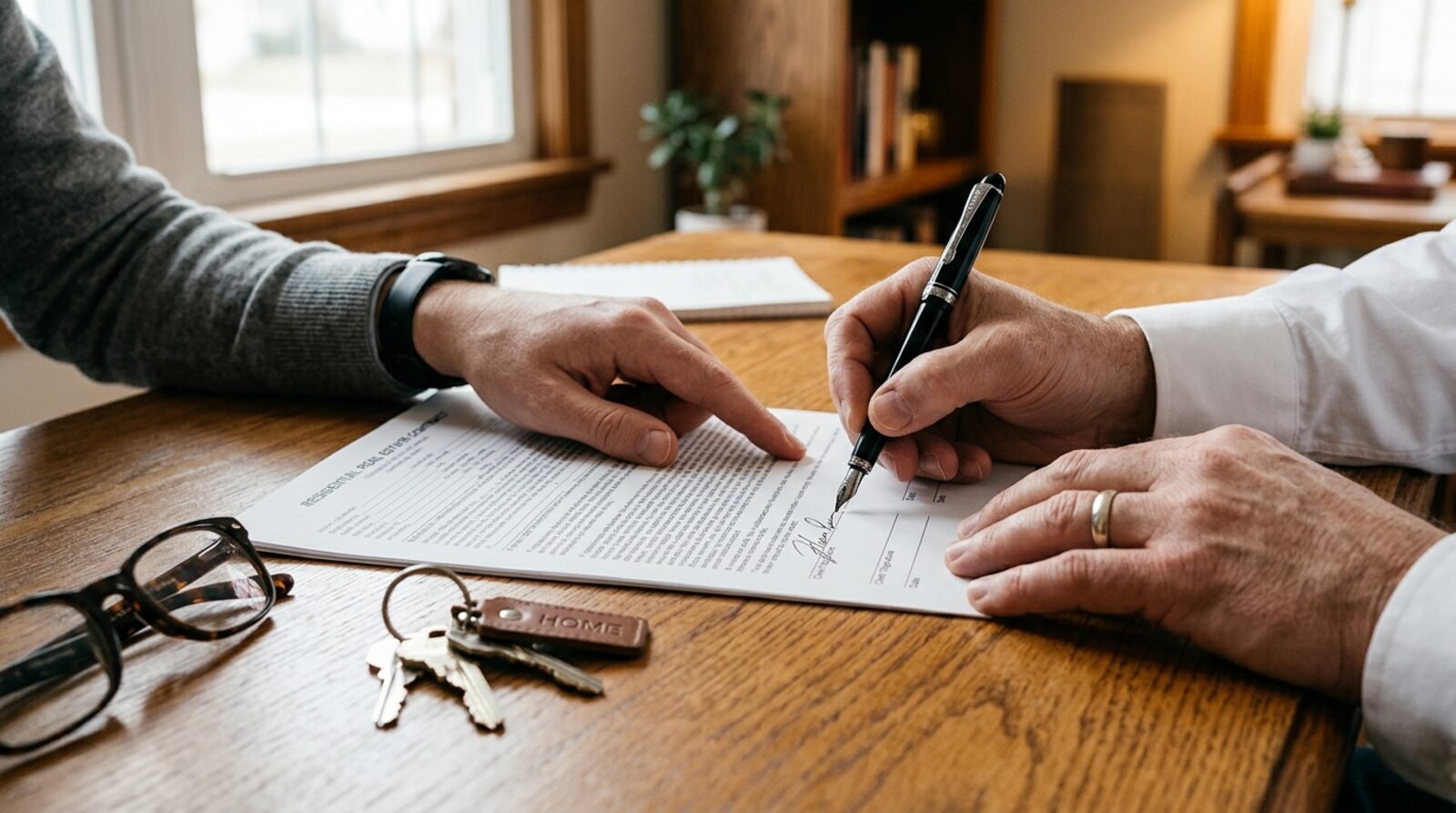
Contract execution: The purchase contract is signed by both parties — this is "going under contract." The effective date (the date the last signature is dated) starts the contract clock for all timeline provisions.
Earnest money deposit: The buyer typically submits the earnest money (1–3% of purchase price) within 1–3 business days of contract execution. The earnest money goes into an escrow account held by the title company or real estate brokerage — not the seller.
Title company selection: In Central Florida, custom is for the seller to choose the title company (because the seller is paying the owner's title insurance premium). The title company becomes the closing agent for the transaction.
What happens: Title company opens the file, begins the title search, and reaches out to both parties to coordinate.
Days 1–15: Inspection period
This is the buyer's most active window:
General home inspection ($350–$600): Typically scheduled in the first week. Covers the roof, HVAC, plumbing, electrical, windows, foundation, and all accessible systems.
WDO inspection ($75–$150): Wood-Destroying Organism inspection — Florida's termite inspection. Separate from the general inspection; required by most lenders. Scheduled separately with a licensed pest control operator.
4-point inspection ($75–$150): If required by the insurance carrier (typically for homes 20–25+ years old). Evaluates roof, HVAC, electrical, and plumbing systems for insurability.
Wind mitigation inspection ($150): Documents construction features affecting wind resistance. Submitted to the insurance carrier for potential premium discounts. Recommended for all Florida buyers.
Additional inspections (if applicable): Pool inspection ($100–$200), sinkhole assessment ($500–$2,000+ in applicable west-corridor areas), mold assessment, roof specialist, HVAC specialist.
Buyer's decision window: Before the inspection period expires, the buyer must decide to proceed, request repairs/credits, or cancel. During this window, the earnest money is fully protected — the buyer can cancel for any reason.
Days 5–30: Financing process (for financed purchases)
Running parallel to the inspection period, the financing process has its own timeline:
Loan application and documentation: Buyer submits the formal loan application with required documentation — tax returns, pay stubs, bank statements, employment verification.
Appraisal: The lender orders an appraisal of the property (typically $400–$700). Appraisals currently take 7–21 days in Central Florida. The appraisal must support the purchase price for the lender to approve the loan as structured.
Underwriting: After the appraisal and documentation review, the loan goes to an underwriter — the person who actually approves the loan. Underwriting can be completed in 3–7 business days or take longer if additional documentation ("conditions") is required.
Clear to Close (CTC): When the underwriter approves the loan without remaining conditions, the lender issues a "Clear to Close" — the signal that closing can be scheduled.
Closing Disclosure: At least 3 business days before closing, the lender provides the Closing Disclosure — itemizing all transaction costs, credits, and loan terms. This 3-day waiting period is federally required and cannot be waived.
Days 30–45: Closing preparation
Title search completion: The title company completes the title search — reviewing property records going back 30–60 years to identify any title defects, liens, or encumbrances that must be resolved before closing. This typically takes 5–10 business days.
HOA estoppel (if applicable): For properties in HOA communities, the title company orders an estoppel certificate — a document from the HOA certifying the current fee balance, any outstanding violations, and the status of the account. Required to confirm the seller is current on dues.
Payoff requests: The title company requests payoff statements from the seller's mortgage lender(s) — the exact amount needed to pay off any existing mortgages at closing.
Homeowners insurance: Buyers must have homeowners insurance in place before closing. In Florida's challenging insurance market, this step should begin early — insurance binding can take 1–5 days, and some properties require 4-point results before binding.
Final walkthrough: The day before or day of closing, buyers typically do a final walkthrough of the property to confirm it's in the same condition as contracted, agreed-upon repairs are complete, and all included items are present.
Closing day
When: Typically 30–45 days after contract execution for financed purchases; 10–21 days for cash.
Where: At the title company's office (or via mobile notary / remote online notarization for buyers who are not local).
What the buyer signs: Loan documents (note, mortgage/deed of trust, truth-in-lending disclosures), title documents, federal required disclosures, insurance authorization, and HOA-related acknowledgments.
What the seller signs: The deed (transferring ownership to the buyer), seller's affidavit, seller's settlement statement, and related documents.
Separate signings: In Florida, buyer and seller don't have to sign at the same time. Many closings are "split closings" where the seller signs in the morning and the buyer signs in the afternoon — or the seller signs remotely/in advance.
Wire funds: The buyer must wire closing funds (down payment + closing costs, minus the earnest money already deposited) to the title company before or at closing. Wire fraud is a significant risk — always verify wire instructions by calling the title company at a number you've independently verified, never from an email link.
Post-signing: funding and recording
After documents are signed:
Lender review: The title company sends the signed loan package to the lender for review and funding authorization. This typically takes 1–4 hours.
Funding: The lender wires the loan proceeds to the title company's escrow account. Until this wire arrives, no money moves and no deed records.
Recording: The title company records the deed and mortgage at the county courthouse. In Florida, most counties record electronically — this can happen same-day.
Keys: Keys are typically released after recording is confirmed — or when the title company receives funding confirmation, depending on the arrangement.
After closing
Change locks: Standard practice — sellers may have had multiple key copies made over the years.
File homestead exemption: If this is your Florida primary residence, file for homestead exemption with the county property appraiser before March 1 of the following year. Not automatic — failure to file costs you a year's worth of exemption.
Homeowners insurance: If you haven't already switched from the binding stage to the active policy, confirm your policy is fully in force.
Title insurance policies: You'll receive both the owner's title insurance policy and the lender's policy in the weeks after closing. Store these with your closing documents — they protect against title defects discovered years later.
Ryan Solberg guides buyers and sellers through every step of the Florida closing process. If you have questions about what to expect or want to understand your transaction's timeline — contact Ryan before you get to closing day surprises.
Frequently asked questions
- How long does closing take in Florida?
- A typical Florida purchase closes in 21–45 days from contract execution — shorter for cash transactions (sometimes 10–14 days), longer for complex financing, estate sales, or title issues. The inspection period (10–15 days) runs during the early part of this window. The primary timing driver for financed purchases is the lender's loan processing timeline — appraisal, underwriting, and final approval typically take 20–35 days. Cash closings can move as fast as title search completion (5–10 business days) allows.
- Do I need an attorney to close in Florida?
- No — Florida does not require an attorney's presence at closing, unlike New York, Massachusetts, or several other states. The title company serves as the closing agent, managing document preparation, lender coordination, title search, and the closing itself. Buyers and sellers may choose to hire a real estate attorney for document review or legal advice — this is optional and is most common in complex transactions (estate sales, business entity ownership, unusual contract terms). Most standard residential closings in Central Florida proceed without either party's attorney present.
- What is a Closing Disclosure and when do I get it?
- The Closing Disclosure (CD) is a federal document required for all financed residential purchases — it itemizes every cost, credit, and payment associated with the transaction. Your lender must provide the CD at least 3 business days before closing. Review it carefully: compare it to your Loan Estimate (provided early in the process), verify the purchase price, loan terms, interest rate, and every line item. Errors do occur — a common one is incorrect prorations for property taxes or HOA fees. If you find a discrepancy, notify your lender and closing agent immediately.
- What happens at the Florida closing table?
- At the Florida closing, buyer and seller (sometimes at different times) sign a stack of documents — typically 50–100+ pages for a financed purchase. Buyer signs loan documents, title documents, and federal disclosures. Seller signs the deed and seller's documents. The closing agent (title company representative) guides both parties through the signing process. After signing, the title company sends the closing package to the lender for review and wire authorization — this 'funding' typically happens the same day or the next business day. Once the lender funds, the deed records and keys are transferred.
The next step
Thinking about a move?
Whether you're two months out or two years out, the right information now saves real money later. Let's talk — no pressure, no pitch.