· 8 min read· By Ryan Solberg, Broker #BK3354351
Buying a Waterfront Home in Orlando 2026: Lakes, Chains, and What to Know Before You Buy
Central Florida has hundreds of lakes — but not all water access is created equal. Here's how to evaluate waterfront homes in Orlando, what the premium is worth, and what lake-specific issues to inspect.
Central Florida has more lakes than most buyers realize — over 1,300 named lakes in Orange County alone. But buying a "waterfront home" in this market requires understanding that not all water is equivalent. A house on the Butler Chain of Lakes in Windermere and a house on a small retention pond in a Kissimmee subdivision are both "waterfront" — but they're entirely different markets.
Here's how to evaluate waterfront properties in Central Florida, what the premiums are, and what you need to inspect before you buy.
The hierarchy of Central Florida lakes
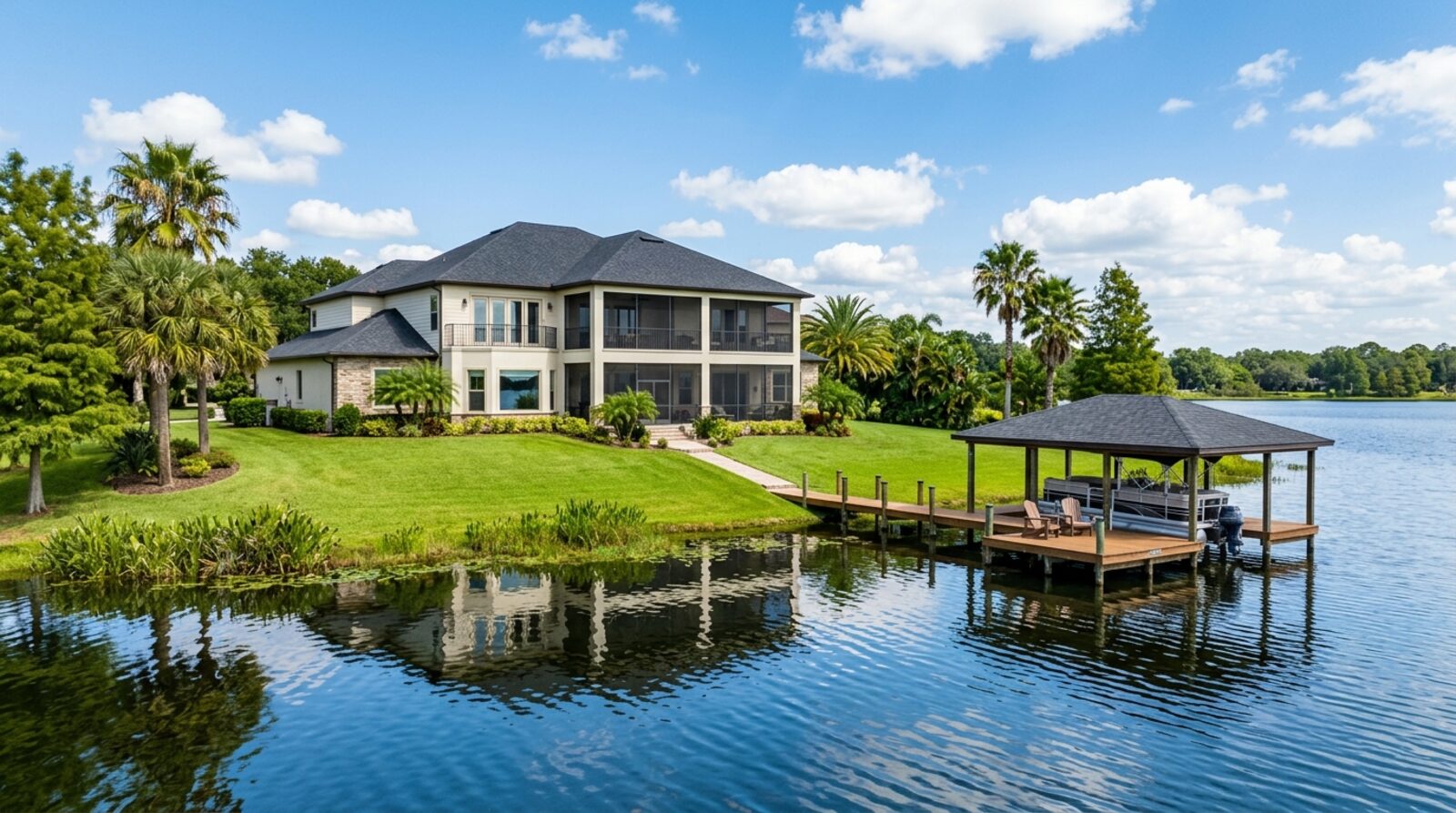
Tier 1: Private ski lakes and connected chains
These are the premier waterfront addresses — large, ski-permitted lakes with minimal commercial development, excellent water quality, and either private frontage or chain connectivity that provides extensive boating access.
- Butler Chain of Lakes (Windermere): The most exclusive — 11 connected lakes from Lake Sheen to Lake Tibet-Butler. Private, ski-permitted, clear water, exceptional waterfront real estate. Prices from $1.5M to $15M+ for legitimate chain frontage.
- Winter Park Chain of Lakes (Lake Virginia, Lake Osceola, Lake Berry, Lake Maitland): Premium chain with boat access to Park Avenue restaurant docks. Lower entry than Butler Chain; still premium.
- Lake Toho / East Lake Tohopekaliga (Kissimmee/St. Cloud): One of Florida's largest lakes, premier bass fishing. More rural character than Orlando chain lakes; prices more accessible.
Tier 2: Quality standalone lakes
Good-sized, recreationally active lakes with waterfront communities but no chain connectivity or more limited access.
- Lake Conway (south Orlando): Large lake with ski permits, active boating community, more accessible pricing than Butler Chain.
- Lake Maitland (Maitland): Premium lake with chain access; Maitland lakefront pricing runs $800K–$1.5M+.
- Lake Ivanhoe (College Park): Urban ski lake adjacent to downtown Orlando. College Park lakefront at urban premium.
- Lake Dora (Mount Dora): Harris Chain access; lifestyle and fishing oriented.
- Lake Howell (Casselberry): 920-acre ski lake; excellent value versus comparable chain lakes.
Tier 3: HOA community lake access
Communities with lake access through an HOA — boat ramp, fishing pier, kayak launch — without private frontage.
This is valuable but distinctly different from private frontage. HOA lake access typically adds 15–30% over comparable non-water-access homes in the same community; private frontage adds far more.
Tier 4: Ponds and retention lakes
Small bodies of water — often drainage retention ponds — with some scenic value but no recreational use. Premium is modest: 5–20% depending on view quality and lot position.
What the waterfront premium buys
Understanding what you're actually getting matters before you pay the premium:
Ski lake permit: Many Central Florida lakes allow water skiing, wakeboarding, and high-speed boating. Check whether the specific lake has a ski permit — unpermitted lakes can only be used for kayaking, fishing, and low-speed boating. The ski permit drives significant recreational premium.
Water depth: Shallow lakes may not support boat docking or certain recreational uses. Ask for bathymetric data or check Lake County / Orange County water resources.
Chain connectivity: A lake that connects to other lakes via navigable canals provides dramatically more recreational opportunity than an isolated lake. Butler Chain's 11-lake connectivity is a core value driver.
Water quality: Florida lakes vary significantly in water quality — clarity, algal bloom frequency, water hyacinth presence. Ask about the specific lake's historic water quality, whether it's monitored by county environmental services, and any recent issues.
Dock infrastructure: Existing docks significantly affect value. Assess dock condition, water depth at dock, boat lift presence, dock age, and compliance with county permitting. New dock construction requires permits and can be expensive.
Florida waterfront inspection checklist
Beyond the standard home inspection, waterfront properties require specific attention:
Dock condition: Hire a marine contractor for a separate dock inspection. Look for: structural integrity of pilings, decking condition, electrical safety (dock electrical requires marine-grade wiring), boat lift function and capacity, gangway condition.
Seawall: If present, seawall assessment by a qualified contractor. Seawall failures are expensive ($200–$500/linear foot) and common in older lakefront properties. Assess for: panel cracks, bowing, erosion at the base, deadman anchor condition.
Shoreline erosion: Florida lakes can experience significant shoreline erosion, particularly in properties without seawalls. Assess the current shoreline condition and look at aerial photographs over time if available.
Flood zone: Get a formal flood zone determination. Lakefront properties in FEMA Special Flood Hazard Areas (Zone AE or Zone A) require flood insurance with a mortgage — which adds $1,000–$5,000+/year to carrying costs depending on the property's elevation and location.
Water intrusion: Waterfront homes can experience water intrusion from both rain and lake flooding. Look at the home's lowest finished floor elevation relative to the lake's historical high-water mark.
Environmental restrictions: Some Florida lakefront properties have littoral zone protections (shoreline vegetation buffer requirements), restricted shoreline modification rights, or other environmental constraints that limit what you can do with the waterfront. Verify before purchasing.
County and state access rules
Florida has extensive public access rights to navigable waterways — including most named lakes. However, the specific rules about where the public can access and what activities are permitted vary by county and water body.
Key questions for waterfront purchases:
- Is the lake publicly accessible or private? (Most named lakes in Florida have some public access)
- Are there county-managed boat ramps that provide public access to your "private" lake?
- What recreational activities are permitted? (Ski permits are explicitly issued by county)
- Are there any deed restrictions on shoreline modifications, dock construction, or vegetation removal?
The financing difference
Waterfront properties sometimes require special attention in the lending process:
Appraisal complexity: Appraising waterfront homes requires finding comparable waterfront sales — which are often few and geographically spread. Waterfront appraisals are more likely to come in below purchase price when buyers are paying significant premiums. Discuss appraisal risk with your lender before contracting.
Insurance: Waterfront properties with flood zone status require flood insurance in addition to homeowners insurance. Get flood insurance quotes during due diligence. Some coastal-style lake properties may also face wind insurance challenges.
Ryan Solberg has represented buyers and sellers on Butler Chain estates, Lake Nona waterfront, Lake Conway, and lake-access communities throughout Central Florida. Waterfront due diligence is specific and matters — connect before you make an offer on any lake property.
Frequently asked questions
- What lakes in Orlando are best for waterfront homes?
- Central Florida's most sought-after lakes are the Butler Chain of Lakes (Windermere) — a private ski lake system with the highest waterfront premiums in the metro. Winter Park Chain of Lakes (Lake Virginia, Lake Osceola, Lake Berry) provides premium waterfront with restaurant access by boat. Lake Nona (USTA National Campus area), Lake Maitland, Lake Conway (south Orlando), and East Lake Tohopekaliga (Kissimmee/St. Cloud) are also significant waterfront markets. Each has different characteristics, access rules, and pricing.
- What is the waterfront premium in Orlando?
- The premium for direct waterfront access in Central Florida varies enormously by lake quality and location. Butler Chain frontage in Windermere: 200–400% premium over comparable non-waterfront. Winter Park Chain: 150–300% premium. Lake Conway or East Lake Toho: 50–120% premium. Small, isolated ponds or retention lakes: 10–30% premium. The value of water access depends on the lake's size, ski permit status, chain connectivity, water quality, and location context.
- What are the biggest inspection concerns for waterfront homes in Florida?
- Florida waterfront homes require specific inspection attention beyond the standard home inspection: dock condition and structural integrity, seawall condition (if present), water table effects on foundation, flood zone status, water quality testing (especially for older well-water properties near lakes), shoreline erosion, and any environmental restrictions on lake use. A specialist dock inspection and seawall assessment are worth getting separately from a general home inspector.
- Do I need flood insurance for a lakefront home in Florida?
- Many Florida lakefront properties are in FEMA Special Flood Hazard Areas (SFHAs) — which require flood insurance if you have a mortgage. Even lakefront homes NOT in a mapped SFHA are at elevated flood risk and may benefit from voluntary coverage. Flood insurance rates for lakefront properties vary significantly based on the specific elevation, lot position, and zone designation. Get a flood zone determination and insurance quote during due diligence — not after closing.
The next step
Thinking about a move?
Whether you're two months out or two years out, the right information now saves real money later. Let's talk — no pressure, no pitch.