· Updated · 11 min read· By Ryan Solberg, Broker #BK3354351
Relocating to Orlando FL: Complete 2026 Guide for Out-of-State Buyers
Moving to Central Florida from out of state requires understanding things that local buyers take for granted: Florida's AS IS contract, homestead exemption timing, no state income tax math, county differences, and which communities actually match your lifestyle.
Moving to Central Florida from out of state is increasingly common — and increasingly complex. The buyers who struggle after relocating are usually the ones who didn't understand the differences before they bought. Here's what you need to know.
The county decision matters more than you think
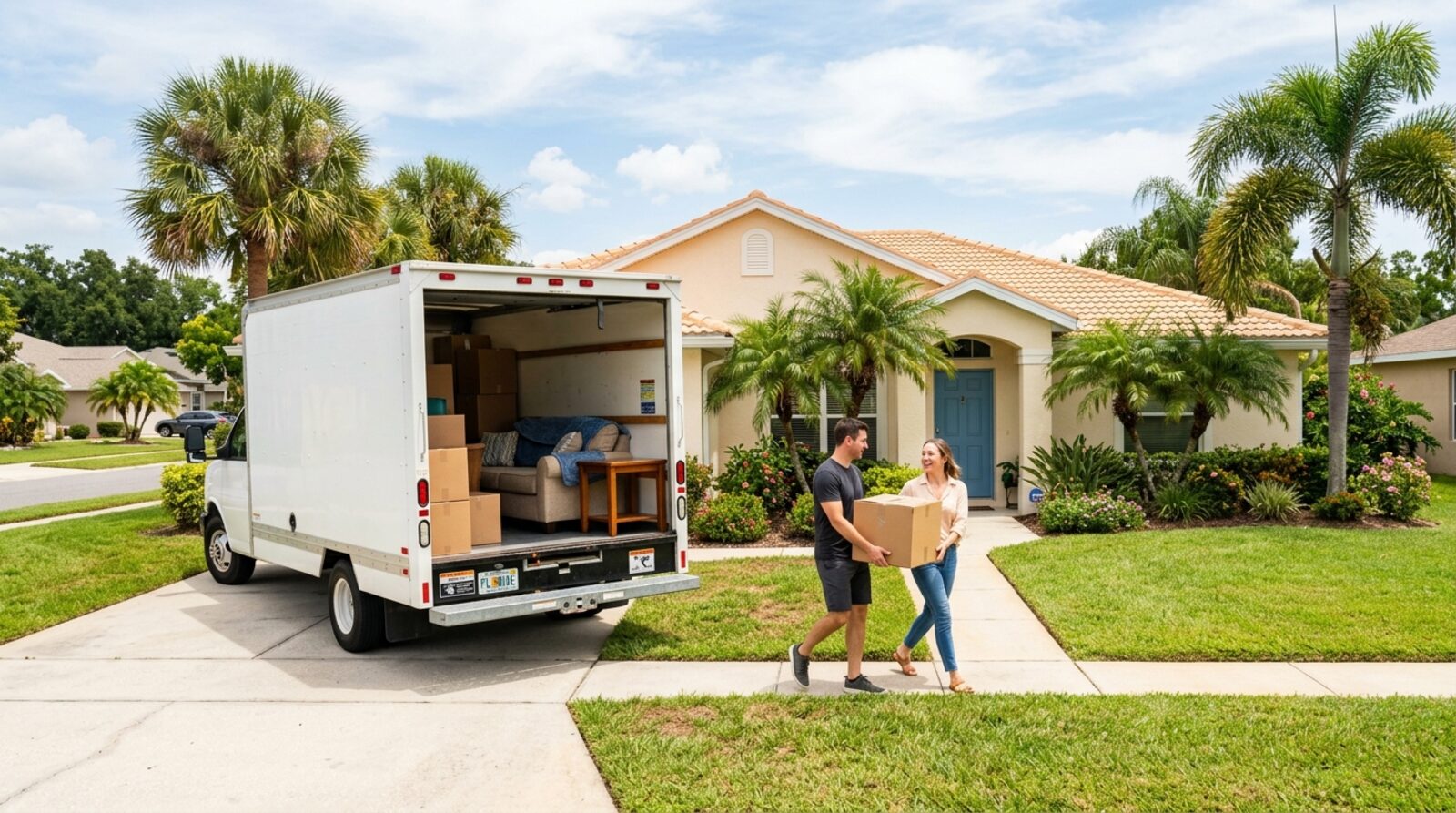
Central Florida is multiple distinct real estate markets organized by county. The county you buy in determines your school district, property tax rate, and community character. This isn't a minor detail — it's the most important structural decision you'll make.
Orange County: Orlando's core county — most major employment centers, Disney/Universal, largest land area. Two major school districts: OCPS (large, variable by zone) and a portion of Seminole at the northern border. Property tax rate: approximately 1.0–1.2% effective.
Seminole County: North and northeast of Orange County — consistently Florida's top-rated school district (SCPS). Communities include Oviedo, Lake Mary, Longwood, Winter Springs, Casselberry, Sanford. Property tax: approximately 1.0% effective. Strong appreciation history.
Osceola County: South of Orange — Kissimmee, Celebration, St. Cloud, Poinciana. More affordable than Orange County; school district (OCPS of Osceola) is a point of concern for some buyers. STR (short-term rental) market is significant in Osceola.
Lake County: Northwest — Clermont, Mount Dora, Leesburg, Minneola. Rural and semi-rural character, lake lifestyle, more affordable than Orange/Seminole. School district (LCPS) is acceptable but not standout.
Polk County: Southwest — Lakeland, Winter Haven, Auburndale, Haines City. Most affordable major Central Florida market. Polk County schools are improving but historically lower-rated than Orange/Seminole. Strong employment growth in distribution and healthcare.
Brevard County: East — Melbourne, Viera, Cocoa Beach, Space Coast. Technology employment (SpaceX, Blue Origin, NASA) anchor; beach access; strong value proposition vs central Orlando. I-95 corridor access.
Mapping employment to community
Your commute tolerance is the most important filter. Central Florida's sprawl means a poorly chosen community can mean 60–90 minutes each way. The primary employment anchors:
Downtown Orlando: 15–25 minutes accessible from College Park, Baldwin Park, Maitland, Casselberry, Longwood. 30–45 minutes from Lake Mary, Oviedo, Winter Garden, Hunters Creek.
Lake Nona Medical City: 15–20 minutes from Waterford Lakes, Avalon Park, St. Cloud. 25–35 minutes from Lake Mary, Oviedo, Kissimmee.
Lake Mary / Sanford corporate corridor (ADP, KPMG, Mitsubishi, Raymond James): 10–20 minutes from Lake Mary, Heathrow, Longwood, Sanford. 30–45 minutes from Orlando proper.
Universal / I-4 west: 15–25 minutes from MetroWest, Ocoee, Winter Garden. 25–40 minutes from Lake Mary, Oviedo.
Walt Disney World: 10–25 minutes from Dr. Phillips, Windermere, Celebration, Hunters Creek. 30–45 minutes from most other Central Florida communities.
Space Coast employers (SpaceX, NASA, defense contractors): 30–60 minutes from Titusville; 45–75 minutes from Melbourne.
Florida-specific contract mechanics
Out-of-state buyers are routinely surprised by Florida's AS IS Residential Contract for Sale and Purchase — which is the standard form for most Florida residential transactions.
What AS IS means: The seller is not contractually required to repair anything discovered in your inspection. This is different from most states' standard contracts, which require sellers to address material defects.
What AS IS doesn't mean: You can't inspect (you can and should), the seller doesn't have to disclose (they do, Florida law requires disclosure of known material defects), or you can't negotiate after inspection (you can — but through credits or price reduction requests, not repair demands).
The inspection period: Typically 10–15 days, negotiated in each contract. During this window, you can cancel for any reason with your full earnest money deposit returned. After it closes, you're committed — canceling without a contractual basis risks your deposit.
Post-inspection negotiation: Request credits (price reduction or closing cost credit), not repairs. Get contractor estimates for issues you want credited. The seller can accept, counter, or decline. If they decline and you're still in the inspection period, you can cancel.
Homeowner's insurance: the biggest surprise
Florida's property insurance market has been in crisis since Hurricane Irma (2017) and subsequent reinsurance market hardening. The impact: premiums have increased dramatically, insurers have left the state, and Citizens Property Insurance (the state insurer of last resort) swelled to about 1.4 million policies by 2023. The market has since begun to recover: Citizens was down to 254,856 policies as of September 18, 2026, and state regulators have been approving homeowners rate decreases.
What this means for relocators:
Get insurance quotes before making an offer — not after. In some areas and for some property types, insurance is expensive enough to affect affordability significantly.
Roof age matters enormously: Insurers in Florida frequently decline coverage or charge dramatically higher premiums for homes with roofs older than 15–20 years. A roof replacement ($10,000–$20,000 for typical Florida single-family) may be required to get standard market insurance.
Wind mitigation report: A $100–$150 inspection that can save 20–60% on your homeowner's insurance premium by documenting how your home's roof and structure resist wind damage. Worth getting on any Central Florida home.
4-point inspection: Required by most Florida insurers for homes over 10–15 years old — a simplified inspection of the four major systems (roof, electrical, plumbing, HVAC) to assess insurability. Results affect coverage availability and cost.
Flood insurance: Standard homeowners policies in Florida do not cover flood damage. If your property is in a FEMA Special Flood Hazard Area (Zone A or AE), flood insurance is required with a mortgage. Even outside flood zones, flood insurance is available and may be worthwhile.
The homestead exemption and Save Our Homes cap
Florida's homestead exemption removes up to $51,411 of assessed value for 2026 — $25,000 from all taxes, plus a second inflation-indexed tier of up to $26,411 from non-school taxes. On a $500,000 home with a 1.1% effective tax rate, this saves approximately $550/year.
More importantly: the Save Our Homes constitutional amendment caps annual property tax assessment increases at 3% or CPI (whichever is lower) for homestead properties. In years with 8–10% market appreciation, this cap becomes enormously valuable.
For relocators: You must file for homestead exemption by March 1 in the year after you close, and you must be the owner of record on January 1. If you close in July 2026, you file by March 1, 2027. If you miss the March 1 deadline, you lose that entire year's exemption — a real cost.
Community types and what to expect
Master-planned communities: HOA-governed, consistent aesthetic, community amenities (pools, fitness, trails). Many have CDD fees (see below). Examples: Celebration, Lake Nona, Horizon West, Avalon Park, Waterford Lakes.
HOA communities (non-master-planned): Standard HOA restrictions and dues without the full master-planned community infrastructure. Common throughout Central Florida's suburban areas.
No-HOA neighborhoods: Older established neighborhoods — College Park, parts of Ocoee, Casselberry, older Oviedo. More property autonomy; less aesthetic consistency.
CDD fees: Master-planned communities in Central Florida often have Community Development District bonds — infrastructure financing that appears on your annual property tax bill as a separate line item. CDD fees typically range $1,500–$5,000+/year and can dramatically affect affordability. Always ask specifically: "What is the annual CDD fee for this property?" before contracting.
The no-income-tax math
Florida has no personal income tax. Moving from New Jersey (6.37% top marginal rate), New York (6.85%), Illinois (4.95%), or California (9.3%+), the savings are significant:
- $150,000 household income moving from NJ: $9,555 saved annually
- $200,000 household income moving from NY: $13,700 saved annually
- $300,000 household income moving from CA: $27,900+ saved annually
These savings partially or fully offset higher property insurance costs, and in most cases substantially exceed them for professional households. This tax differential is a primary driver of Central Florida's continued in-migration.
Ryan Solberg has worked with relocating buyers from New York, New Jersey, California, Illinois, Massachusetts, and across the country. The questions out-of-state buyers don't know to ask are the ones that create problems post-closing — connect before you start your search.
Frequently asked questions
- What should out-of-state buyers know before buying in Orlando?
- Three things most out-of-state buyers are surprised by: (1) Florida's AS IS contract — sellers don't have to repair anything discovered in inspection; your leverage is the inspection period cancellation right; (2) Homeowner's insurance cost — Central Florida insurance has increased significantly due to reinsurance market conditions; get quotes before making an offer, not after; (3) CDD fees — many master-planned communities add $2,000–$5,000/year in Community Development District fees to your property tax bill that are separate from HOA dues. Understanding these three factors before you start shopping will prevent sticker shock.
- Which Central Florida neighborhood is best for a relocating buyer?
- There's no single answer — it depends on your employment, commute, school priorities, and lifestyle preferences. If schools are your top priority: Oviedo and Lake Mary (Seminole County SCPS, Florida's top-rated district). If you want new community design: Lake Nona, Horizon West, or Celebration. If you want Disney lifestyle access: Dr. Phillips or Windermere. If you want value: Hunters Creek, MetroWest, or east Orange County communities. Start with your primary employment location and work backward from commute tolerance.
- Is Orlando a good place to relocate to in 2026?
- Central Florida continues to attract significant in-migration — from Northeast, Midwest, and California metros primarily. The market drivers: no state income tax, relative affordability versus major coastal metros, strong employment growth in healthcare, tech, tourism, and logistics, warm climate, and proximity to Florida's coasts. The trade-offs: increasing property insurance costs, summer heat and humidity, traffic in key corridors (I-4), and hurricane risk that requires preparation. For most relocators from high-tax northern markets, the financial trade-off strongly favors Florida.
- How does Florida property tax compare to other states?
- Florida's effective property tax rate is moderate — typically 0.8–1.2% of assessed value for primary residences. The homestead exemption reduces the taxable assessed value by $50,000 for the first year, and the Save Our Homes cap limits annual increases to 3% or CPI (whichever is lower) for established homeowners. Compared to New Jersey (2–3%), Illinois (2%+), or Connecticut (1.5–2%), Florida property taxes are lower — but compared to Texas (1.5–2%), California (0.75% but with Prop 13 protections), or Nevada (0.5–0.75%), they're mid-range. The no-income-tax savings typically more than offsets property tax for most households.
The next step
Thinking about a move?
Whether you're two months out or two years out, the right information now saves real money later. Let's talk — no pressure, no pitch.