· 7 min read· By Ryan Solberg, Broker #BK3354351
Buying a Home With No HOA in Orlando: Best Areas and What to Know
Where to find no-HOA homes in Central Florida, what you actually gain and give up, and the due diligence steps buyers often skip before closing.
The HOA-free home is one of the most consistently searched topics among Central Florida buyers, and it's not hard to understand why. Adding $200 to $600 per month in HOA dues to a mortgage in a high-insurance, high-property-tax state like Florida changes the math on what you can actually afford — and that's before accounting for the restrictions, the political dynamics, and the approval process for painting your front door.
The problem is that finding genuine no-HOA inventory in Central Florida takes real effort. Here's what you need to know about where to look, what you're actually getting, and the due diligence steps that most buyers skip.
The No-HOA Reality in Central Florida
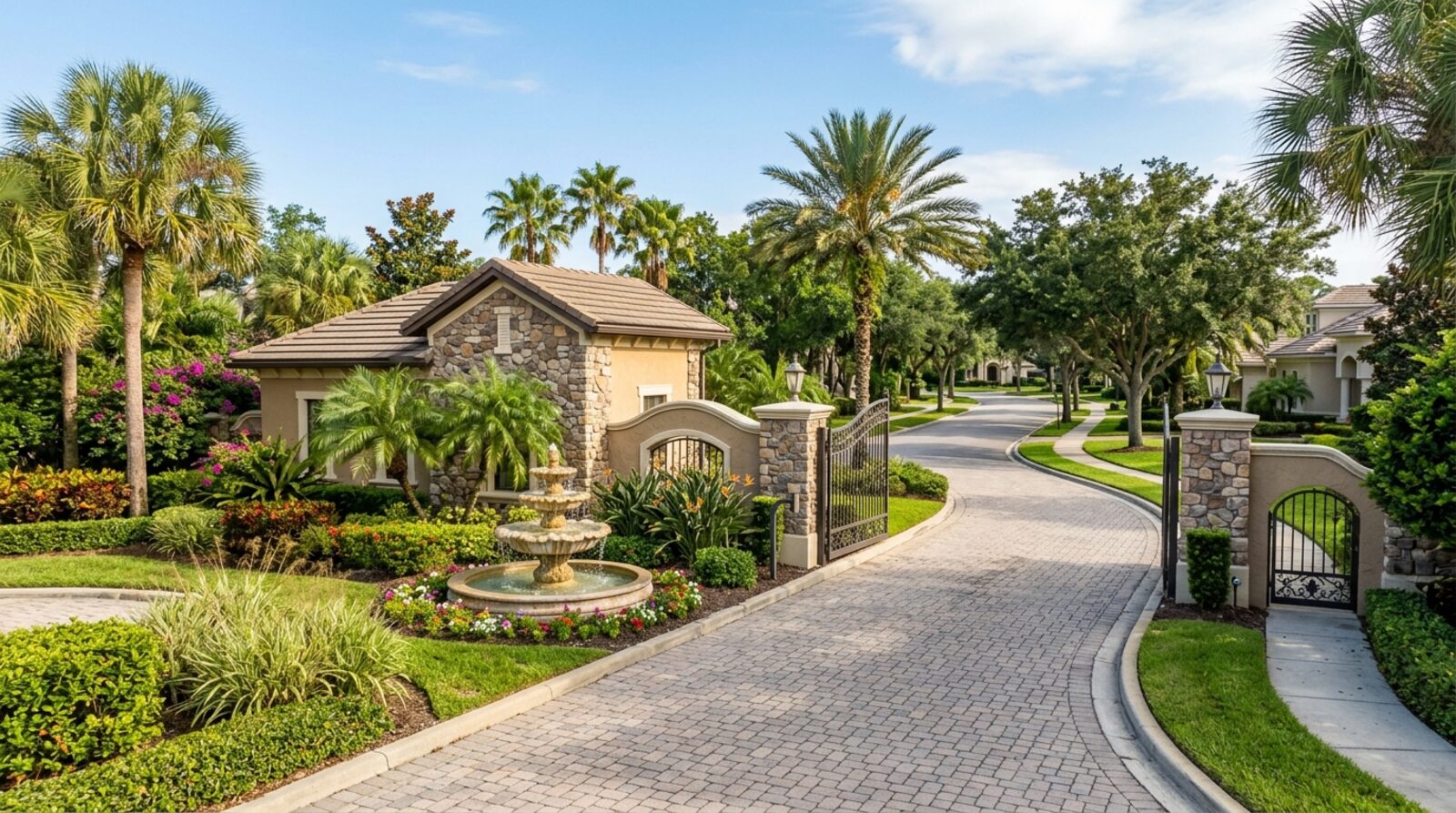
The blunt truth: the majority of single-family homes built in Central Florida after 2000 come with a mandatory HOA. The economics of master-planned development require it — developers use HOA infrastructure to fund amenities, maintain community standards, and protect the value of homes they're still selling in later phases.
If you want a no-HOA home in Orlando, you're almost certainly looking at older construction — typically pre-1990, and in many neighborhoods, pre-1980. That means you're trading newer construction features (open floor plans, modern kitchens, energy efficiency) for ownership freedom. Whether that trade is worth it depends entirely on your priorities.
The no-HOA inventory does exist, and it's concentrated in specific areas. Here's where to focus your search.
Best Areas for No-HOA Homes in Orlando
College Park
College Park is the single best no-HOA neighborhood close to downtown Orlando. The streets between Edgewater Drive and the Lake Ivanhoe area contain a mix of 1920s through 1950s bungalows and mid-century homes, most without any HOA. Edgewater Drive itself is a walkable commercial corridor with restaurants, coffee shops, and boutiques.
Pricing currently runs from roughly $400,000 for a smaller bungalow that needs updating to $850,000+ for larger renovated homes on good lots. The neighborhood has gentrified significantly over the past decade, and good condition homes move quickly. This is one of the few Orlando neighborhoods where you can walk to dinner without getting in a car — and do it without an HOA.
Conway / Belle Isle Area
The Conway corridor south of downtown and the Belle Isle area near the airport cover a large swath of established 1960s through 1980s single-family homes, most without HOA structures. Pricing generally runs from $280,000 to $550,000 depending on condition, size, and whether you're on a lake or lake-access street.
Some streets here have direct lake access to the Conway chain — a legitimately underrated set of lakes for boating and fishing. Buyers coming from out of state who want Florida lake life without paying Windermere prices should look here.
Maitland
Maitland's older established neighborhoods — particularly the streets east of US-17/92 — contain significant no-HOA inventory in the $400,000–$900,000 range. The city has an excellent location: equidistant from downtown Orlando and the Winter Park corridor, with good access to I-4 and the 429.
The older neighborhoods here vary considerably in condition and character. Some blocks are pristine with well-maintained mid-century homes; others are more mixed. The lack of HOA means you'll encounter both.
Winter Park Historic Streets
Winter Park's most established streets — primarily in the 32789 zip code — include older homes that predate the HOA era. You're paying for the address: Winter Park carries a premium, and no-HOA homes here run from $500,000 for smaller properties into the millions for estate lots. But if you want the Winter Park school district, the Park Avenue walkability, and no HOA, this is where to look.
Altamonte Springs
Altamonte Springs has a mix of older single-family neighborhoods and condominium communities, a portion of which have no HOA or very minimal voluntary association structures. Pricing runs from approximately $250,000 for a smaller home needing work to $500,000 for updated homes in better blocks. The I-4 access and proximity to Cranes Roost Park make it a practical choice for commuters.
Sanford
Downtown-adjacent Sanford has become one of Central Florida's better-kept secrets for no-HOA value. The historic streets near the downtown waterfront contain Craftsman bungalows, older colonials, and mid-century homes in the $250,000–$400,000 range — often without HOA. Sanford's downtown has real restaurants and genuine character, and the SunRail station makes it viable for downtown Orlando commuters.
The trade-off is that Sanford's neighborhood quality varies significantly by block. Do your homework on the specific street, not just the zip code.
Older Clermont Streets
Pre-2000 Clermont — the streets around downtown Clermont and the older sections along the chain of lakes — has no-HOA inventory in the $300,000–$450,000 range. Newer Clermont (Groveland, Minneola, the major master-planned communities) is almost entirely HOA. You need to search specifically for older stock.
DeLand in Volusia County also deserves a mention for buyers with flexibility on employment location — historic districts near the downtown and Stetson University with no HOA and pricing from $200,000–$400,000.
What You Give Up Without an HOA
This is not a one-sided decision. No-HOA ownership means:
No shared amenities. Community pools, tennis courts, playgrounds, and fitness centers are HOA infrastructure. Without an HOA, those don't exist unless the municipality provides them.
No enforcement of neighbor standards. If your neighbor decides to let their lawn turn to weeds, paint their house a vivid color, or park cars on their front lawn, there's limited recourse beyond county code enforcement — which is slow and limited in scope.
Potential resale considerations. Buyers shopping your home in 10 years may expect HOA amenities at the price point you're selling. No-HOA homes can still sell at strong prices, but this is a factor to think about in the long term.
What You Actually Gain
No monthly dues. At $300/month, HOA dues add $3,600 per year to your housing costs — $108,000 over a 30-year mortgage. At $500/month, that's $180,000. These aren't trivial numbers.
Freedom to modify. Want to paint your house a different color? Build a workshop? Add a fence? Install solar panels? Without an HOA, you're dealing with county permitting only — not architectural review committees.
No HOA politics. HOA boards can become contentious. Special assessments, rule disputes, election drama, and email chains that go nowhere are real features of HOA living. You opt out of all of that with no-HOA ownership.
Flexibility for business use, RV parking, and other uses that HOAs commonly restrict (subject to county zoning — see below).
The Hidden Restrictions Buyers Miss
Here's where buyers make expensive mistakes.
Deed restrictions survive the HOA. Many older neighborhoods have deed restrictions recorded in the 1950s or 1960s that restrict certain uses — even though there's no active HOA to enforce them. These run with the land and technically bind future owners. Have your title company or attorney specifically research deed restrictions, not just HOA status.
CDDs are not HOAs — but they cost money. A Community Development District is a special tax district that appears on your property tax bill. If a property has a CDD, you pay the assessment whether you like the amenities or not. Newer communities in Osceola, Lake, and Orange counties frequently have CDDs. A no-HOA property can still carry a $1,200-per-year CDD assessment. Search the property appraiser records and ask the listing agent directly.
County zoning governs what you can actually do. If you want to run a business from home, park an RV, operate a short-term rental, or keep chickens — HOA status matters less than county zoning. Orange County, Seminole County, Lake County, and the various municipalities each have their own rules. The right answer to "can I do X" is to call the zoning department for that jurisdiction, not to assume that no HOA means no rules.
Due Diligence Checklist Before You Close
If you're specifically buying no-HOA for ownership freedom, run these steps before you close:
- Request a deed restriction search from your title company — not just an HOA estoppel.
- Search the county property appraiser database for any CDD assessment on the tax bill.
- Verify your specific intended use (Airbnb, home business, RV parking) with the county or municipal zoning department.
- Review county code enforcement history on the property — older neighborhoods without HOA oversight can have unresolved code issues.
- If you're on a well and septic (more common in rural no-HOA areas), get a full inspection on both systems.
Buying without an HOA is a legitimate and often smart choice — but it requires more homework, not less. The freedom is real, and so are the responsibilities.
For help finding specific no-HOA listings in any of these areas, reach out directly or visit our selling guide to understand the market context if you're also considering a move from a current HOA community. We work in College Park, Maitland, Altamonte Springs, Sanford, and across Central Florida.
Frequently asked questions
- Can I Airbnb a no-HOA home in Orlando?
- Possibly, but HOA status is not the main hurdle. Orange County and other Central Florida counties have short-term rental zoning regulations that apply regardless of HOA. Many residential zones restrict short-term rentals or require registration and licenses. Check with the county zoning department and review the deed for any restrictions before assuming a no-HOA home is Airbnb-eligible.
- What is the difference between an HOA and a CDD?
- A Community Development District (CDD) is a special tax district — not a homeowners association. CDD assessments appear as a line item on your annual property tax bill and typically run $500–$2,500 per year. CDDs fund the infrastructure and amenities (roads, drainage, community pool) but do not have architectural review boards or the same rule-enforcement mechanism as an HOA. Many newer communities have both a CDD and an HOA. You can have a CDD without an HOA.
- What are the best no-HOA neighborhoods in Orlando?
- College Park, Conway/Belle Isle, older sections of Maitland, historic Winter Park streets in 32789, Altamonte Springs older stock, downtown-adjacent Sanford, and pre-2000 neighborhoods in Clermont all have significant no-HOA inventory. The common thread is older construction — most neighborhoods built before 1990 predate the era of mandatory HOA structures.
- Can I park my RV or boat at a no-HOA home in Orlando?
- In most cases, yes — which is one of the primary reasons buyers seek no-HOA properties. However, county and municipal codes still apply. Orange County has rules about recreational vehicle storage in residential zones, and some municipalities have their own ordinances. Check the specific county or city code for the address before assuming you can park anything. Deed restrictions on older properties can also prohibit RV parking even without a formal HOA.
- Can I run a business from a no-HOA home in Orlando?
- Home-based business rules are primarily governed by county and municipal zoning, not HOA status. Most residential zones in Orange County allow low-impact home-based businesses (office work, consulting, tutoring) but restrict customer traffic, signage, employees on-site, and certain commercial activities. Without an HOA to add a second layer of restrictions, you have more flexibility — but zoning still applies. Always verify your specific use case with the zoning department before purchase.
The next step
Thinking about a move?
Whether you're two months out or two years out, the right information now saves real money later. Let's talk — no pressure, no pitch.