· Updated · 12 min read· By Ryan Solberg, Broker #BK3354351
What Mexicans Need to Know Before Buying Property in Florida
Mexico is the third-largest source of foreign buyers in US real estate — $4.4 billion in the twelve months to March 2025, up 57% from the year before. That number is not a...

Buyer Profile
Mexican buying Florida real estate
#5 source country for Florida foreign buyers
Annual purchases
~1,200 homes/yr
Typical price range
$300K–$700K
Min. down payment
30%
Home currency
MXN
Source region
Mexico City, Monterrey, Guadalajara
Primary use
Wealth protection / lifestyle second home
What This Money Buys
At home versus in Orlando
Mexico City, Mexico
MXN 7M
A 2-bed apartment in Polanco — 90 sq m, concierge building, no pool, urban density, MXN volatility.
Dr. Phillips, FL
$400K
3-bed pool home — 1,900 sq ft, private pool, gated community, A-rated schools, USD asset.
Property comparisons are illustrative. Market prices change — confirm current listings with a local agent.
What You'll Actually Pay Each Year
True carrying cost of a $550K Florida home
On a $550K Orange County home — non-residents don't qualify for the homestead exemption; Florida residents save up to $50K in assessed value
Florida premiums have risen sharply since 2022; flood insurance is separate and mandatory in many zones — get quotes based on actual roof age and construction year
Caretaking-only runs $150–$300/month for absentee owners; full-service long-term rental management is 8–12% of gross rent
Peso Reality Check
At MX$17.25 per dollar, a home with $15,000/yr in U.S. carrying costs equals approximately MX$258,750 annually — before mortgage. At the 2024 peak of MX$20.87/dollar, the same costs would have run MX$313,050. Run the numbers in pesos at your expected conversion rate, not today's spot rate.
The Rule That Surprises Everyone at Closing
How FIRPTA works when you sell
01
Offer accepted
Agreed sale price: $550,000 USD
02
15% withheld at closing
$82,500 sent directly to the IRS by the title company
03
You receive net proceeds
$467,500 (before commissions and closing costs)
04
File Form 1040-NR
IRS refund issued after 6–12 months
Critical detail
That 15% is calculated on the gross sale price — not your profit. On a $550,000 sale, the IRS holds $82,500 regardless of what you paid for the home. You can recover it, but only after filing a US non-resident return — a process that typically takes 6–12 months. There is no US-Mexico treaty exception. Use a cross-border CPA who files Form 1040-NR for Mexican nationals, not a Mexican accountant without US filing experience.
Before You Make an Offer
What your Florida home really costs in pesos
| USD Price | 20.87MXN at peak (Oct 2024) | 17.25Current (May 2026)Current | 16.33MXN at recent low (mid-2024) |
|---|---|---|---|
| $400,000USD | MX$8,348,000MXN | MX$6,900,000MXN | MX$6,532,000MXN |
| $550,000USD | MX$11,478,500MXN | MX$9,487,500MXN | MX$8,981,500MXN |
| $700,000USD | MX$14,609,000MXN | MX$12,075,000MXN | MX$11,431,000MXN |
| $1,000,000USD | MX$20,870,000MXN | MX$17,250,000MXN | MX$16,330,000MXN |
The peso-dollar rate swung from 16.33 to 20.87 between mid-2024 and late 2024 — a 28% range. On a $550,000 home, that is a MX$2 million difference in purchase cost. Use a currency specialist to time your conversion; retail bank spreads add meaningful cost on large transfers.
Matching Strategy to Location
Dollar-hedge investor or lifestyle home base?
Dollar-Hedge / Wealth Protection
Capital first
USD asset · LLC structure required · Cash purchase typical
- ◆Dollar-denominated asset outside Mexico's monetary system
- ◆Miami / Brickell — established Latin American financial community
- ◆68% of Latin American international buyers pay cash
- ◆LLC or irrevocable trust ownership to avoid $60K estate tax cap
- ◆Strong long-term appreciation history in South Florida luxury corridor
Lifestyle Home Base
Community first
Schools · Security · Operational US base for business travel
- ◆Dr. Phillips — established, A-rated schools
- ◆Lake Nona — master-planned, newer construction, medical corridor anchor
- ◆Windermere / Butler Chain of Lakes — larger lots, lake access, privacy
- ◆Direct MCO flights: Aeromexico & Volaris serve Mexico City corridor
- ◆20–25 min to Orlando International — practical for frequent Mexico travel
Who You Need in Your Corner
Your cross-border buying team
01
US Estate Attorney (Mexico/US Cross-Border)
LLC or irrevocable trust structure before closing to address the $60,000 non-resident exemption exposure. There is no US-Mexico estate tax treaty — this is not optional for any Mexican national buying US real estate. A general Florida estate attorney may not know the cross-border structure.
Must have Mexico/US foreign national experience — not just Florida estate planning
02
Cross-Border CPA (Mexico/US)
FIRPTA planning, Form 1040-NR filing, ongoing rental income reporting on Schedule E, and coordination between US and Mexican tax obligations. Must understand both systems. A Mexican contador without US filing experience cannot handle this.
Must file US non-resident returns for Mexican nationals
03
Local Realtor
Neighborhood intelligence for Mexican buyers — which communities have established Latin American buyer networks, which HOAs have rental restrictions, which schools feed correctly for your children's ages. Getting the community wrong invalidates the strategy.
MaxLife Realty works with Mexican buyers regularly
04
ITIN or Foreign National Mortgage Specialist
If you have an ITIN and US tax history, some lenders offer near-domestic terms — potentially 20% down. Without an ITIN, foreign national programs run 25–30% down with income documentation via CPA letter and foreign credit references. DSCR loans available for investment properties.
Optional for cash buyers; critical if financing
05
Currency Specialist
The peso-dollar rate swung from 16.33 to 20.87 in a single year. On a $550,000 purchase, that is a MX$2 million difference in conversion cost. A specialist FX broker saves meaningfully versus a retail bank spread on a large transfer — and can help time the conversion.
Not your retail bank — use a dedicated FX broker
Free Download
Mexican Buyer Checklist —  Florida Real Estate
35+ step checklist covering ITIN, financing, due diligence, closing, post-closing obligations, and mexican-specific tax and transfer rules. Print it or save it to your phone.
Official IRS Documents
Key IRS forms for foreign property owners
Downloaded directly from IRS.gov. Forms are revised periodically — check the revision date on page one before filing and confirm you have the current version with your CPA.
Certificate of Foreign Status of Beneficial Owner
Filed by: Foreign buyer
When you need it: At closing and when opening a US bank account or brokerage
Certifies to US payers (lenders, title companies, banks) that you are a non-US person. Required by your US financial institutions to apply the correct withholding rate on any passive US-source income — interest, dividends, rental income. Without it, payers must withhold at the maximum 30% backup rate. File with each institution that holds or pays US funds on your behalf.
Application for IRS Individual Taxpayer Identification Number (ITIN)
Filed by: Foreign buyer without a US SSN
When you need it: Before your first US tax filing; required before closing in some transactions
If you don't have a US Social Security Number, you need an ITIN to file US tax returns (including recovering FIRPTA withholding) and to appear on a deed in some counties. The application requires certified copies of identity documents — your passport is the primary option. Processing takes 7–11 weeks when filed by mail; an IRS Certifying Acceptance Agent can expedite it. Apply early — don't wait until the year you sell.
U.S. Withholding Tax Return for Dispositions by Foreign Persons
Filed by: Buyer's closing agent (on your behalf)
When you need it: Filed by the title company within 20 days of closing when you sell
This is the FIRPTA withholding return. When you sell your Florida property, the buyer's title company is legally required to withhold 15% of the gross sale price and remit it to the IRS using this form. You do not file it — the withholding agent does. But you should request a copy at closing: it documents the exact amount withheld, which you'll need to reconcile when you file your 1040-NR and claim a refund of any excess withholding.
Statement of Withholding on Dispositions by Foreign Persons
Filed by: Provided to the foreign seller by the withholding agent
When you need it: Issued at closing alongside Form 8288
Your copy of the FIRPTA withholding record — stamped and returned to you by the IRS after processing Form 8288. Think of it as your receipt for the withheld funds. Attach the stamped copy to your Form 1040-NR when you claim a refund of excess withholding. Keep this document in a safe place; without it, reconciling your refund with the IRS is significantly more complicated.
Application for Withholding Certificate for Dispositions by Foreign Persons
Filed by: Foreign seller (or their CPA)
When you need it: File with the IRS BEFORE closing — ideally 90+ days in advance
If your actual US capital gains tax on the sale will be less than the standard 15% FIRPTA withholding, you can apply for a Withholding Certificate to reduce the withheld amount before closing. Example: you paid $500,000 for a property and are selling for $520,000 — your actual gain is $20,000, but 15% of the $520,000 sale price is $78,000. File Form 8288-B with supporting documentation and the IRS may authorize the title company to withhold only the amount covering your actual liability. The IRS has 90 days to respond; if no response before closing, the full 15% must be withheld regardless.
U.S. Nonresident Alien Income Tax Return
Filed by: Foreign owner of US rental property; foreign seller recovering FIRPTA withholding
When you need it: Filed annually by June 15 (or April 15 if US wages exist); filed after a sale to recover FIRPTA overage
The primary US tax return for non-resident alien property owners. Two situations trigger this form: (1) You earn rental income from your Florida property — report it here annually on Schedule E, deduct allowable expenses, and pay tax on net income. (2) You sold your property and had 15% FIRPTA withheld at closing — file this return to report your actual gain, calculate the correct tax, and claim a refund of any amount withheld in excess of your liability. Refunds on FIRPTA recoveries typically take 6–12 months from filing. Work with a CPA who handles non-resident US returns — this is not a standard US tax return and general tax software does not handle it well.
United States Estate Tax Return — Estate of Nonresident Not a Citizen
Filed by: Estate of the deceased foreign property owner
When you need it: Filed within 9 months of date of death if US-situs assets exceed $60,000
If a non-US citizen who owns Florida real estate dies, their estate must file this return if the fair market value of their US-situs assets (real estate, US stocks, tangible property in the US) exceeds $60,000. The non-resident alien estate tax exemption is only $60,000 — compared to $13.6 million for US persons in 2026. On a $700,000 Florida property, approximately $640,000 is potentially subject to US federal estate tax at rates up to 40%. This is why ownership structure (personal vs. LLC vs. foreign corporation) must be decided before purchase, not after. Proper planning can eliminate or dramatically reduce this exposure.
These forms are provided for informational purposes only. Tax law changes frequently. Always confirm the current version and applicability with a qualified cross-border CPA before filing.
Go Deeper
IRS publications for foreign property owners
These reference guides explain the rules behind the forms — worth reading before you hire a CPA so you can ask the right questions.
Residential Rental Property
Reference — not filed; used for tax preparation
When to use it: Before your first rental season and at tax time each year
The IRS's complete guide to tax rules for residential rental property. Covers what rental income to report, which expenses are deductible (mortgage interest, repairs, insurance, depreciation, management fees), how to calculate depreciation on a US rental property, and passive activity loss rules. Foreign owners who rent their Florida property on a short-term or long-term basis should read this before hiring a CPA — understanding the basics makes the 1040-NR Schedule E process far less opaque.
U.S. Tax Guide for Aliens
Reference — not filed; used to determine residency status and filing obligations
When to use it: Before your first US tax year and whenever your visa or residency status changes
The authoritative IRS reference for non-US persons with any US tax obligation. Explains the difference between resident aliens (taxed like US citizens) and nonresident aliens (taxed only on US-source income), how to apply the Substantial Presence Test, how to determine your filing status, and which tax treaties may reduce your US liability. Particularly valuable for Indian nationals on H-1B or green cards who need to understand whether they file Form 1040 or Form 1040-NR in a given tax year.
Withholding of Tax on Nonresident Aliens and Foreign Entities
Reference for withholding agents; relevant to foreign buyers receiving US-source income
When to use it: When setting up US rental income payments or reviewing withholding on passive income
Explains the rules US payers (banks, title companies, rental agents) must follow when paying income to foreign persons. As a foreign property owner, this publication helps you understand why your US bank or property manager withholds at certain rates, which treaty exemptions can reduce that withholding, and what documentation (typically Form W-8BEN) you need to provide to claim a lower rate. Also covers the NRA withholding rules that apply to rental income paid to non-US owners.
Information Return of U.S. Persons With Respect To Foreign Disregarded Entities and Foreign Branches
US persons who own a foreign LLC or disregarded entity that holds US real estate
When to use it: Filed annually with your US tax return if a foreign entity owns your Florida property
If you hold your Florida investment property through a foreign LLC, foreign partnership, or similar entity that is treated as a disregarded entity for US tax purposes, the US member or owner may be required to file this information return annually. This is a reporting form — not a tax payment form — but failure to file carries significant penalties ($10,000+). Relevant primarily to buyers who have set up foreign holding structures to own US real estate. Ask your cross-border CPA whether your ownership structure triggers this filing.
Required Filings & Licenses
State and federal obligations beyond the IRS
Florida Vacation Rental License Application
Florida DBPR (Dept. of Business & Professional Regulation)
Florida law requires a state vacation rental license for any property rented for periods of less than 30 days more than three times per year. This is separate from any county or city STR permit — you need both. The application requires proof of ownership, a property inspection, and an annual renewal fee. Operating without this license exposes you to fines and potential rental income clawback. Apply before your first rental booking.
FinCEN FBAR — Report of Foreign Bank and Financial Accounts (FinCEN 114)
US Financial Crimes Enforcement Network (FinCEN)
If you are a US person (green card holder, H-1B meeting the Substantial Presence Test, or US citizen) and the combined value of your foreign financial accounts exceeds $10,000 at any point during the calendar year, you must file an FBAR annually by April 15 (automatic extension to October 15). This includes foreign bank accounts, brokerage accounts, and certain foreign trusts. Penalties for non-filing are severe — up to $10,000 per violation for non-willful, much higher for willful. NRIs who become US tax residents are commonly surprised by this requirement.
External links open official government websites. MaxLife Realty is not responsible for changes to third-party sites. Always verify requirements with a licensed CPA, attorney, or the relevant agency before filing.
Mexico is the third-largest source of foreign buyers in US real estate — $4.4 billion in the twelve months to March 2025, up 57% from the year before. That number is not a surprise to anyone paying attention to the Mexican buyer profile. These aren't part-year residents seeking a winter escape or investors chasing Disney vacation rental yields. Wealthy Mexicans buying Florida real estate are doing something different: they're converting peso-denominated wealth into dollar-denominated assets, establishing a US base, and in many cases creating a stable alternative to parts of Mexico that have become difficult for business owners.
I tell Mexican clients something I don't say to British or Canadian buyers: your single biggest financial risk in this transaction is one you may never have heard of, and it has nothing to do with the market or the mortgage rate. It's the estate tax exposure — and unlike UK or Australian buyers, you have no treaty to protect you.
Here's what needs to be handled correctly.
Why Florida — Not Texas, Not Arizona
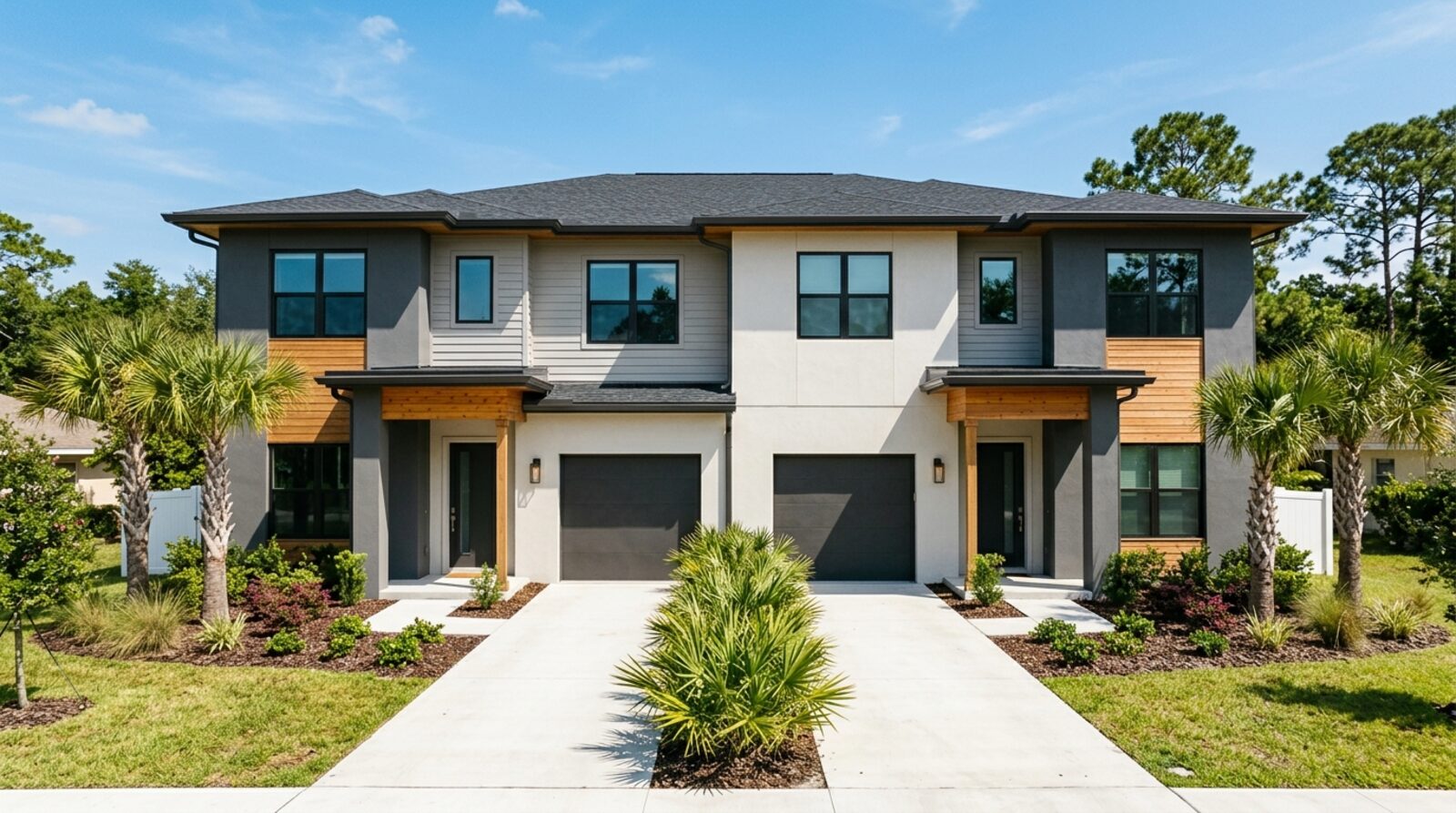
The answer isn't just climate, though the comparison to Mexico City's altitude and northern Mexico's heat matters. Florida's draw for Mexican buyers is structural.
Texas — historically the top US destination for Mexican real estate investment — passed laws restricting foreign ownership of real property, targeting buyers from designated countries. Florida has no such restriction. More practically, Florida's no-income-tax environment, strong Latin American community infrastructure (particularly in South Florida and Orlando), and direct flight connections to Mexico City, Monterrey, and Guadalajara make it operationally easy to manage a US property from Mexico.
The peso volatility of 2024 — the dollar hit 20.87 pesos after the Sheinbaum election, up from 17 pesos earlier that year — triggered a significant surge in interest in US dollar-denominated real estate. Google searches for "Miami real estate" and "Florida real estate" spiked from Mexico in June 2024. That interest has held. At a May 2026 rate of approximately 17.25 pesos per dollar, the peso has recovered substantially, which actually makes now a better moment to convert than the crisis peak.
The Carrying Cost Reality
On a $550,000 home in Orange County — a reasonable mid-range target for Mexican buyers in Dr. Phillips or Lake Nona — the annual carrying cost looks like this:
- Property taxes: $5,500–$8,000/year. Non-residents do not qualify for Florida's homestead exemption, which removes up to $51,411 of assessed value (2026) for residents.
- Homeowners and wind insurance: $3,500–$6,500/year. Florida premiums have risen sharply since 2022; get quotes based on actual construction year and roof age.
- Property management or caretaking: If you're not in Florida full-time, plan for either a full-service property manager (8–12% of gross rental income for long-term rentals, 15–25% for STR) or a baseline caretaker at $150–$300/month.
Total carrying cost before mortgage: $11,000–$18,000 per year. At 17.25 pesos per dollar, that's roughly MX$190,000–MX$310,000 annually. Run that number in pesos at the exchange rate you plan to use for funding before you fall in love with a listing.
Estate Tax Exposure — No Treaty Exists
This is the section most Mexican buyers skip. I'm going to be direct: skipping it is a serious financial error.
The United States imposes a federal estate tax on US-situs assets owned by non-resident aliens at death. The exemption for non-resident aliens is $60,000 — compared to approximately $13.6 million for US citizens and residents in 2026. On a $550,000 Florida property held personally by a Mexican national, roughly $490,000 is exposed to federal estate tax at graduated rates up to 40%. That's a potential liability of close to $200,000 that your heirs would owe the IRS.
Unlike buyers from the United Kingdom, Australia, or several European countries, Mexican nationals have no estate tax treaty with the United States. The US-Mexico Income Tax Convention covers income taxes — dividends, interest, business income. It does not cover estate or gift taxes. Mexico does not impose an estate tax itself, so no bilateral estate treaty exists.
The standard solution is to hold the property through a US LLC or an irrevocable foreign trust — structures that remove the Florida property from the owner's personal US-situs estate and eliminate or substantially reduce the exposure. This must be structured before closing by a US estate attorney with Mexico/US cross-border experience. It cannot be undone after the fact without a taxable transfer.
I've seen clients learn about this issue after closing. It's one of the most expensive mistakes a foreign buyer can make in a Florida transaction. Address it first.
FIRPTA — The Withholding That Surprises People at Closing
When you eventually sell, FIRPTA (Foreign Investment in Real Property Tax Act) requires the buyer's title company to withhold 15% of the gross sale price and remit it directly to the IRS. On a $550,000 sale, that's $82,500 withheld at closing — regardless of what you originally paid, regardless of your actual gain.
You get it back — but only after filing a US non-resident return (Form 1040-NR), which takes 6–12 months. The IRS refunds the excess over your actual capital gains tax liability. If you held the property for more than a year and your actual gain is $100,000, the tax at long-term capital gains rates might be $15,000–$20,000 — and you'd receive $60,000+ back.
The process is manageable but requires a cross-border CPA who files Form 1040-NR returns for foreign national property owners. Do not attempt to handle this with a Mexican accountant who doesn't have US filing experience.
Financing: ITIN Loans vs. Foreign National Programs
Many Mexican buyers have an ITIN (Individual Taxpayer Identification Number) — issued by the IRS to individuals with US tax obligations who aren't eligible for a Social Security number. If you have rental income, business income, or prior US tax filings, you likely have one. An ITIN opens up better financing options than a pure foreign national program:
- ITIN mortgage programs: Some lenders will treat ITIN borrowers similarly to domestic buyers — potentially 20% down, standard documentation process, better rates.
- Foreign national mortgage programs: For buyers without an ITIN or US tax history. Expect 25–30% down, income documentation via certified CPA letter and bank statements, foreign credit references, and 6–12 months of mortgage reserves. Rates typically run 0.5–1% above conventional.
- DSCR loans: For investment properties, loan qualification based on the property's rental income rather than your personal income. Useful for business owners with complex income structures.
In practice, approximately 68% of Latin American international buyers in Florida pay cash. If that describes you, it simplifies the transaction significantly and makes offers more competitive. Sellers and title companies treat cash offers differently.
If you're financing, the peso-to-dollar conversion timing matters. At 17.25 pesos per dollar in May 2026, a $550,000 purchase costs approximately MX$9.49 million. At the 2024 peak of 20.87 pesos, the same purchase would have cost MX$11.48 million. That's nearly MX$2 million in currency risk on a mid-range purchase. Work with a currency specialist, not a retail bank, on the conversion.
Where Mexican Buyers Land in Orlando

South Florida — Miami, Brickell, Coral Gables — attracts the highest-dollar Mexican buyers and those prioritizing the established Latin American social infrastructure of Miami's financial district. For buyers choosing Central Florida, the pattern is more specific.
Dr. Phillips is where I see the largest concentration of Mexican buyers in the Orlando market. The community has a long-established international buyer base, strong public schools (Dr. Phillips High School consistently ranks among Orange County's best), and a practical position between I-4, Sand Lake Road, and the Florida Turnpike. Many Mexican business owners buying here travel frequently — the 20-minute drive to Orlando International Airport with direct Aeromexico and Volaris service to Mexico City matters.
Lake Nona attracts buyers who want newer construction and a master-planned community environment. The USTA National Campus, Medical City cluster, and proximity to major employers make it a strong long-term hold — which matters to buyers who view this as a capital asset, not just a house. Entry prices start around $450,000 for single-family and run well above $1M for larger lake-view homes.
Windermere and the Butler Chain of Lakes appeal to buyers in the $700K–$1.5M+ range who want larger lots, lakefront access, and the particular prestige of Orlando's established luxury corridor. Several Mexican buyers I've worked with have been drawn here by the combination of privacy, quality of construction, and proximity to International Drive without being in the tourist zone.
For buyers specifically prioritizing school enrollment, Lake Nona's school feeds (Innovation Middle, Lake Nona High) and Dr. Phillips' chain are both strong options. Buyers with university-age children often look at Oviedo, near UCF.
HOA Rules and Rental Restrictions
If you plan to rent the property — either seasonally while you're in Mexico or as a long-term investment — read the HOA CC&Rs before making an offer. Florida rental rules are governed at the community level, not city-wide. A residential community in Dr. Phillips may require minimum 6-month leases; a community two miles away may allow monthly rentals; a third may prohibit all rentals.
The Disney vacation rental corridor (Reunion Resort, Champions Gate, Davenport) explicitly permits short-term rentals and is structured as an investment vehicle — but it's a different product, a different use case, and a different neighborhood character than the residential communities that attract Mexican lifestyle buyers. Don't mix the two strategies.
Pull the CC&Rs during due diligence. Your agent should flag this; the title company will not.
Property Management Is Not Optional for Absentee Owners
If you're spending eight or nine months a year in Mexico with a Florida property sitting empty, you need a minimum of a quarterly caretaking check — hurricane shutter deployment, A/C maintenance, pest control, lawn care. For buyers who plan to rent the property while they're away, full-service property management is not optional.
For long-term rentals (12-month leases), management runs 8–12% of monthly rent. For short-term or seasonal rentals where allowed, 15–25% of gross revenue. On a property generating $2,800/month in long-term rent, that's $2,700–$4,000/year in management fees — a real budget line, but the cost of running an investment from across the Gulf of Mexico.
Get the Right Professionals Before You Make an Offer
Four people need to be in place before you go under contract:
- A US estate attorney with Mexico/US cross-border experience — to structure the LLC or trust before closing. Not a general Florida estate planning attorney; not a Mexican notario. Someone who specifically handles foreign national property ownership and knows the estate tax exposure.
- A cross-border CPA — to handle FIRPTA planning, Form 1040-NR filing, and ongoing rental income reporting if applicable. Must understand both Mexican and US tax obligations.
- A Florida Realtor who works with Latin American buyers — who knows which communities have established Mexican and broader Latin American buyer networks, which HOAs have rental restrictions, and which neighborhoods fit a household's actual use pattern.
- A mortgage specialist or foreign national lending contact — whether you're pursuing an ITIN program, a foreign national loan, or want to know your options before committing to cash.
At MaxLife Realty, I work with Mexican buyers regularly. I can connect you with attorneys and CPAs experienced in this specific transaction structure. Reach out to start the conversation.
Making Orlando your US base long-term? The Complete Orlando Relocation Guide covers Florida's income tax advantages, neighborhood comparisons, and what the transition looks like for buyers coming from Mexico.
How to Buy Florida Real Estate as a Mexican Citizen
What Mexican nationals need to know before buying in Florida — dollar-denominated wealth protection, estate tax exposure without a treaty, FIRPTA withholding, ITIN versus foreign national financing, ownership structure, and the best Orlando neighborhoods for Mexican buyers.
Step 1
Understand What's Actually Driving This Purchase
Before running numbers, be clear about what you're actually buying. Mexican buyers in Florida are mostly not buying vacation homes — they're buying dollar-denominated stability, a physical US base, and a place where children can attend school without the security concerns that affect parts of Mexico. That goal requires a different type of property (stable residential neighborhood, good schools, manageable carrying cost) versus the STR investor buying near Disney. Get the goal clear first; it determines every other decision including neighborhood, ownership structure, and financing.
Step 2
Quantify Your True Annual Carrying Cost
On a $550,000 home in Orange County: property taxes run $5,500–$8,000 per year — non-residents do not qualify for Florida's homestead exemption, which saves Florida residents roughly $500–$1,000/year in taxes. Homeowners and wind insurance runs $3,500–$6,500/year depending on construction year, roof age, and flood zone. If you're not in Florida full-time, add property management or caretaking at $150–$300/month minimum, or full-service property management at 8–12% of gross rental income if you plan to rent it out long-term. Total annual carrying cost on a $550,000 home runs $11,000–$18,000 before mortgage. Run that number in pesos at your expected conversion rate. At 17.25 pesos per dollar, $15,000/year in carrying costs is roughly MX$258,750 annually.
Step 3
Address Estate Tax Exposure Before You Close — There Is No Treaty
This is the most important step and the one most commonly skipped. The United States taxes non-resident aliens on US-situs assets at death. The standard federal exemption for non-resident aliens is $60,000 — compared to approximately $13.6 million for US persons in 2026. On a $550,000 Florida property held personally by a Mexican national, approximately $490,000 is potentially exposed to federal estate tax at graduated rates up to 40%. Unlike UK or Australian buyers, Mexican nationals have no estate tax treaty with the United States — the US-Mexico tax treaty is an income tax treaty only. The standard solution is to hold the Florida property through a US LLC or irrevocable foreign trust, removing it from the owner's personal US-situs estate. This must be structured by a US estate attorney experienced in Mexico/US cross-border transactions before closing. It cannot be fixed retroactively without a taxable transfer. Do not buy Florida real estate as a Mexican national without addressing this first.
Step 4
Understand FIRPTA When You Eventually Sell
FIRPTA (Foreign Investment in Real Property Tax Act) requires the buyer's title company to withhold 15% of the gross sale price and remit it to the IRS when a foreign national sells US real estate. On a $550,000 sale, that is $82,500 withheld at closing and submitted to the IRS — regardless of what you paid or what your actual capital gain is. You file a US non-resident return (Form 1040-NR) and the IRS issues a refund for the excess over your actual tax liability. The process takes 6–12 months. One caveat: if the property is held through an LLC that is treated as a disregarded entity for US tax purposes, FIRPTA still applies. A properly advised CPA can help structure the sale to minimize withholding. FIRPTA is not avoidable for foreign nationals — but it is manageable.
Step 5
Choose Between ITIN Financing and Foreign National Loans
Many Mexican buyers have an ITIN (Individual Taxpayer Identification Number) because they have US rental income, business income, or prior tax filings. If you have an ITIN and documented US tax history, some lenders will treat you similarly to a domestic borrower — better rates, lower down payment requirements (sometimes 20%), and more loan programs available. Without an ITIN or US tax history, foreign national mortgage programs are available through specialist lenders. Expect 25–30% down payment, reserves of 6–12 months of mortgage payments, and rates 0.5–1% above conventional. You'll document income via certified CPA letter, bank statements, and foreign credit references. DSCR loans (Debt Service Coverage Ratio) are also available for investment properties — the loan is sized on rental income rather than your personal income, which simplifies qualification for business owners with complex income structures. Roughly 68% of Latin American international buyers pay cash. If that's your situation, it eliminates the financing complexity entirely and makes your offer more competitive.
Step 6
Decide on Neighborhood Based on Your Actual Use Pattern
Mexican buyers in Orlando concentrate in two areas for good reason. Dr. Phillips offers an established international buyer community, strong A-rated public schools (Dr. Phillips High School, Chain of Lakes Middle), proximity to I-4 and the Florida Turnpike, and a mature residential character that reads as stable to families making a long-term commitment. Lake Nona is newer construction, a master-planned community with a town center, and has the added anchor of USTA and the Lake Nona Medical City cluster — which matters to buyers who want long-term appreciation backed by real employment, not just tourism. Both neighborhoods are 20–25 minutes from Orlando International Airport — practical for buyers flying Mexico City–MCO routes (Aeromexico and Volaris both serve this corridor). The Butler Chain of Lakes and Windermere communities appeal to buyers in the $700K–$1.5M range who want larger lots and lake access. For buyers with children planning to attend University of Central Florida, Oviedo and Waterford Lakes offer proximity to campus at a lower price point.
Step 7
Build Your Cross-Border Professional Team Before You Search
You need four people in place before you make an offer: a US real estate attorney with specific Mexico/US cross-border experience (for ownership structure and estate planning — not just title review); a cross-border CPA who files returns for Mexican nationals with US rental income; a Florida Realtor who works with Latin American buyers and knows which communities have strong international buyer networks and which HOAs have rental restrictions; and a mortgage specialist if you're financing, whether through an ITIN program or a foreign national loan. At MaxLife Realty, I work with Mexican buyers regularly and can connect you with attorneys and CPAs experienced in this specific transaction type. Contact me to start the conversation.
The next step
Thinking about a move?
Whether you're two months out or two years out, the right information now saves real money later. Let's talk — no pressure, no pitch.