· Updated · 8 min read· By Ryan Solberg, Broker #BK3354351
How to Price Your Home in Florida: A Seller's Guide to Setting the Right Asking Price
Pricing a home correctly is the single most important decision a seller makes. Set it too high and the home sits; too low and you leave equity on the table. Here's how to price accurately in the Florida market.
Watch the video
Pricing is the highest-stakes decision in a home sale. Get it right and you sell quickly at a strong price. Get it wrong and you either leave equity on the table or sit on the market until the days-on-market stigma forces a reduction — often below where you'd have sold on day one.
Here's how to think about pricing strategically.
The market is always right
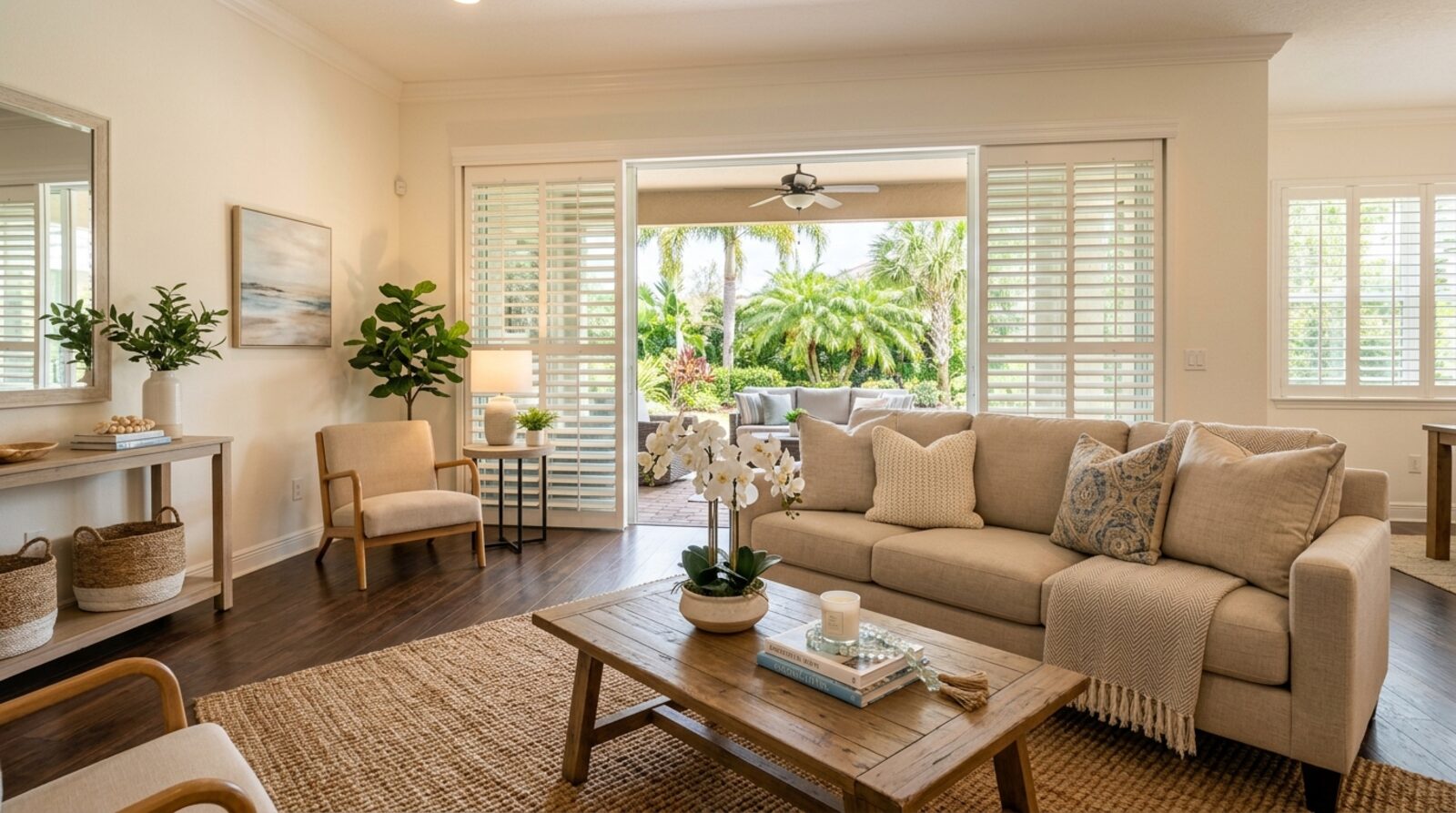
Before anything else: understand that the market sets home values, not sellers. You don't get to decide what your home is worth — the market does, through the mechanism of what buyers are willing to pay. Your role as a seller is to price at market value, market effectively, and let buyers compete.
This matters because emotional attachment to a home creates systematic overpricing bias. Sellers remember what they paid, what they invested in renovations, and what they've heard neighbors' homes sold for. These inputs are real but frequently lead to prices above what the current market supports.
The 2-week window
Newly listed homes experience peak buyer attention in the first 10–14 days on market. Active buyers who have been monitoring the market for weeks or months receive instant notifications when a new home matches their criteria — they show up in force, make offers, and competition is highest.
This 2-week window is not recoverable. If your pricing is correct, you'll receive strong interest, potentially multiple offers, and maximum leverage. If your pricing is high, active buyers self-select out, showings are sparse, and the home begins accumulating days-on-market stigma that signals to subsequent buyers that something is wrong.
This is why pricing correctly from day one matters more than any other single decision.
How agents determine market value
Comparable sales (the foundation)
The most reliable pricing input is recent closed sales of similar homes — within the last 90–180 days, similar square footage, bedrooms, condition, and location. Your agent compares your home to these comps and makes adjustments for differences:
| Feature difference | Typical adjustment |
|---|---|
| Pool vs no pool | +$15,000–$30,000 depending on market |
| Updated kitchen vs original | +$10,000–$25,000 |
| Extra bedroom | +$5,000–$15,000 depending on size |
| Better lot (corner, cul-de-sac, preserve-backing) | +$5,000–$15,000 |
| Newer roof (less than 5 years) vs aging roof | +$5,000–$10,000 |
| HOA community vs no HOA | Adjusts both ways based on what buyers pay |
These adjustments are judgment-based, not algorithmic — which is why experienced local agents provide more accurate CMAs than algorithmic tools.
Active competition
Your home isn't priced in isolation — it's priced relative to what buyers can choose instead. Your agent will show you the active competing listings: what's available in your neighborhood and price range, how your home compares on square footage, condition, and features, and what price points the competition has established.
If three comparable homes are priced at $480,000–$495,000 and have been sitting for 60+ days, that's market feedback that those prices are too high. If two similar homes just went under contract at $470,000 within 10 days, that's the market telling you what buyers will pay.
Expired listings
Expired listings — homes that went under contract, then sat, then expired — are the market's explicit rejection. If a home expired at $510,000 and the market absorbed similar homes at $470,000–$480,000, that's a clear data point about the price ceiling.
The psychology of price points
Buyers search by price ranges — typically in $25,000 or $50,000 increments. A home priced at $505,000 misses buyers searching up to $500,000. A home priced at $499,900 captures them.
Specific Florida considerations:
- $500K threshold: Significant buyer pool cuts off here for first-time buyers and FHA buyers (the 2026 FHA limit across Central Florida is $541,287)
- $750K threshold: Approaching the conforming loan limit ($832,750 loan amount in 2026, per FHFA) — jumbo loan requirements change the buyer pool above it
- $1M threshold: Psychological barrier with meaningful buyer pool impact
Price on the right side of these thresholds when you're close. Pricing at $498,000 instead of $505,000 can double your buyer pool.
When pricing is especially difficult
Unique homes: Custom builds, unusual floor plans, or distinctive features make comp analysis harder. If your home has features that no other recent sale in the area has, there's genuine uncertainty in pricing. In these cases, a professional appraisal ($400–$700) may be worth doing before listing to establish a defensible value.
Rapidly changing markets: In a market where values have shifted quickly (up or down), sales from 6 months ago may not accurately represent current value. Prioritize very recent sales and pending contract data.
Minimal recent activity: Some neighborhoods have very few sales. If comparable sales are scarce, your agent needs to cast a wider net — similar neighborhoods, similar streets, similar price ranges — while applying careful adjustments.
The price reduction trap
Price reductions are expensive. Here's why:
Reduced buyer urgency: New listings generate the most traffic. A price reduction generates a secondary burst — but smaller and often from buyers who've already seen the home and passed.
Days on market stigma: Every day on market raises the question "what's wrong with this house?" After 30 days in a typical market, buyers start assuming there's a problem, even if the only issue was original overpricing.
Lower final sale price: Research consistently shows that homes that start high and reduce often sell for less than correctly-priced homes would have achieved. The price reduction signals seller motivation in a way that invites lower offers.
The cost of overpricing is real, measurable, and almost always larger than sellers expect.
Seller pricing mistakes to avoid
Pricing based on what you need: What you owe on the mortgage, what you paid in 2019, or what you need for your next purchase is irrelevant to market value. The market doesn't care about your needs.
Pricing based on neighbor conversations: "My neighbor said their home would sell for $520,000" — these informal valuations are typically optimistic and may reflect a moment in the market that's passed.
Pricing based on Zestimate: Algorithmic estimates can be materially off in specific neighborhoods. Use them for context, not as the basis for your list price.
Adding renovation costs to price: $40,000 spent on a kitchen renovation doesn't add $40,000 in value if the market doesn't support that premium. Ask your agent what specific updates add value in your specific market before investing.
Starting high "to test the market": The 2-week window doesn't wait for you to test — you either get it right from day one or you miss the best moment.
The right process
- Request a CMA from two or three local agents (compare their analysis, not just their suggested price)
- Review the comp analysis: are the comparables truly similar to your home?
- Walk through active competing listings — ideally in person, to understand what buyers see
- Establish a pricing range based on the comps, not on a number you want to achieve
- Set the list price within that range based on your timeline and market conditions
- Commit to a price reduction trigger in advance — agree on a specific DOM threshold and reduction amount before listing
Ryan Solberg provides detailed, honest Comparative Market Analyses for sellers throughout Central Florida. If you want to know what your home will actually sell for — not what you want to hear — start with a free home valuation and contact Ryan for a no-obligation consultation.
Frequently asked questions
- What is a Comparative Market Analysis and how is it used?
- A Comparative Market Analysis (CMA) is a systematic review of recently sold homes comparable to yours — similar size, age, condition, and location — to establish a market value range for your property. A good CMA examines: recent closed sales (typically the last 90–180 days), active competing listings (what buyers can choose instead of your home), pending sales (indicating demand), and expired listings (what the market rejected as overpriced). The agent applies adjustments for differences between comparables and your property — a pool, an extra bathroom, updated kitchen, superior lot — to arrive at a market value range. Price within that range based on your timeline and market conditions.
- How accurate are online home value estimates like Zillow's Zestimate?
- Online automated valuation models (AVMs) like Zillow's Zestimate or Redfin's Estimate are algorithmic and can be meaningfully inaccurate for specific properties. They work best in neighborhoods with high transaction volume, consistent lot sizes, and relatively uniform construction. They work poorly on: unique or custom homes, properties with unusual features (waterfront, large lots, significant upgrades), HOA communities where fees significantly affect value, and neighborhoods where recent renovations or market shifts haven't been captured yet. AVMs are useful for a rough sense of range — but sellers should not list based on an AVM alone.
- Should I price high to 'leave room to negotiate'?
- This is the most common pricing mistake sellers make in Florida — and one of the most expensive. In normal market conditions, buyers who have been actively watching the market know value immediately. An overpriced home gets fewer showings, fewer offers, and sits on the market. After 30–45 days, buyers wonder what's wrong with the property. A price reduction signals weakness and often attracts lower offers than a correctly-priced listing would have generated on day one. The research consistently shows that correctly-priced homes sell for more in less time than homes that start high and reduce. Price right from day one.
- How does the Florida market affect pricing strategy in 2026?
- Florida's 2026 market is balanced in most Central Florida submarkets — not the frenzied seller's market of 2021–2022, but not a buyer's market either. Well-priced homes in desirable communities still attract multiple offers; overpriced or condition-challenged homes sit. Sellers with realistic pricing expectations and well-prepared homes are moving inventory in 2–4 weeks. Sellers anchored to 2022 peak prices or hoping to fund their next purchase with an above-market price are accumulating days on market. The key adjustment for 2026: buyers have more options and more negotiating leverage than 2 years ago.
The next step
Thinking about a move?
Whether you're two months out or two years out, the right information now saves real money later. Let's talk — no pressure, no pitch.