· 9 min read· By Ryan Solberg, Broker #BK3354351
Gated Communities in Orlando FL: Complete 2026 Buyer's Guide
Central Florida has hundreds of gated communities — from guard-gated estates on the Butler Chain to staffed entry HOA communities near Disney. Here's how to evaluate them and what to expect.
Central Florida's gated community landscape ranges from true luxury estates in guard-gated enclaves to modest HOA communities with keypad entry on a perimeter road. Understanding the difference — and what you're actually paying for — is essential before you add "gated" to your search filter.
The two categories of gated communities
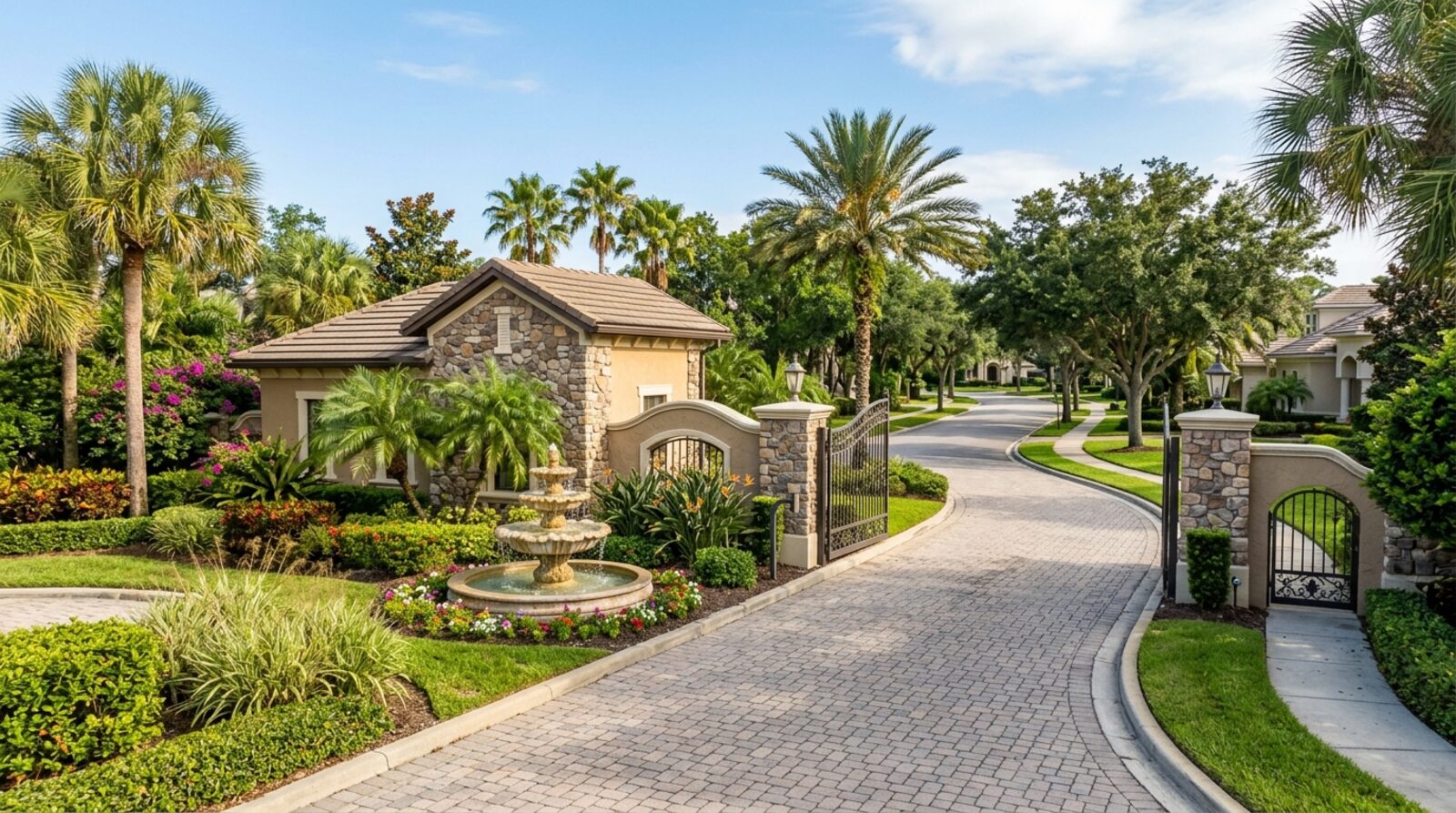
Guard-gated (staffed entry)
These communities have a staffed guardhouse — 24 hours a day, 7 days a week, or at minimum during peak hours. Guards log visitor information, manage guest access, and provide a real human presence at the entry point. This is the category buyers associate with maximum prestige and security.
Central Florida's guard-gated communities include:
- Isleworth (Windermere): Among Florida's most exclusive — Tiger Woods owned here. Private golf course. $3M–$30M+. Membership required.
- Golden Oak at Walt Disney World: Luxury community on Disney property with Golden Oak Club membership. $2.5M–$15M+.
- Keene's Pointe (Windermere): Butler Chain of Lakes access, lakefront lots, private golf. $800K–$3M+.
- Alaqua (Lake Mary/Heathrow): Natural setting, semi-rural feel, custom homes. $1M–$3M+.
- Bella Collina (Montverde): Rolling hills (unusual for Florida), Nick Faldo-designed golf course. $700K–$5M+.
- Lake Nona Golf & Country Club: Private golf with Lake Nona's Medical City adjacency. $1.5M–$10M+.
- Reunion Resort: Near Disney, golf villas and estate homes, resort programming. $400K–$2M+.
Automated gate-gated (keypad/card entry)
These communities have a gate and perimeter fence, but entry is via keypad, card reader, or phone-based app — no staffing. This is the most common form of "gated" in Central Florida, covering hundreds of communities at accessible price points.
The gate does provide a real barrier to casual entry and logs visitor patterns in modern systems. But it's fundamentally a deterrent and a community identifier, not a staffed security operation.
What the gated premium actually buys
When buyers pay a premium for a gated community, they're typically paying for several things simultaneously:
Perceived security and privacy: Reduced drive-through traffic, logged visitor access, and a psychological barrier. The actual crime reduction data for gated communities is mixed — studies show modest reductions in property crime, particularly vehicle break-ins and package theft, but not significant reductions in residential burglary by determined actors.
Community exclusivity: Gates create a defined "inside" and "outside." This social signaling matters to many buyers and drives the premium as much as the functional security benefit.
HOA-funded amenities: Guard-gated communities typically have robust HOA dues that fund the gate operation plus other amenities — resort pools, fitness centers, social programming, landscaping. You're often paying for the community as a whole, not just the gate.
Insurance considerations: Some insurance carriers offer modest discounts for gated communities — typically 3–8% — due to reduced vehicle traffic and deterrence effects. This is real but not dramatic.
HOA fees in gated communities
Costs vary significantly by community type:
| Community Type | Monthly HOA Range | What's Included |
|---|---|---|
| Basic automated gate | $150–$400/month | Gate maintenance, common areas, landscaping |
| Staffed gate, standard amenities | $400–$900/month | Guard, pool, fitness, common area maintenance |
| Full-service club community | $900–$2,500+/month | Guard, club membership, golf access, social programming |
| Ultra-luxury (Isleworth, Golden Oak) | $2,000–$5,000+/month | Full-service club, concierge, extensive amenities |
CDD fees: Many newer gated communities also have CDD (Community Development District) fees — infrastructure bonds that appear as a separate line on your property tax bill. CDD fees typically add $2,000–$6,000 per year on top of HOA dues. Research whether your target community has a CDD before making assumptions about total carrying costs.
Guest and rental restrictions
Gated communities often have more restrictive guest and rental policies than open neighborhoods. Before purchasing, understand:
Guest access: Most gated communities allow residents to add guests to an approved list. Some require guest registration through a resident portal. Visitors who aren't pre-approved must stop at the gate and wait for resident authorization — which affects Amazon deliveries, contractors, rideshare pickups, and family visits.
Short-term rental (STR) restrictions: Many gated communities explicitly prohibit Airbnb or VRBO rentals. If you want STR income flexibility, this is a critical filter — many of Central Florida's most desirable gated communities prohibit short-term rentals.
Long-term rental restrictions: Some communities limit the percentage of homes that can be rented out or impose minimum lease terms (6 months, 1 year). This affects resale flexibility if you need to relocate before you want to sell.
Architectural review and rules
Guard-gated and premium gated communities almost universally have architectural review committees (ARCs) that govern exterior modifications:
- Paint colors require ARC approval
- Landscaping changes require approval
- Adding/modifying fences, pools, or structures requires approval
- Vehicle restrictions (RVs, commercial vehicles, boats) are common
- Holiday lighting and decoration timing may be governed
These rules protect community aesthetics and property values — but they also constrain your ability to personalize your home. Review the community's CC&Rs (Covenants, Conditions & Restrictions) before purchasing to ensure you can live with the restrictions.
What to check before you buy
HOA financials: Request the last two years of meeting minutes, the current reserve study, and the current budget. Look for: underfunded reserves (a warning sign for future special assessments), pending litigation, recent special assessments, and the community's track record of maintaining amenities.
Gate infrastructure condition: For older gated communities, ask about gate system age and pending upgrades. Gate system replacement or security upgrades can trigger special assessments.
Pending changes: Some communities are transitioning from automated to staffed gates (or vice versa) — understand what the community you're buying into will look like in 2–3 years.
Insurance: Get homeowners insurance quotes before contracting, not after. Some gated communities with older infrastructure or unusual characteristics may affect your options.
Ryan Solberg has represented buyers in Isleworth, Keene's Pointe, Alaqua, Golden Oak, Bella Collina, and dozens of gated communities throughout Central Florida. Evaluating what a community's gate and HOA structure actually delivers — versus what the listing says — is part of buyer due diligence. Connect before you make an offer in any community you're not familiar with.
Frequently asked questions
- What are the best gated communities in Orlando?
- Central Florida's most prestigious guard-gated communities include Isleworth (Windermere, $3M–$30M+, private golf), Golden Oak at Walt Disney World (on Disney property, $2.5M–$15M+, club membership required), Keene's Pointe (Windermere, Butler Chain access, $800K–$3M), Alaqua (Lake Mary/Heathrow area, $1M–$3M+), and Bella Collina (Montverde, golf course, $700K–$5M+). Each has distinct character, pricing, and lifestyle. Less exclusive but highly regarded gate communities include Lake Nona's Medical City-adjacent neighborhoods, Harmony in Osceola County, and numerous master-planned communities throughout Orange, Seminole, and Osceola counties.
- Do gated communities increase home value?
- Yes, but the premium varies significantly by community type. Guard-gated communities with club amenities (golf, fitness, social programming) command the strongest premiums — typically 15–40% over comparable non-gated homes in the same market. Basic automated gate communities (keypad/card entry, no staffing) add a more modest premium of 5–15%. The premium is driven by perceived security, community exclusivity, and the lifestyle amenities that often accompany gating — not the gate itself.
- What are the downsides of buying in a gated community?
- Gated communities come with trade-offs: higher HOA fees (to fund gate staffing and infrastructure), guest inconvenience (visitors must check in, delivery services may be limited), stricter architectural review and use restrictions, potential for gate malfunction delays, and sometimes lower liquidity in thin markets (fewer buyers meet the income/HOA threshold). Review the community's rules, meeting minutes, and financial reserves before purchasing — some gated communities have underfunded reserves or pending special assessments.
- What questions should I ask about a gated community before buying?
- Key questions: What is the total monthly HOA (master + sub-community)? Are there CDD (Community Development District) fees on top of HOA? What are the guest/rental/short-term rental policies? Is the gate staffed 24/7 or automated? What amenities does the HOA fee cover? Are there capital contribution or initiation fees at closing? Are there pending special assessments? How are gate access credentials managed for buyers? Review the last two years of HOA meeting minutes and the reserve study for deferred maintenance.
The next step
Thinking about a move?
Whether you're two months out or two years out, the right information now saves real money later. Let's talk — no pressure, no pitch.