· Updated · 8 min read· By Ryan Solberg, Broker #BK3354351
Florida Homeowners Insurance Crisis: What Buyers Need to Know in 2026
Florida's homeowners insurance market has fundamentally changed — insurers have exited, premiums have surged, and roof age requirements have created new buyer challenges. Here's how to navigate it in 2026.
Florida's homeowners insurance market in 2026 is unlike any other state — and unlike Florida's own market just five years ago. Buyers who don't understand the insurance landscape before purchasing can face costly surprises after closing.
Here's what you need to know.
The Florida insurance market: what happened
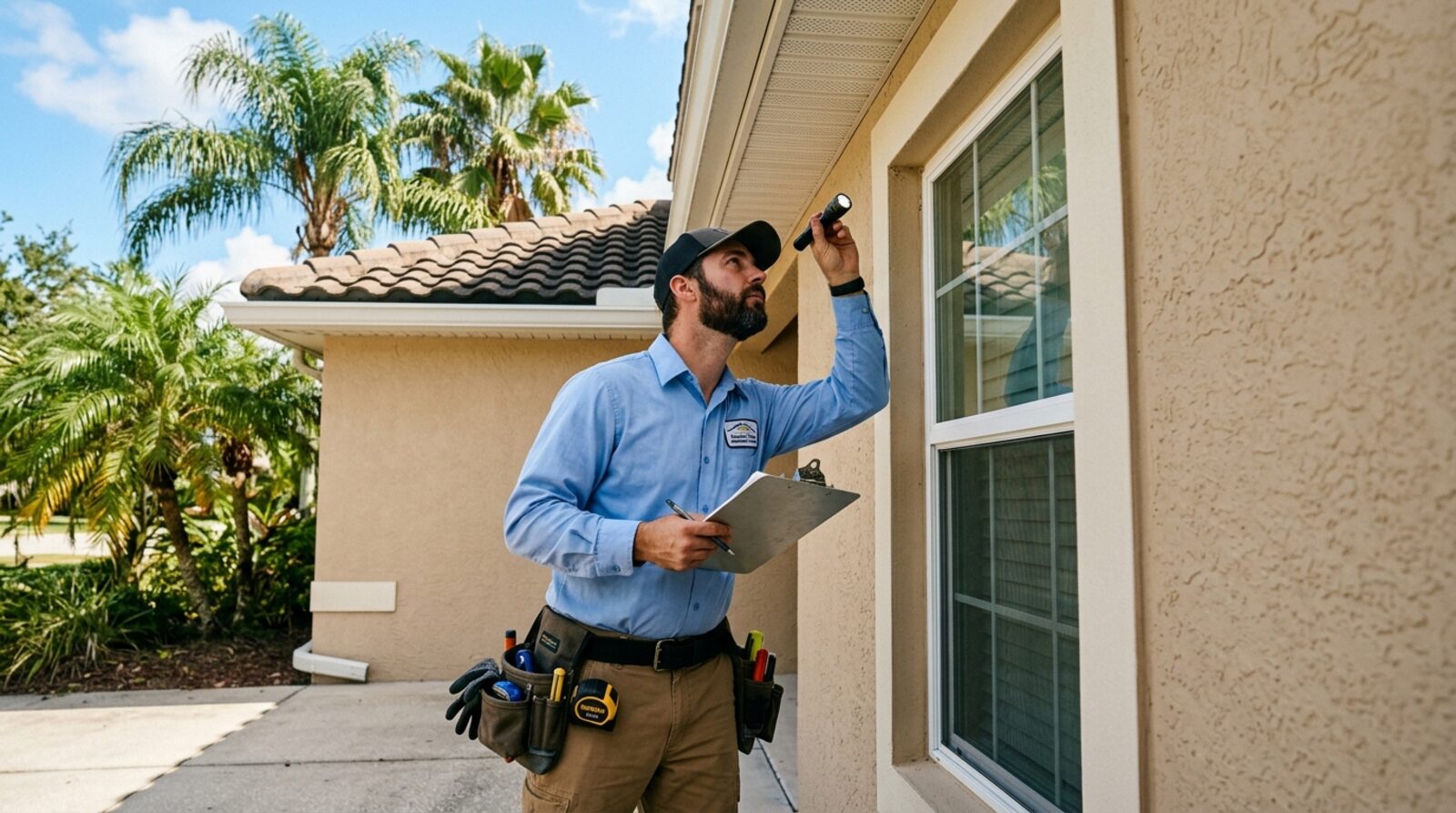
Florida's insurance market crisis is real and structural:
Carrier withdrawals: More than a dozen insurance carriers have either exited Florida entirely or dramatically restricted new policies since 2020. Farmers Insurance, Bankers Insurance, Universal Property and Casualty (in some markets), and others have pulled back significantly.
Rate increases: Remaining carriers have increased premiums by 30–100%+ since 2020 in most Florida markets. Average Florida homeowner premiums now rank among the highest in the nation.
Citizens growth — and reversal: With private carriers exiting, Citizens Property Insurance grew to roughly 1.4 million policies by late 2023 — far beyond its intended "last resort" role. Depopulation has since reversed that: Citizens reported 254,856 policies as of September 18, 2026.
The litigation factor: Florida historically had disproportionate insurance litigation — particularly around roof replacement claims post-storm. Legislative reforms in 2022–2023 have reduced litigation but haven't fully unwound prior years of losses that drove carrier decisions.
The 2026 turn: The market is now moving the other way. The Florida Office of Insurance Regulation reported 20 new property and casualty insurers entering Florida since the reforms (May 2026), state regulators cut 2026 Citizens homeowners multiperil rates by an average of 8.8%, and in September 2026 OIR approved four more private-carrier rate decreases averaging about 7%. Premiums remain high by national standards, so the due-diligence steps below still apply — but shopping your policy is more likely to pay off than it was a few years ago.
Roof age: the controlling variable
If there's one thing buyers in Florida must understand about insurance, it's roof age.
Why roof age matters: Wind damage is Florida's largest insurance risk. Older roofs are more likely to fail in storms and more expensive to replace. Insurance actuaries have priced this aggressively.
Carrier thresholds (approximate, varying by carrier and roof material):
| Roof material | Typical insurance threshold |
|---|---|
| Asphalt shingle | 15–20 years max for many carriers |
| Metal | 20–30 years for most carriers |
| Concrete tile | 25–30 years for most carriers |
| Wood shake | Very limited acceptance at any age |
Practical impact: A buyer financing a home with a 17-year-old asphalt shingle roof may find that only Citizens will insure it — or that private market options require a new roof as a condition of issuing a policy. This can derail a transaction if the buyer didn't investigate insurance before going under contract.
What to check before making an offer: Have your agent check the permit history for the most recent roof replacement. Ask the seller for documentation. Then check with an independent insurance agent whether the roof age is insurable.
The wind mitigation inspection: the best $150 you'll spend
A wind mitigation inspection documents the construction characteristics of your home that affect wind resistance:
- Roof shape: Hip roofs (all sides slope) provide better wind resistance than gable roofs (two triangular ends) — and carriers price the difference
- Roof deck attachment: How the sheathing is attached to the trusses affects whether the roof system stays intact in a storm
- Roof-to-wall connection: How the roof system connects to the walls — clips vs. wraps vs. single-wraps
- Opening protection: Whether windows and doors have hurricane protection (shutters, impact glass)
The wind mitigation report is submitted to your insurance carrier with your application. The discounts for favorable findings are significant:
- Hip roof vs. gable: 10–30% premium reduction
- Strong roof-to-wall connections: 10–20% reduction
- Impact windows or shutters on all openings: 10–40% reduction
- Combined strong characteristics: Total discounts of 30–60% on the wind portion of the premium
The inspection costs $150. On a $3,000/year insurance premium, a 30% wind mitigation discount saves $900/year. The inspection pays for itself in 2 months.
For sellers: Provide a current wind mitigation report to buyers. It's a concrete financial benefit that makes your home more attractive — especially in the current insurance environment.
The 4-point inspection: what insurance carriers flag
For homes over 20–25 years old, most Florida insurance carriers require a 4-point inspection before issuing a policy. The four systems evaluated:
1. Roof
Age, materials, visible condition. This is the primary variable. A roof reported as 15 years old with 5 years remaining estimated life may trigger a carrier to require replacement before issuing or renewing a policy.
2. HVAC
Age and condition of all heating and cooling equipment. HVAC over 15–20 years old may flag for some carriers. A non-functioning or failing system is a standard flag.
3. Electrical
This is where older Florida homes create the most insurance challenges:
- Aluminum wiring (common in 1960s–1970s construction): Most carriers won't insure, or require a licensed electrician's inspection and remediation first
- Federal Pacific Stab-Lok panels: Flagged by most carriers; some refuse to insure at all
- Zinsco/Sylvania panels: Similarly problematic
- Knob-and-tube wiring: Generally uninsurable
If a home you're considering has any of these electrical components, investigate insurance availability before you're under contract.
4. Plumbing
Pipe materials matter:
- Polybutylene pipes (gray plastic, common 1978–1995): Some carriers refuse to insure; many require documentation of leak history
- Cast iron (older homes): May require inspection for condition
- Copper: Generally accepted
- CPVC / PVC: Generally accepted for supply lines
Citizens Property Insurance: what buyers need to know
Some Florida buyers still end up with Citizens Property Insurance — usually because private options are unavailable for a specific property. What Citizens means for you:
Coverage limitations: Citizens residential policies cap at $700,000 for the dwelling. High-value homes may need to split coverage or find supplemental coverage.
Depopulation program: Citizens actively tries to move policies to private carriers. Your Citizens policy may be non-renewed and replaced by a private carrier offer that you must accept or re-enter the private market. If the private carrier offer is within 20% of Citizens' rate, you're required to take it.
Claims: Citizens handles its own claims — the experience has historically been mixed. In major storm years, Citizens claims processing is heavily loaded.
Eligibility restrictions: Citizens cannot insure properties that a private carrier will insure at a rate within 20% of Citizens. This eligibility is re-evaluated annually.
Flood requirement: Citizens requires flood insurance on personal residential policies with wind coverage in FEMA Special Flood Hazard Areas, and is phasing the requirement in for everyone else by dwelling value — $400,000 and up as of January 1, 2026, and all such policies regardless of zone or value starting January 1, 2027. Budget for a flood policy if Citizens is your fallback.
The insurance check in your buyer's due diligence
Before making an offer on a Florida home, add these insurance checks to your process:
- Ask for the seller's current insurance policy — what carrier, what premium, what coverage
- Check roof age from permits or documentation — estimate insurability before going under contract
- Hire an independent insurance agent to quote before the inspection period ends — this is your due diligence window
- Order a wind mitigation inspection — critical for understanding insurance costs going forward
- Request a 4-point inspection if the home is over 20 years old — this documents what carriers will see
If you can't get affordable insurance, you generally can't get a mortgage. Treat insurance investigation as a tier-one contingency, not an afterthought.
Ryan Solberg works with buyers throughout Central Florida to navigate the insurance landscape during the purchase process. Ask Ryan for a referral to an independent Florida insurance agent experienced in navigating the current market.
Frequently asked questions
- Why is homeowners insurance so expensive in Florida?
- Florida's homeowners insurance market is stressed from multiple converging factors: (1) Hurricane exposure — Florida has the highest hurricane risk of any state, with catastrophic losses in Ian (2022), Idalia (2023), and prior storms; (2) Litigation crisis — Florida historically had disproportionate insurance litigation that drove costs above loss levels; (3) Reinsurance costs — global reinsurers increased costs significantly after large Florida claims; (4) Climate change concerns — models showing increasing intensity of storms have made some insurers exit entirely. The combined effect: dozens of carriers have left Florida since 2020, driving premiums up as the remaining carriers have pricing power in a thinned market.
- What is Citizens Property Insurance and should I use it?
- Citizens Property Insurance Corporation is Florida's state-chartered insurer of last resort — created to provide coverage when private market carriers won't. Citizens has significant coverage limitations compared to private carriers: coverage caps ($700,000 for most residential properties), non-renewal for properties that private carriers will cover at a reasonable rate, mandatory participation in Citizens' depopulation program (where private carriers can take over your policy), and claim handling differences. Citizens is not necessarily bad coverage, but it's designed as a backstop, not a preferred insurer. Many Florida homeowners are on Citizens because private market options are limited or prohibitively expensive.
- How do I get the best insurance rate in Florida?
- Four high-ROI actions for reducing Florida insurance costs: (1) New or recent roof — the single biggest factor; carriers price dramatically for roof age and materials; (2) Wind mitigation inspection ($150) — documents roof construction details that earn discounts on the wind portion of your premium (which dominates in Florida); (3) Hurricane shutters or impact windows — opening protection earns substantial discounts; (4) Working with an independent insurance agent who can quote multiple carriers. Don't use a captive agent for Florida insurance — the market requires comparing across many carriers.
- What is a 4-point inspection and when is it required?
- A 4-point inspection is a limited inspection that evaluates four systems: (1) Roof — age, condition, and materials; (2) HVAC — age and condition of heating/cooling systems; (3) Electrical — panel type, wiring type, and condition; (4) Plumbing — pipe materials and condition. Insurance carriers require 4-point inspections for homes typically over 20–25 years old as a condition of issuing or renewing a policy. The inspection is performed by a licensed inspector and costs $75–$150. Results determine insurability — certain findings (aluminum wiring, knob-and-tube wiring, polybutylene plumbing, older Federal Pacific or Zinsco electrical panels) can make a home difficult to insure.
The next step
Thinking about a move?
Whether you're two months out or two years out, the right information now saves real money later. Let's talk — no pressure, no pitch.