· Updated · 9 min read· By Ryan Solberg, Broker #BK3354351
Florida Homeowners Insurance Guide 2026: What Buyers Need to Know Before Closing
Florida's homeowners insurance market has gone through a crisis — understanding what you're actually buying, what it costs, and how to shop it has never been more important for Florida home buyers.
Florida's homeowners insurance market is not like any other state's. Between hurricane risk, litigation costs, carrier insolvencies, and legislative reforms that are still working their way through the system, Florida buyers in 2026 face an insurance landscape that requires more due diligence than ever.
This guide covers what you actually need to know before you close — not what the general national resources tell you, which rarely applies to Florida's specific situation.
The current state of the market
Between 2021 and 2024, Florida lost numerous private insurance carriers to insolvency or market exit. Remaining carriers raised rates dramatically, tightened underwriting standards, and in some cases stopped writing new business in certain counties or with certain property characteristics.
The December 2022 special session and 2023 legislative session produced reforms intended to stabilize the market — ending one-way attorney fees in insurance litigation, Assignment of Benefits restrictions, and incentives for new carrier entry. In 2026, these reforms are having a measurable effect: the Florida Office of Insurance Regulation reported 20 new property and casualty insurers entering the market since the reforms (May 2026), regulators have been approving homeowners rate decreases, and Citizens depopulation is continuing.
What this means for buyers:
- Insurance must be part of your due diligence — not an afterthought
- Get quotes from multiple carriers before your inspection period expires
- Insurance availability and cost affect affordability as much as the purchase price
- Certain property conditions (aging roof, aluminum wiring, older plumbing) are deal considerations
The 4-point inspection: what it reveals
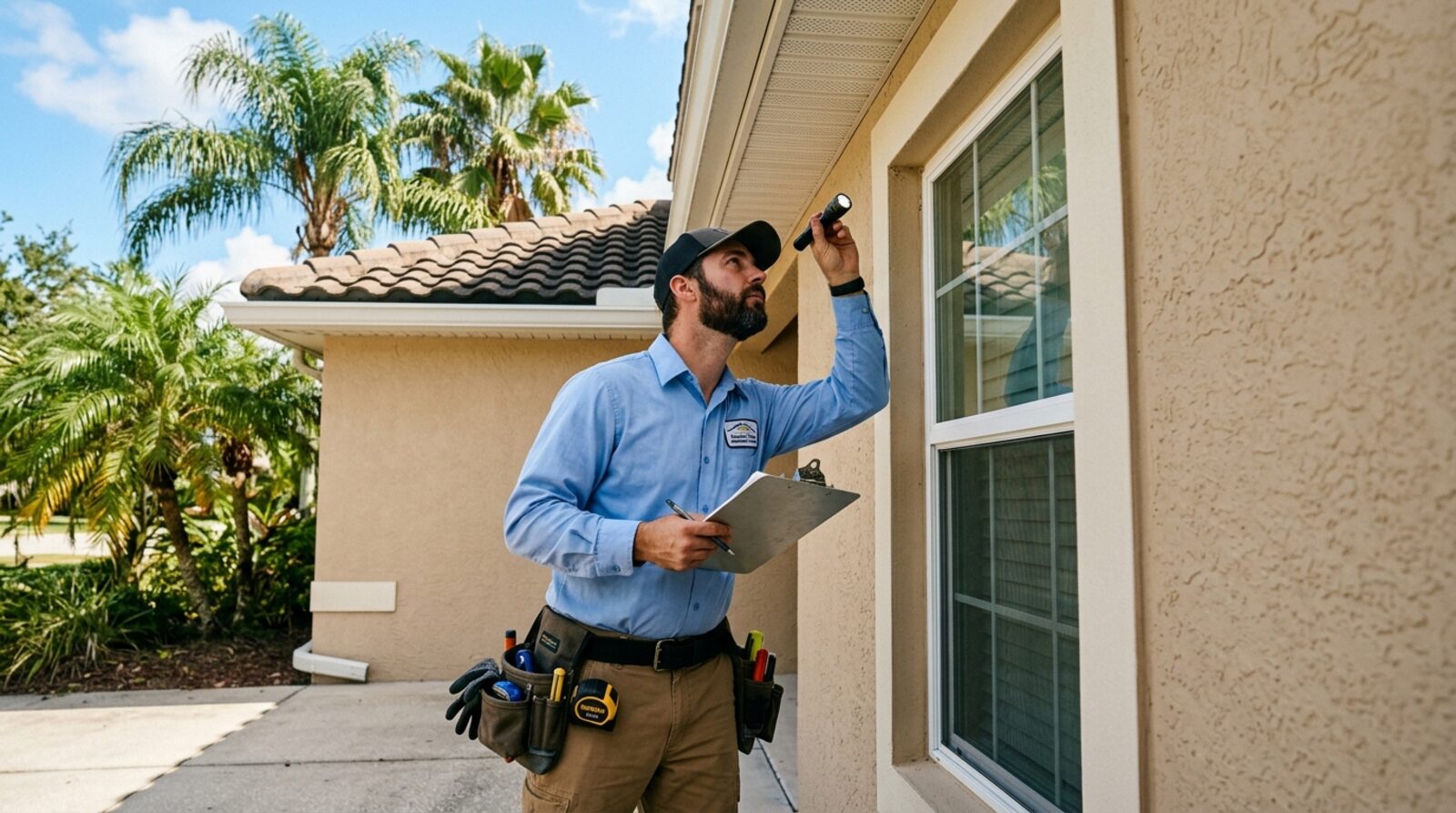
For homes built 25+ years ago (pre-2000 for most underwriting guidelines), carriers require a 4-point inspection before binding coverage. The four points:
1. Roof
- Age and condition of the roof covering
- What material (shingle, tile, metal, flat)
- Any visible damage or deterioration
- Remaining useful life estimate
2. Electrical
- Panel type (Federal Pacific and Zinsco panels are often uninsurable)
- Wiring type (aluminum wiring is a red flag for many carriers)
- Overall condition and any visible hazards
3. Plumbing
- Material type (polybutylene is a major insurance issue — it fails and causes water damage)
- Copper, CPVC, and PEX are generally acceptable
- Water heater age and condition
4. HVAC (Heating, Ventilation, Air Conditioning)
- System age
- Working condition
- Proper installation evidence
Conditions that frequently cause coverage issues or premium spikes:
- Roofs over 15 years old (some carriers cut off at 10–12 years)
- Flat roofs (higher risk rating)
- Aluminum wiring (some carriers will insure with documented updates; others won't)
- Polybutylene plumbing (widely rejected)
- Federal Pacific or Zinsco electrical panels
- Water heaters over 15 years old
If a 4-point reveals problems, you have options: negotiate a price reduction, require seller remediation before closing, or factor remediation cost into your offer. These are not automatic deal-killers, but they require analysis.
Wind mitigation: the premium reducer
A wind mitigation inspection evaluates how well your home withstands wind damage. In Central Florida, hurricane and tropical storm risk makes this inspection particularly valuable.
Factors evaluated:
- Roof shape: Hip roofs (sloped on all four sides) get better ratings than gable roofs
- Roof covering: How was the roof installed? When?
- Roof deck attachment: How are the decking panels connected? More fasteners = better rating
- Roof-to-wall connection: Clips vs. single wraps vs. double wraps — significantly affects credit
- Opening protection: Do windows and doors have impact-rated glass or verified hurricane shutters?
Potential savings: Wind mitigation credits can reduce your premium by 20–60% on Central Florida properties with favorable characteristics. Newer homes (post-2002 building code upgrades) generally have much better wind mitigation profiles than older construction.
Even if the home you're purchasing doesn't have a current wind mitigation report, ordering one during your due diligence period typically costs $100–$150. On a home with good characteristics, the premium savings pay for the inspection in the first month.
Citizens Property Insurance in 2026
Citizens Property Insurance Corporation is Florida's insurer of last resort — a state-run carrier that writes coverage when private market options are unavailable or unaffordable (defined as 20% above Citizens rates for comparable coverage).
In 2026, Citizens is undergoing depopulation: private carriers are "taking out" Citizens policies, transferring them to private insurance. Citizens' policy count fell from about 1.4 million in 2023 to 254,856 as of September 18, 2026. If you're insured by Citizens, you may receive a takeout offer — accepting it is often voluntary, though rates and terms vary.
Citizens eligibility notes for 2026:
- Citizens has a maximum insured value cap for new policies
- Properties within certain distance of the coast may face additional restrictions
- The 20% affordability threshold means Citizens is only available if private market rates are significantly above Citizens rates
- Flood insurance is required on Citizens personal residential policies with wind coverage in a FEMA Special Flood Hazard Area, and for homes outside it with dwelling coverage of $400,000 or more as of January 1, 2026 — and for all such Citizens policies regardless of zone or value starting January 1, 2027
For most Central Florida (Orange, Seminole, Osceola, Lake County) buyers, private market coverage is typically available — Citizens is not the first call. But it remains a legitimate backstop for properties that private carriers are declining.
How to shop homeowners insurance as a buyer
Step 1 — Get your quotes during the inspection period: Don't wait until the week before closing. Insurance is a due diligence item. If a home is uninsurable or affordable only at a cost that breaks your budget, you want to know this before your inspection contingency expires.
Step 2 — Work with an independent agent: Independent insurance agents can quote multiple carriers simultaneously. Direct writers (one company only) can't do this. In Florida's fragmented current market, comparison shopping across 5–10 carriers is standard practice.
Step 3 — Request the 4-point and wind mitigation: Order these at the same time as your home inspection. Some home inspectors include 4-point reports — confirm this before booking.
Step 4 — Compare actual coverage, not just price: Florida policies vary significantly in covered perils, deductibles, and replacement cost vs. actual cash value terms. A cheaper policy that pays actual cash value on a 10-year-old roof is not the same coverage as one that pays replacement cost. Read the declarations page.
Step 5 — Understand separate hurricane deductibles: Most Florida policies have separate deductibles for wind/hurricane damage — typically 2%–5% of the insured value, NOT a flat dollar amount. On a $500,000 home with a 2% hurricane deductible, your deductible for hurricane damage is $10,000. This is standard and expected — just factor it into your emergency fund planning.
Flood insurance: separate from homeowners
Standard homeowners insurance in Florida does NOT cover flood damage. If your home is in a FEMA Special Flood Hazard Area (SFHA / Zone A or AE), flood insurance is typically required by your lender.
Even outside mandatory flood zones, flood insurance is worth evaluating — particularly for homes with any water proximity or low-elevation positions. FEMA's National Flood Insurance Program (NFIP) and private flood carriers both offer coverage. Private flood has become more competitive in Florida.
Check your FEMA flood zone before closing at msc.fema.gov using your property address. If the property is in a flood zone, get a flood insurance quote during due diligence.
Ryan Solberg walks every buyer through the insurance due diligence process before they close. The cost and availability of insurance should influence your offer, your negotiation, and your closing budget — not be discovered the week before settlement. Connect to discuss what you need to know for any specific property you're evaluating.
Frequently asked questions
- How much does homeowners insurance cost in Florida?
- Florida homeowners insurance premiums vary significantly by location, age of home, roof condition, and coverage level. In 2026, Central Florida buyers should budget $2,500–$5,000/year for standard coverage on a $400,000–$600,000 home in non-coastal areas. Older homes with original roofs, aluminum wiring, or galvanized plumbing face higher premiums or difficulty obtaining coverage. Coastal and storm-exposed locations are significantly higher. Get actual quotes during your due diligence period — estimates from national averages are not useful in Florida's current market.
- What is a 4-point inspection in Florida?
- A 4-point inspection examines four systems: roof, electrical, plumbing, and HVAC. Insurance carriers require this inspection for homes typically 25+ years old (thresholds vary by carrier). The inspection report determines insurability — certain conditions (aluminum wiring, polybutylene plumbing, roof over 15–20 years old) can result in coverage refusal or significantly elevated premiums. Order your 4-point and wind mitigation reports at the same time as your home inspection.
- What is a wind mitigation report?
- A wind mitigation inspection evaluates your home's resistance to wind damage — roof shape, roof covering type, roof deck attachment, roof-to-wall connections, and opening protections (impact windows, shutters). Homes with favorable wind mitigation features receive premium discounts, sometimes substantial ones. Even if the current seller doesn't have a wind mitigation report, ordering one during due diligence is worth the $100–$150 cost.
- Can I get homeowners insurance in Florida right now?
- Yes, for most homes in Central Florida — though it's significantly more challenging than pre-2021. The market has fewer carriers and higher premiums. Citizens Property Insurance (state-run) remains a backstop for homeowners who cannot find private coverage. In 2026, Citizens has implemented specific eligibility requirements and depopulation programs. Most Central Florida homes can obtain private coverage, though older homes with aging roofs face the most difficulty.
The next step
Thinking about a move?
Whether you're two months out or two years out, the right information now saves real money later. Let's talk — no pressure, no pitch.