· 7 min read· By Ryan Solberg, Broker #BK3354351
ADUs and In-Law Suites in Florida: What Homeowners Need to Know Before Building
Florida ADU rules, permit requirements, HOA restrictions, rental income potential, and how accessory dwelling units affect your home's value when you sell.
Florida has become one of the more ADU-friendly states in the South — but the rules vary enough that homeowners need to understand the specifics before starting any project. This guide covers the legal framework, construction considerations, rental income potential, and what an ADU does (and doesn't do) for your home's value.
What is an ADU?
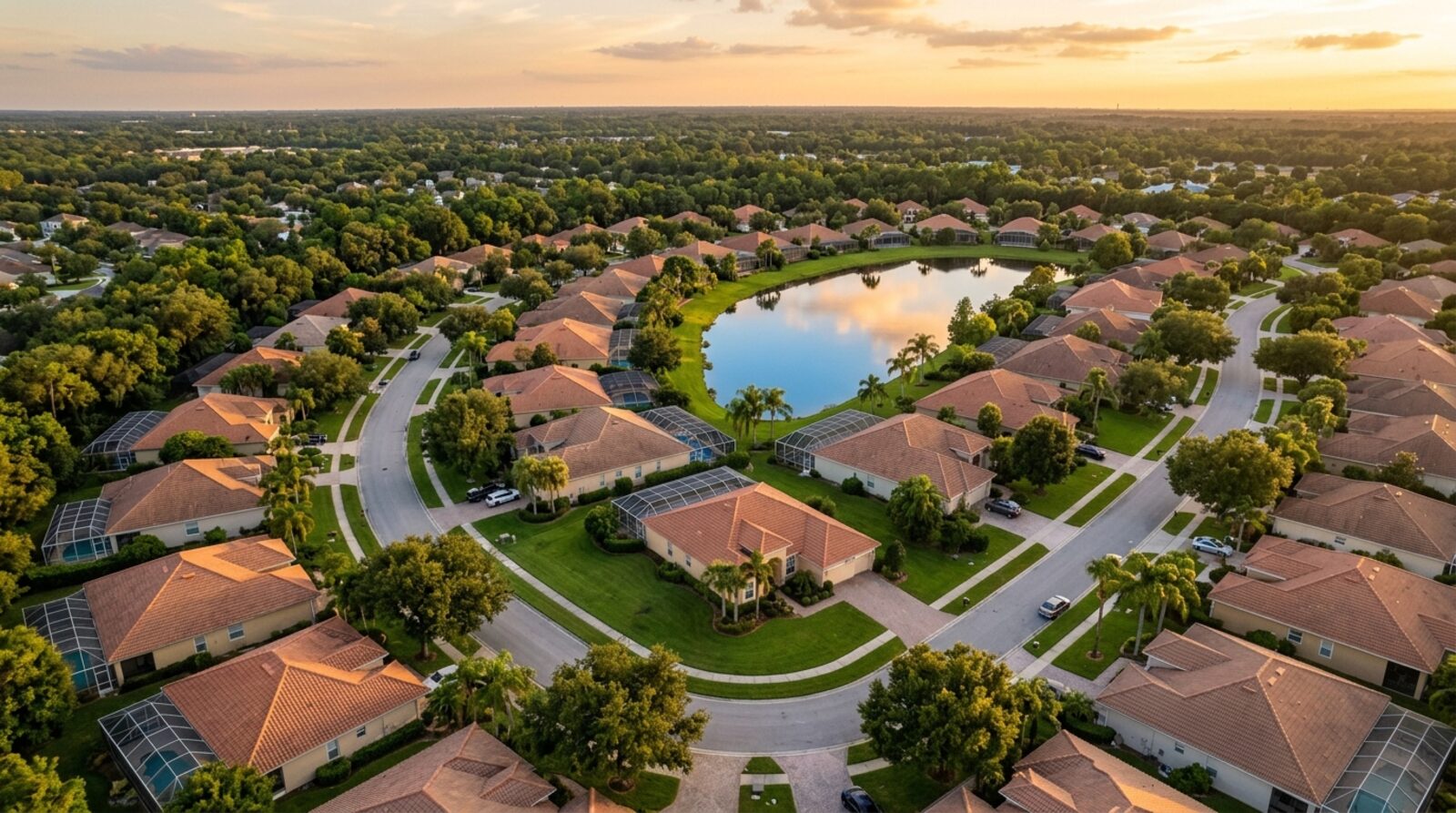
An accessory dwelling unit (ADU) is a secondary residential unit on a single-family lot — either attached to the primary residence or a separate detached structure. Common forms:
- Garage conversion: Converting an attached or detached garage into a living unit
- Attached addition: Building an addition with a separate entrance, kitchen, and bathroom
- Detached cottage: A freestanding structure in the backyard
- Basement or lower level: Converting an existing lower level (less common in flat Florida)
- Above-garage apartment: Building habitable space above a detached garage
The defining characteristics are a separate entrance, sleeping area, and kitchen or kitchenette — creating a self-contained living space.
Florida's ADU law: HB 1417 (2023)
Florida passed significant ADU legislation in 2023 — House Bill 1417 preempts local governments from banning ADUs in single-family zones. This is a meaningful change: before this law, many Florida municipalities prohibited or made ADUs practically impossible through restrictive zoning.
What the law does:
- Requires municipalities and counties to allow ADUs in single-family residential zones
- Municipalities can still regulate (but not prohibit) setbacks, lot coverage, parking, height, and design
- Owner-occupancy requirements may be allowed (requiring the owner to live in the primary or ADU unit)
- Maximum size restrictions are permitted — most municipalities allow 750–1,000 sq ft
What the law doesn't do:
- Override HOA governing documents — private CC&Rs are not affected by this state law
- Eliminate permitting requirements — permits are still required
- Guarantee that your specific lot, setbacks, or site constraints allow an ADU
Always verify with your specific municipality. Zoning codes are being updated to comply with the 2023 law, but implementation varies. Contact your local building department before finalizing any plans.
HOA restrictions: the bigger obstacle than zoning
For many Central Florida homeowners, HOA restrictions are a bigger barrier than city zoning. HOA covenants, conditions, and restrictions (CC&Rs) are private contracts — the state ADU law does not override them.
Common HOA restrictions that affect ADUs:
- Prohibitions on "guest houses" or "accessory structures" used as residential units
- Restrictions on separate exterior entrances on the primary home
- Requirements that all structures match primary home materials and rooflines
- Prohibitions on short-term rentals that would apply to an ADU
- Parking requirements that may conflict with adding a dwelling unit
What to do:
- Pull your HOA's CC&Rs and rules from the county recorder's office or HOA management company
- Search for language about "accessory structures," "guest houses," "additional dwelling units," "separate entrances," and "rentals"
- If the language is ambiguous, submit a written question to the HOA board and get a written response
- If the CC&Rs prohibit your intended use, you either need an HOA variance (rare) or must reconsider the project
Non-HOA properties have no private covenant restrictions — just municipal zoning requirements.
Permitting: why it matters for your equity
An ADU built without permits is an unpermitted structure. In Florida:
- Sellers must disclose known unpermitted structures on the seller's disclosure
- Buyers can demand the seller permit the structure (often requiring inspections, structural updates to current code, and significant cost) or reduce the purchase price
- Appraisers cannot give full credit for unpermitted square footage
- Insurance may not cover unpermitted structures
- In some cases, local governments can require demolition
The permit process for an ADU typically involves:
- Architectural or engineering drawings
- Zoning review for setbacks, lot coverage, parking
- Building permit application
- Inspections (framing, electrical, plumbing, mechanical, final)
- Certificate of Occupancy
Costs vary by municipality — plan for $3,000–$15,000 in permitting and processing fees in most Central Florida jurisdictions.
Rental income potential
An ADU's rental income potential depends on your market:
Long-term rental (12-month lease):
- Central Florida suburban markets (suburban Orlando, Brevard County, Volusia County): $1,200–$1,800/month for a studio or 1BR unit
- Premium markets (Winter Park area, Heathrow): $1,500–$2,200/month
- Rural markets (Lake County rural, Polk County): $900–$1,400/month
Short-term rental (Airbnb/VRBO):
- Beach-adjacent markets (Cocoa Beach, New Smyrna Beach, Ormond Beach): $80–$200+/night at 55–75% occupancy
- Orlando area (tourist-adjacent): $70–$150/night but STR regulations are increasingly restrictive
- Residential neighborhoods: Lower occupancy, more regulatory risk
Income in loan underwriting: When refinancing or purchasing a home with an existing ADU, lenders may count ADU rental income as qualifying income. Requirements: typically 12 months of documented rental history, appraiser confirmation of market rents, and depending on the loan type, the borrower's existing equity and debt ratios.
Impact on appraised value
How an ADU affects appraised value:
Comparable sales approach: If comparable homes in your market with ADUs have sold recently, the appraiser uses those sales. This is the strongest evidence — actual market transactions.
Income approach: The appraiser capitalizes the ADU's rental income at the prevailing capitalization rate. This approach works in markets where ADU rental income is well-documented and buyers are actually underwriting it. It's less reliable in high-price markets where buyers aren't primarily making a purchase decision on rental income.
Cost approach: The appraiser values the property at replacement cost. This is a floor, not a ceiling — it doesn't capture the premium buyers pay for a built and operating ADU.
Practical reality: In Brevard County, Volusia County, and suburban Orlando markets, a permitted ADU with documented rental income typically adds $40,000–$100,000+ to appraised value depending on size and market rents. In premium residential markets (Windermere, Dr. Phillips), the income approach may not be as relevant and the comparable sales approach dominates.
Garage conversion: the fastest path to an ADU
For most Central Florida homeowners, a garage conversion is the lowest-cost, lowest-complexity path to an ADU:
Why garages work well:
- Foundation, framing, and roof already exist
- Electrical panel is often nearby
- No new utility lateral required for electric
- Setbacks typically already satisfied
- Easier to get building permits than new detached structures
What a garage conversion requires:
- Insulation (walls and ceiling — garages are typically uninsulated)
- HVAC (mini-split systems are most common — efficient and low-profile)
- Finish flooring (over concrete slab — moisture barrier important in Florida)
- Kitchen or kitchenette (plumbing stub-in is the most complex part)
- Bathroom (if the garage doesn't have an existing half bath)
- Separate entrance (exterior door to the unit, separate from the primary home)
- Egress windows if converting to bedroom use
Estimated cost: $40,000–$90,000 for a full garage-to-ADU conversion in Central Florida, depending on current state of the garage, plumbing complexity, and finish level.
Trade-off: You lose covered parking — a meaningful consideration in Florida's sun and storm climate. HOAs that require covered parking for vehicles may restrict this option.
The bottom line for Central Florida homeowners
The 2023 ADU law made Florida more ADU-friendly than it's ever been — but the practical steps (HOA check, municipal verification, permits) are non-negotiable. A correctly built and permitted ADU adds real value, generates real income, and creates flexibility for multi-generational living.
The worst outcome: build without permits, list the home, and face buyer demands to retroactively permit work that can't meet current code — or disclose and accept a reduced price.
Ryan Solberg works with sellers and buyers on properties with existing ADUs and can help evaluate ADU income in the context of your transaction. Contact Ryan for a specific market assessment.
Frequently asked questions
- Are ADUs legal in Florida?
- Yes — Florida law (HB 1417, effective 2023) requires municipalities to allow accessory dwelling units in single-family residential zones. Local governments can regulate setbacks, maximum square footage (typically 750–1,000 sq ft), owner-occupancy requirements, parking, and design standards, but they cannot prohibit ADUs outright. HOA restrictions are a separate issue — the state law applies to local government zoning, not private HOA covenants. Always verify with your specific municipality and check your HOA documents before planning.
- How much does it cost to build an ADU in Florida?
- Florida ADU construction costs in 2026 range from approximately $80,000–$200,000+ for a full detached unit depending on size, finish level, and utility connections. Garage conversions (converting an existing attached or detached garage) are the least expensive option — typically $40,000–$90,000 depending on scope. New detached structures with separate utilities cost more. Permitting fees, impact fees, and architect/engineer costs add $5,000–$20,000 to total project cost depending on the municipality.
- Do ADUs need separate utilities in Florida?
- Florida does not uniformly require separate utility meters for ADUs — requirements vary by municipality. Separate meters for electric and water are generally advisable for long-term rental ADUs: they simplify rent collection, prevent utility billing disputes, and significantly improve resale appeal. Impact fees may apply when adding a second meter — confirm with your utility provider. For short-term rentals where the owner is paying utilities as part of the rental, separate meters are less critical.
- Does an ADU increase home value in Florida?
- A legally permitted, properly constructed ADU typically increases appraised value — appraisers use the income approach (capitalized rental income) or comparable sales data from homes with ADUs in the same market. In rental-friendly markets (Brevard County, Volusia County, suburban Orlando), ADU income is real and appraisers can document it. In high-income primary residence markets (Windermere, Dr. Phillips), the ADU income approach may be less relevant than the comparable sales approach. Unpermitted ADUs often require disclosure and may reduce value — buyers will negotiate or demand permits be obtained.
The next step
Thinking about a move?
Whether you're two months out or two years out, the right information now saves real money later. Let's talk — no pressure, no pitch.