· 12 min read· By Ryan Solberg, Broker #BK3354351
What Colombians Need to Know Before Buying Property in Florida
Colombia is the number one country searching Miami real estate online — for 39 consecutive months, no other country has matched Colombian demand for South Florida listings. In...

Buyer Profile
Colombian buying Florida real estate
#6 source country for Florida foreign buyers
Annual purchases
~800 homes/yr
Typical price range
$250K–$500K
Min. down payment
30%
Home currency
COP
Source region
Bogotá, Medellín
Primary use
Capital preservation / lifestyle
What This Money Buys
At home versus in Orlando
Bogotá, Colombia
COP 1B
A 2-bed apartment in Chapinero — 70 sq m, building amenities, high-rise city tower, COP exposure.
Champions Gate, FL
$280K
3-bed townhome — 1,600 sq ft, community pool, resort amenities, STR potential, USD-denominated asset.
Property comparisons are illustrative. Market prices change — confirm current listings with a local agent.
Lo Que Realmente Pagarás Cada Año
True carrying cost of a $500K Florida home
On a $500K Orange County or Miami-Dade home — non-residents don't qualify for Florida's homestead exemption
Flood insurance is separate and mandatory in many zones; Florida premiums have risen sharply since 2022
Full-service STR management runs 15–25% of gross rental revenue; long-term rental management runs 8–10%
Peso Reality Check
At COP 3,800/USD, a home with $14,000/yr in U.S. carrying costs runs the equivalent of COP $53,200,000 — before mortgage. Run the numbers in both currencies, and use a conservative peso rate, not the recent high.
The Rule That Surprises Everyone at Closing
How FIRPTA works when you sell
01
Offer accepted
Agreed sale price: $500,000 USD
02
15% withheld at closing
$75,000 sent directly to the IRS by the title company
03
You receive net proceeds
$425,000 (before commissions and closing costs)
04
File Form 1040-NR
IRS refund issued after 6–12 months
Critical detail
That 15% is calculated on the gross sale price — not your profit. On a $500,000 sale, the IRS holds $75,000 regardless of what you paid for the home. You can recover it, but only after filing a US non-resident return — a process that typically takes 6–12 months. Use a cross-border CPA who handles Colombian nationals, not just a Colombian accountant.
Before You Make an Offer
What your Florida home really costs in pesos
| USD Price | 4,500COP near high (2023–24) | 3,800Current (May 2026)Current | 3,550COP near low (2026) |
|---|---|---|---|
| $380,000USD | COP 1.710.000.000 | COP 1.444.000.000 | COP 1.349.000.000 |
| $500,000USD | COP 2.250.000.000 | COP 1.900.000.000 | COP 1.775.000.000 |
| $650,000USD | COP 2.925.000.000 | COP 2.470.000.000 | COP 2.307.500.000 |
| $900,000USD | COP 4.050.000.000 | COP 3.420.000.000 | COP 3.195.000.000 |
Estimates only. Bank spreads, wire fees, and specialist FX rates vary — confirm before wiring. COP/USD has swung more than 30% over the past three years; use a conservative rate when modeling carrying costs and total purchase cost.
Matching Strategy to Location
Miami corridor or Orlando?
Miami Corridor
Capital first
USD preservation · Established Colombian community · Direct flights from BOG, MDE, CLO
- ◆Brickell & Edgewater — urban condo core, strong long-term rental demand
- ◆Doral — largest established Colombian community in Miami-Dade
- ◆Sunny Isles & Aventura — newer luxury inventory, Latin American resale liquidity
- ◆Coral Gables — prestige addresses, established Latin American buyer base
- ◆64% of Latin American Miami buyers purchase for investment (rental or resale)
Orlando
Space & yield first
More property per dollar · STR-permitted resort communities · Long-term hold
- ◆Dr. Phillips — established international community, between Disney and downtown
- ◆Lake Nona — master-planned, newer construction, medical-city employment anchor
- ◆Butler Chain of Lakes — waterfront lifestyle, estate properties, longer hold
- ◆Reunion Resort & Champions Gate — STR-permitted Disney-proximity yield play
- ◆30–40% more square footage per dollar vs. comparable Miami submarkets
Who You Need in Your Corner
Your cross-border buying team
01
Florida Estate Attorney (Cross-Border)
LLC and entity structuring to address the estate tax exposure — Colombia has no US estate or gift tax treaty, leaving only a $60,000 exemption on US assets. A general Florida estate attorney won't know the solutions; a UK-trained attorney won't either. You need someone who specifically handles Colombian or Latin American non-resident estate planning.
Must have US-Colombia or Latin American cross-border experience
02
Cross-Border CPA (US/Colombia)
FIRPTA planning, Form 1040-NR filing, US rental income reporting on Schedule E, and ensuring Colombian DIAN obligations are met for foreign assets. The US and Colombia share tax information under a FATCA-based IGA — your US property is visible to Colombian authorities.
Must know both US and Colombian tax reporting
03
Local Realtor
STR-permitted community knowledge in Orlando, building-level rental rules in Miami, Colombian community infrastructure by neighborhood, and HOA CC&R due diligence. Getting the community wrong — buying in a non-STR-permitted building for an STR strategy, or missing a rental restriction — invalidates the investment thesis.
MaxLife Realty works with Colombian buyers regularly
04
Foreign National Mortgage Specialist
Florida-focused lenders like The Doce Group, Griffin Funding, and Fidelity Home Group structure loans using Colombian CPA income letters and bank statements — no SSN or US credit history required. 25–30% down, 30-year terms. New construction condos may require up to 50% down.
Optional for all-cash buyers
05
Licensed Property Manager
For STR investors in Reunion/Champions Gate/Davenport: platform management, dynamic pricing, guest services, pool servicing, hurricane prep, and emergency response — from 1,500 miles and 1–5 time zones away. For long-term rental owners: tenant placement, maintenance, and annual inspections. This is not optional for absentee owners.
15–25% of gross STR revenue; 8–10% for long-term rentals
Free Download
Colombian Buyer Checklist —  Florida Real Estate
35+ step checklist covering ITIN, financing, due diligence, closing, post-closing obligations, and colombian-specific tax and transfer rules. Print it or save it to your phone.
Official IRS Documents
Key IRS forms for foreign property owners
Downloaded directly from IRS.gov. Forms are revised periodically — check the revision date on page one before filing and confirm you have the current version with your CPA.
Certificate of Foreign Status of Beneficial Owner
Filed by: Foreign buyer
When you need it: At closing and when opening a US bank account or brokerage
Certifies to US payers (lenders, title companies, banks) that you are a non-US person. Required by your US financial institutions to apply the correct withholding rate on any passive US-source income — interest, dividends, rental income. Without it, payers must withhold at the maximum 30% backup rate. File with each institution that holds or pays US funds on your behalf.
Application for IRS Individual Taxpayer Identification Number (ITIN)
Filed by: Foreign buyer without a US SSN
When you need it: Before your first US tax filing; required before closing in some transactions
If you don't have a US Social Security Number, you need an ITIN to file US tax returns (including recovering FIRPTA withholding) and to appear on a deed in some counties. The application requires certified copies of identity documents — your passport is the primary option. Processing takes 7–11 weeks when filed by mail; an IRS Certifying Acceptance Agent can expedite it. Apply early — don't wait until the year you sell.
U.S. Withholding Tax Return for Dispositions by Foreign Persons
Filed by: Buyer's closing agent (on your behalf)
When you need it: Filed by the title company within 20 days of closing when you sell
This is the FIRPTA withholding return. When you sell your Florida property, the buyer's title company is legally required to withhold 15% of the gross sale price and remit it to the IRS using this form. You do not file it — the withholding agent does. But you should request a copy at closing: it documents the exact amount withheld, which you'll need to reconcile when you file your 1040-NR and claim a refund of any excess withholding.
Statement of Withholding on Dispositions by Foreign Persons
Filed by: Provided to the foreign seller by the withholding agent
When you need it: Issued at closing alongside Form 8288
Your copy of the FIRPTA withholding record — stamped and returned to you by the IRS after processing Form 8288. Think of it as your receipt for the withheld funds. Attach the stamped copy to your Form 1040-NR when you claim a refund of excess withholding. Keep this document in a safe place; without it, reconciling your refund with the IRS is significantly more complicated.
Application for Withholding Certificate for Dispositions by Foreign Persons
Filed by: Foreign seller (or their CPA)
When you need it: File with the IRS BEFORE closing — ideally 90+ days in advance
If your actual US capital gains tax on the sale will be less than the standard 15% FIRPTA withholding, you can apply for a Withholding Certificate to reduce the withheld amount before closing. Example: you paid $500,000 for a property and are selling for $520,000 — your actual gain is $20,000, but 15% of the $520,000 sale price is $78,000. File Form 8288-B with supporting documentation and the IRS may authorize the title company to withhold only the amount covering your actual liability. The IRS has 90 days to respond; if no response before closing, the full 15% must be withheld regardless.
U.S. Nonresident Alien Income Tax Return
Filed by: Foreign owner of US rental property; foreign seller recovering FIRPTA withholding
When you need it: Filed annually by June 15 (or April 15 if US wages exist); filed after a sale to recover FIRPTA overage
The primary US tax return for non-resident alien property owners. Two situations trigger this form: (1) You earn rental income from your Florida property — report it here annually on Schedule E, deduct allowable expenses, and pay tax on net income. (2) You sold your property and had 15% FIRPTA withheld at closing — file this return to report your actual gain, calculate the correct tax, and claim a refund of any amount withheld in excess of your liability. Refunds on FIRPTA recoveries typically take 6–12 months from filing. Work with a CPA who handles non-resident US returns — this is not a standard US tax return and general tax software does not handle it well.
United States Estate Tax Return — Estate of Nonresident Not a Citizen
Filed by: Estate of the deceased foreign property owner
When you need it: Filed within 9 months of date of death if US-situs assets exceed $60,000
If a non-US citizen who owns Florida real estate dies, their estate must file this return if the fair market value of their US-situs assets (real estate, US stocks, tangible property in the US) exceeds $60,000. The non-resident alien estate tax exemption is only $60,000 — compared to $13.6 million for US persons in 2026. On a $700,000 Florida property, approximately $640,000 is potentially subject to US federal estate tax at rates up to 40%. This is why ownership structure (personal vs. LLC vs. foreign corporation) must be decided before purchase, not after. Proper planning can eliminate or dramatically reduce this exposure.
These forms are provided for informational purposes only. Tax law changes frequently. Always confirm the current version and applicability with a qualified cross-border CPA before filing.
Go Deeper
IRS publications for foreign property owners
These reference guides explain the rules behind the forms — worth reading before you hire a CPA so you can ask the right questions.
Residential Rental Property
Reference — not filed; used for tax preparation
When to use it: Before your first rental season and at tax time each year
The IRS's complete guide to tax rules for residential rental property. Covers what rental income to report, which expenses are deductible (mortgage interest, repairs, insurance, depreciation, management fees), how to calculate depreciation on a US rental property, and passive activity loss rules. Foreign owners who rent their Florida property on a short-term or long-term basis should read this before hiring a CPA — understanding the basics makes the 1040-NR Schedule E process far less opaque.
U.S. Tax Guide for Aliens
Reference — not filed; used to determine residency status and filing obligations
When to use it: Before your first US tax year and whenever your visa or residency status changes
The authoritative IRS reference for non-US persons with any US tax obligation. Explains the difference between resident aliens (taxed like US citizens) and nonresident aliens (taxed only on US-source income), how to apply the Substantial Presence Test, how to determine your filing status, and which tax treaties may reduce your US liability. Particularly valuable for Indian nationals on H-1B or green cards who need to understand whether they file Form 1040 or Form 1040-NR in a given tax year.
Withholding of Tax on Nonresident Aliens and Foreign Entities
Reference for withholding agents; relevant to foreign buyers receiving US-source income
When to use it: When setting up US rental income payments or reviewing withholding on passive income
Explains the rules US payers (banks, title companies, rental agents) must follow when paying income to foreign persons. As a foreign property owner, this publication helps you understand why your US bank or property manager withholds at certain rates, which treaty exemptions can reduce that withholding, and what documentation (typically Form W-8BEN) you need to provide to claim a lower rate. Also covers the NRA withholding rules that apply to rental income paid to non-US owners.
Information Return of U.S. Persons With Respect To Foreign Disregarded Entities and Foreign Branches
US persons who own a foreign LLC or disregarded entity that holds US real estate
When to use it: Filed annually with your US tax return if a foreign entity owns your Florida property
If you hold your Florida investment property through a foreign LLC, foreign partnership, or similar entity that is treated as a disregarded entity for US tax purposes, the US member or owner may be required to file this information return annually. This is a reporting form — not a tax payment form — but failure to file carries significant penalties ($10,000+). Relevant primarily to buyers who have set up foreign holding structures to own US real estate. Ask your cross-border CPA whether your ownership structure triggers this filing.
Required Filings & Licenses
State and federal obligations beyond the IRS
Florida Vacation Rental License Application
Florida DBPR (Dept. of Business & Professional Regulation)
Florida law requires a state vacation rental license for any property rented for periods of less than 30 days more than three times per year. This is separate from any county or city STR permit — you need both. The application requires proof of ownership, a property inspection, and an annual renewal fee. Operating without this license exposes you to fines and potential rental income clawback. Apply before your first rental booking.
FinCEN FBAR — Report of Foreign Bank and Financial Accounts (FinCEN 114)
US Financial Crimes Enforcement Network (FinCEN)
If you are a US person (green card holder, H-1B meeting the Substantial Presence Test, or US citizen) and the combined value of your foreign financial accounts exceeds $10,000 at any point during the calendar year, you must file an FBAR annually by April 15 (automatic extension to October 15). This includes foreign bank accounts, brokerage accounts, and certain foreign trusts. Penalties for non-filing are severe — up to $10,000 per violation for non-willful, much higher for willful. NRIs who become US tax residents are commonly surprised by this requirement.
External links open official government websites. MaxLife Realty is not responsible for changes to third-party sites. Always verify requirements with a licensed CPA, attorney, or the relevant agency before filing.
Colombia is the number one country searching Miami real estate online — for 39 consecutive months, no other country has matched Colombian demand for South Florida listings. In the twelve months ending mid-2025, Colombian buyers spent $925 million on Florida real estate, making Colombia the second-largest foreign buyer in the state by dollar volume, behind only Canada. That's a market that knows what it's doing.
But there is a gap between market enthusiasm and transaction readiness. Most Colombian buyers I work with arrive knowing the neighborhoods, knowing the USD price they want to spend, and sometimes knowing exactly which building they want. What they often don't know is the legal structure required to hold the property safely, the carrying cost in pesos at a realistic long-term exchange rate, or the single biggest financial trap for Colombian owners that UK and German buyers don't face: no estate tax treaty protection.
Here's what needs to be in place before you close.
Know the Real Carrying Cost — Before and in Pesos
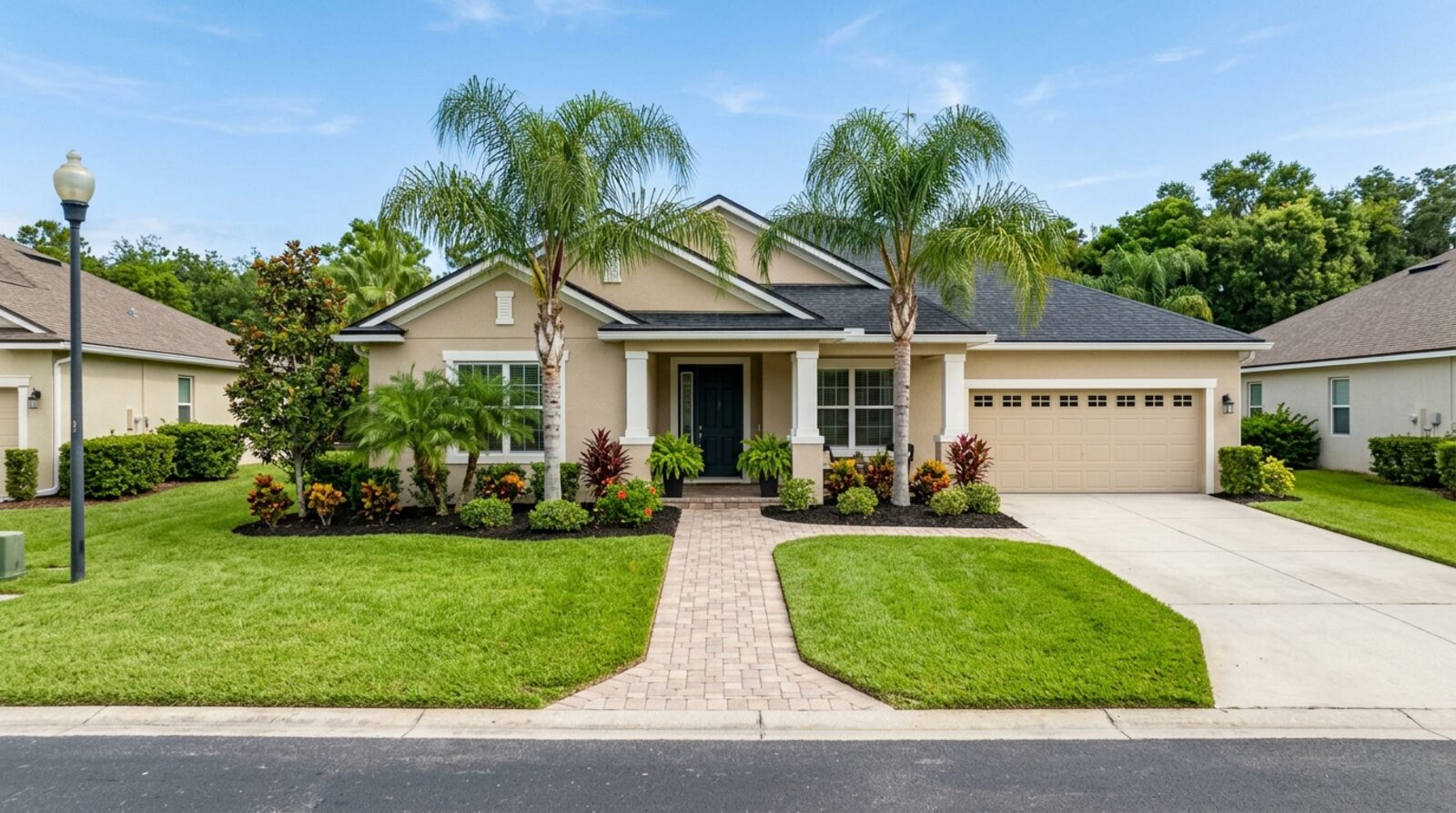
On a $500,000 Orlando or Miami property, non-residents can expect annual property taxes around $5,000–$7,500. Florida's homestead exemption — which can reduce taxes by $50,000 or more — is available only to Florida residents. You won't qualify.
Homeowners and wind insurance has risen sharply since 2022; budget $3,500–$6,500/year depending on construction year, roof age, and wind zone. Flood insurance is separate and mandatory in many zones — budget $1,500–$3,000/year in flood-prone areas. If you're buying for rental income, property management adds another 15–25% of gross revenue.
I tell Colombian clients to convert the full annual carrying cost to pesos at a conservative rate — not the best COP rate of the past year, but a rate that reflects the volatility range. At 3,800 pesos per dollar, $15,000/year in carrying costs is COP $57 million. At 4,500, it's COP $67.5 million. Run the number at multiple rates before you fall in love with a listing.
Financing as a Colombian National
You can get a US mortgage without a Social Security number, US credit score, or green card. Foreign national mortgage programs from Florida-focused lenders — The Doce Group, Griffin Funding, Fidelity Home Group — verify income through a certified Colombian CPA letter and 12–24 months of bank statements. No US tax returns, no SSN, no US credit history required for most programs.
Typical terms: 25–30% down payment, fixed rates 0.5–1% above conventional, 30-year terms available. New construction condos may require up to 50% down.
With the COP strengthening from lows above 4,900 per dollar in 2023 to the 3,500–3,800 range in 2025–2026, many Colombian buyers are moving decisively on all-cash purchases. Cash eliminates the financing contingency, simplifies closing, and makes offers significantly more competitive in Miami's South American buyer-heavy condo market. If you're financing, time your COP-to-USD conversion through a specialist FX service rather than your retail bank — the spread on a large peso transfer can cost you millions of pesos at a retail rate.
FIRPTA — The Rule That Surprises Everyone at Closing
FIRPTA (Foreign Investment in Real Property Tax Act) requires the buyer's title company to withhold 15% of the gross sale price when a foreign national sells US real estate. That's 15% of the sale price — not the gain.
On a $500,000 sale, that's $75,000 withheld at closing and submitted to the IRS, pending your non-resident return. You can recover it — but it requires filing Form 1040-NR, and the refund process typically takes 6–12 months. Plan for a cash flow gap. Work with a cross-border CPA before you're anywhere near ready to sell.
Estate Tax — The Most Dangerous Gap for Colombian Buyers
This is where I have a very different conversation with Colombian clients than I have with UK or German buyers.
Non-resident aliens without a US estate or gift tax treaty receive only a $60,000 exemption on US-situs assets at death. The US has estate and gift tax treaties with the UK, Germany, France, Australia, Japan, and a dozen other countries — treaties that give their buyers a proportionate share of the full $13.6M US exemption. Colombia is not on that list. There is no US-Colombia estate or gift tax treaty.
That means a Colombian national holding a $600,000 Miami condo personally has roughly $540,000 exposed to US federal estate tax at rates that reach 40%. At a 40% effective rate on the excess over $60,000, the potential estate tax bill on a single Florida property exceeds $200,000.
The standard solution is entity structuring: holding the Florida property through a properly structured LLC or foreign corporation that removes the real estate from your personal US estate. The details matter — a Florida LLC alone doesn't solve the problem; the entity structure needs to be designed by an attorney who handles US-Colombia cross-border cases. This must be done before you close, not after. It cannot be retrofitted onto an already-purchased property without triggering additional taxes.
I raise this in the first conversation with every Colombian client, not because it's the most exciting topic, but because it's the one that can quietly cost a household hundreds of thousands of dollars.
Where Colombian Buyers Land in Florida
The data is clear: Colombian buyers concentrate heavily in South Florida. The Miami corridor — Brickell, Doral, Edgewater, Sunny Isles Beach, Aventura, Coral Gables — accounts for the majority of Colombian purchases. These are familiar markets with large established Colombian communities, direct flights from Bogotá, Medellín, and Cali, and a deep pipeline of Spanish-speaking professionals, property managers, and service providers.
If your goal is capital preservation plus rental yield: Brickell and Edgewater condos in Miami's urban core offer walkable environments, strong long-term rental demand, and appreciating USD-denominated assets. Sunny Isles and Aventura offer newer luxury inventory with ocean access and large Latin American buyer communities that support resale liquidity.
Doral deserves its own mention: it's the neighborhood with the deepest Colombian community presence in all of Miami-Dade, with Colombian restaurants, Colombian schools, and a buyer-seller ecosystem that functions almost independently. Many Colombian investors buy here first.
If you want more space per dollar or a base near Orlando: Dr. Phillips has a long-established international buyer community, excellent schools, and positions you between Disney and downtown Orlando — practical for buyers who visit seasonally and want a genuine neighborhood rather than a resort compound. Windermere and the Butler Chain of Lakes corridor suit buyers drawn to waterfront lifestyle and larger estate properties. Lake Nona suits newer-construction buyers who want a master-planned environment with strong employment-corridor fundamentals anchoring long-term rental demand.
If your strategy is STR yield near Disney: Reunion Resort, Champions Gate, and the Davenport/Haines City corridor are the purpose-built options. These communities explicitly permit short-term rentals, sit within 15–20 minutes of the Disney parks, and generate 40–50 week occupancy when managed professionally. Entry prices start around $380,000 for Davenport townhomes; Reunion Resort homes run $500,000–$750,000+ for resort pool homes. Gross yields of 8–12% are achievable; net yield after management, taxes, insurance, and maintenance is the number to pressure-test.
HOA and STR Rules — Read Them Before You Make an Offer
In Dr. Phillips and the established Orlando lifestyle communities, most neighborhoods prohibit short-term rentals or impose 30-day minimum tenancy requirements. In Miami, STR rules vary building by building and municipality by municipality. The communities and buildings that permit STR carry a price premium precisely because of that permission.
I've had clients fall in love with a building, negotiate a price, and discover on day three of due diligence that Airbnb was prohibited by the HOA. The title company will not flag this for you. Pull the CC&Rs before you make an offer.
Property Management Is Not Optional
For Colombian owners managing a Florida property from Bogotá or Medellín — typically on a 1-to-5-hour time difference — on-the-ground management is not optional. For STR properties: platform management, dynamic pricing, guest communication, cleaning coordination, pool and spa servicing, and hurricane prep all require a local operator. For long-term rentals: tenant placement, maintenance coordination, and annual inspections. Budget 15–25% of gross revenue for STR management; 8–10% for traditional long-term management. This is the cost of operating a USD-denominated asset from thousands of miles away.
Get the Right Professionals in Place Early
Before you make an offer, you need: a Florida estate attorney who handles US-Colombia cross-border entity structuring (not a general estate planning attorney — someone who specifically knows the non-treaty exposure and LLC solutions), a CPA who files US non-resident returns for Colombian property owners, and a local agent who knows which communities permit STR and which neighborhoods have the strongest Colombian buyer community infrastructure for resale.
At MaxLife Realty, I work with Colombian buyers across both the Miami corridor and Orlando. Reach out when you're ready to start the conversation.
Planning a longer-term base in Central Florida? The Complete Orlando Relocation Guide covers income tax savings by state, neighborhood comparisons, and which community fits where you're coming from.
How to Buy Florida Real Estate as a Colombian Citizen
What Colombian nationals need to know before buying in Florida — carrying costs in COP, financing without a US credit history, FIRPTA withholding, the estate tax exposure with no treaty protection, ownership structure, and the best neighborhoods for Colombian buyers.
Step 1
Run the Full Annual Carrying Cost — in Both USD and COP
Colombian buyers often focus on the purchase price and underestimate the ongoing cost of owning a Florida property from a distance. On a $500,000 home in Miami-Dade or Orange County: annual property taxes run $5,000–$7,500 (non-residents do not qualify for Florida's homestead exemption); homeowners and wind insurance runs $3,500–$6,500/year and has risen sharply since 2022; flood insurance is separate and mandatory in many zones. If you're buying an STR near Disney or a rental condo in Brickell, add property management at 15–25% of gross rental revenue. Total annual carrying cost on a well-managed investment property can exceed $20,000/year before mortgage. Convert that number to pesos at your expected long-term rate — not the best rate of the last 12 months — before you commit to a price.
Step 2
Understand Your Financing Options as a Colombian National
Standard US conventional mortgages require a Social Security number and US credit history — Colombian nationals don't qualify through normal channels. Your realistic options are: foreign national mortgage programs through specialist lenders (The Doce Group, Griffin Funding, and Fidelity Home Group are three Florida-focused lenders that work regularly with Latin American buyers); or all-cash purchase. Specialist lenders verify income through a certified Colombian CPA letter and 12–24 months of bank statements rather than US tax returns. No SSN or US visa is required by many programs. Typical terms: 25–30% down payment, fixed rates 0.5–1% above conventional, 30-year terms available. With the COP strengthening to the 3,500–3,800 range in 2025–2026 from lows above 4,900 in 2023, many Colombian buyers are moving more aggressively into the cash purchase category. A competitive all-cash offer can move faster and often beats a financed offer in the South Florida condo market.
Step 3
Understand FIRPTA Withholding When You Eventually Sell
FIRPTA (Foreign Investment in Real Property Tax Act) requires the buyer's title company to withhold 15% of the gross sale price and remit it to the IRS when a foreign national sells US real estate. On a $500,000 sale, $75,000 is withheld at closing — regardless of what you paid for the property or what your actual capital gain is. You file a US non-resident return (Form 1040-NR) and the IRS refunds the excess over your actual tax liability. The process typically takes 6–12 months. Work with a cross-border CPA who handles Colombian nationals with US real estate income before you sell, not at closing.
Step 4
Understand the Estate Tax Exposure — Colombia Has No Treaty
This is the most significant financial risk most Colombian buyers don't know about until it's too late. Non-resident aliens without a US estate or gift tax treaty receive only a $60,000 exemption on US-situs assets. The US has estate and gift tax treaties with Australia, Austria, Denmark, Finland, France, Germany, Greece, Ireland, Italy, Japan, the Netherlands, South Africa, Switzerland, the United Kingdom, and Canada — Colombia is not on this list. That means a Colombian national who dies holding a $600,000 Miami condo personally exposes roughly $540,000 to US federal estate tax at rates up to 40%. At a 40% effective rate, that is $216,000 in US estate tax on a single property. The standard solution is to hold the property through a properly structured entity — typically a Florida LLC owned by a Colombian corporation or trust — that removes the Florida real estate from your personal US-situs estate. This must be set up before you close, not after. Work with a Florida estate attorney who handles Colombian or Latin American cross-border cases.
Step 5
Choose Your Strategy Before You Choose a Neighborhood
Colombian buyers in Florida fall into two use cases that require different markets and ownership structures. Capital-preservation investors want rental-income properties in Miami's established international submarkets — Brickell, Doral, Edgewater, Sunny Isles, and Aventura. These buyers hold condos that generate long-term rental income while the asset appreciates in a stable USD-denominated market. Lifestyle buyers — Colombian professionals, entrepreneurs, or pre-retirees planning to spend significant time in Florida — often target the same Miami submarkets or shift to Orlando for more space per dollar: Dr. Phillips for its established Latin American community and excellent schools, Lake Nona for newer construction and a master-planned environment, the Butler Chain of Lakes corridor for waterfront lifestyle. STR investors focused on Disney-proximity yield concentrate in Reunion Resort, Champions Gate, and the Davenport corridor, where resort amenities and professional management drive 40–50 week occupancy.
Step 6
Verify STR Permissions and HOA Rules Before Making an Offer
Short-term rental rules in Florida are governed at the community level. In Orlando, two communities in the same zip code can have completely different rules — one allowing nightly Airbnb rentals, one requiring 12-month minimum leases, one prohibiting rentals entirely. In Miami, STR rules vary by municipality and by individual building. Brickell condos that permit STR command a significant premium because of that permission. Always read the HOA CC&Rs and review the rental restrictions section before going under contract. Your agent should pull governing documents during due diligence; the title company will not flag rental restrictions for you.
Step 7
Open a US Bank Account and Assemble Your Cross-Border Team
Open a US bank account before closing — it simplifies wire transfers, rental income deposits, and ongoing expense payments. Many Colombian buyers open accounts through US regional banks or use international banking services offered by banks like Citibank that have a Colombian presence. Assemble your advisory team before you start searching: a Florida real estate attorney with Latin American or Colombian cross-border experience (specifically for LLC/entity structuring to address the estate tax exposure), a cross-border CPA who files US returns for Colombian property owners, a foreign national mortgage specialist if financing, a licensed property manager for STR or rental operations, and a currency specialist to time COP-to-USD conversions at favorable rates. At MaxLife Realty, I work with Colombian buyers in both the Orlando and the South Florida corridor and can connect you with the right professionals.
The next step
Thinking about a move?
Whether you're two months out or two years out, the right information now saves real money later. Let's talk — no pressure, no pitch.