· 8 min read· By Ryan Solberg, Broker #BK3354351
Best Orlando Neighborhoods for First-Time Homebuyers in 2026
First-time buyers in Orlando face a crowded market but have more options than they realize. Here are the neighborhoods that deliver the best value for debut buyers in 2026.
Watch the video
The first home purchase in Orlando in 2026 looks different than it did in 2019 — higher prices, elevated rates, and a competitive market that moves faster than many first-timers expect. But the fundamentals of finding the right first home haven't changed: match your budget to a neighborhood that offers the best long-term value for what you can afford, and don't stretch to a home that creates financial stress.
Here's an honest guide to where the opportunities actually are.
What the first-time buyer market looks like in 2026
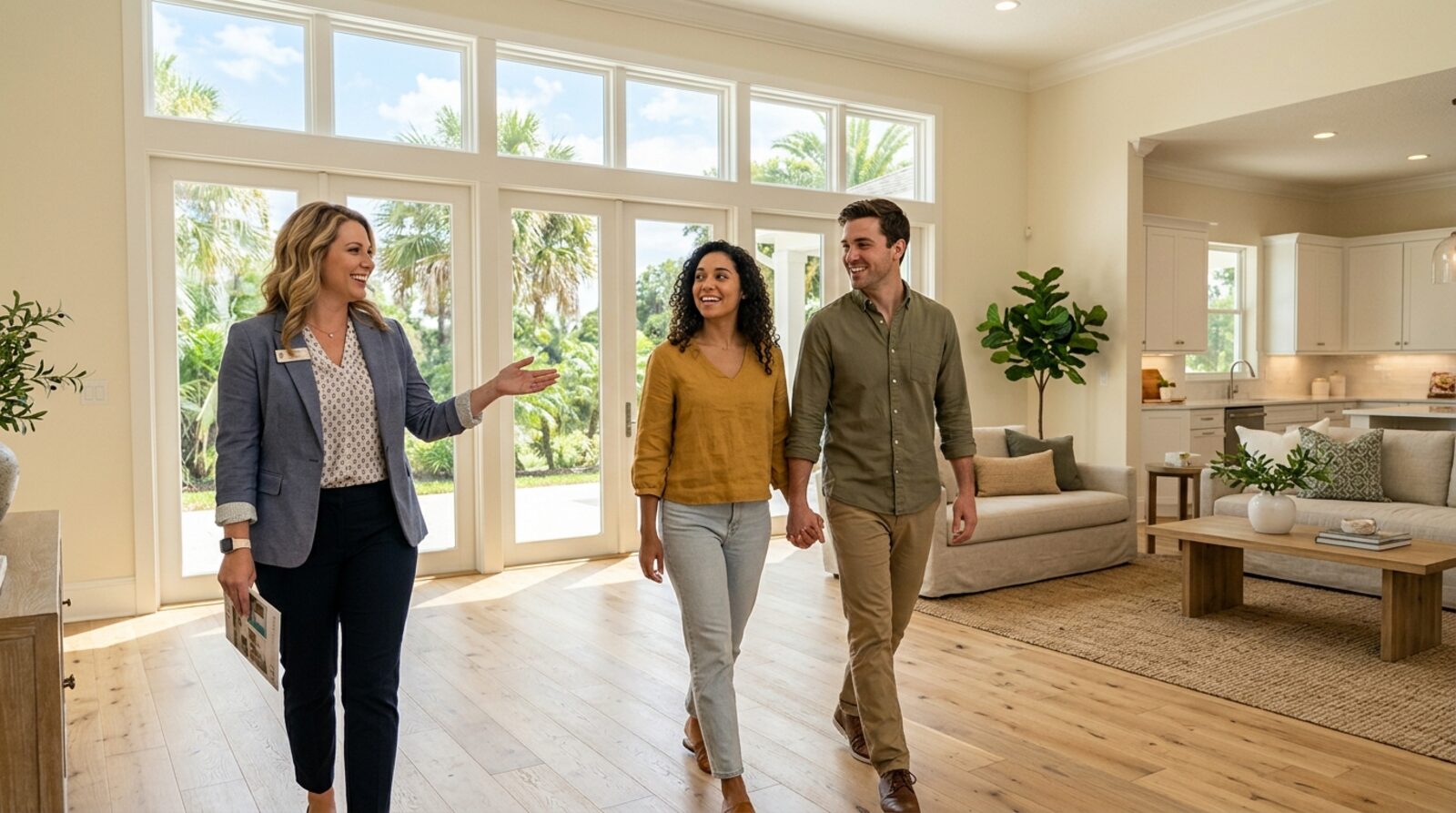
The $280,000–$400,000 single-family home in Orange County is the most competitive market segment in Central Florida. When a well-priced, move-in-ready home hits the MLS in this range in desirable zip codes, it often has multiple offers within 72 hours.
That doesn't mean the market is impossible — it means the preparation matters enormously. Buyers who are pre-approved, know their neighborhoods, and are ready to act quickly compete effectively. Buyers who browse Zillow casually and then try to move quickly are consistently outcompeted.
The good news: there are more affordable entry points in the Orlando metro than most first-time buyers realize. They often require looking beyond the most marketed neighborhoods.
The neighborhoods that deliver the most for first-time buyers
Apopka — Orange County's best value market
Apopka consistently delivers the most house per dollar in Orange County. A home that would list at $450,000 in Winter Garden often prices at $350,000–$390,000 in Apopka. The city is growing rapidly, with improving retail and dining options, and Kelly Park at Rock Springs is one of the most unique natural amenities in the state.
The trade-off: commutes to downtown Orlando and south/east Orange County are longer. SR-429 provides reasonable I-4 access, but plan for 30–40 minute commutes in most directions.
Target price range: $280,000–$420,000 for 3-4BR detached single-family
Casselberry and Altamonte Springs — Seminole County value entry
Seminole County schools at near-Orange-County prices. Casselberry and Altamonte Springs offer SR-436 corridor access, Seminole school zones, and home prices 10–20% below comparable Oviedo properties. For buyers who prioritize school quality but can't stretch to Oviedo or Lake Mary pricing, this is the rational alternative.
Target price range: $290,000–$400,000
Kissimmee and St. Cloud — Osceola County opportunity
The most volume of sub-$350,000 single-family inventory in the Orlando metro is in Kissimmee and St. Cloud. Osceola County carries more stigma than it deserves among first-time buyers — the school district is improving, the proximity to US-192 employment and downtown access via Osceola Parkway is workable, and prices are genuinely accessible.
St. Cloud specifically has a quiet lakefront downtown character that surprises first-time visitors. East Lake Toho access and a growing local economy make it an underrated entry market.
Target price range: $270,000–$380,000
Sanford — Seminole County's most undervalued entry point
Sanford is having a moment. The historic downtown on the St. Johns River has developed genuine restaurant, bar, and arts character over the last five years. Seminole County schools, direct SunRail access, and lake access create a lifestyle package that significantly outperforms the price point.
Entry-level homes in established Sanford neighborhoods in the $290,000–$380,000 range offer some of the best value in the metro for buyers willing to bet on a neighborhood that's still moving upward.
Target price range: $280,000–$400,000
Groveland and Minneola — Lake County growth corridor
Along US-27 in Lake County, national builders are actively constructing entry-level and mid-range homes in communities with access to the Florida Turnpike and quick connections to Winter Garden and east Orange County.
New construction from Lennar and DR Horton in Groveland starts from the upper-$200s — rare in the Orlando metro at current conditions. Builder incentives (rate buydowns, closing cost credits) make the math work for buyers who would otherwise struggle to qualify.
Trade-off: the commute to central Orlando is 35–50 minutes, and Lake County schools are not Seminole or Orange caliber. But for buyers who work remotely or along the US-27/Turnpike corridor, the value proposition is hard to beat.
Target price range: $275,000–$380,000 (new construction)
Davenport — STR corridor and primary residence entry
Davenport (Polk County) is primarily known for vacation rentals, but a significant share of Davenport's population is primary residents attracted by prices, I-4 access, and new construction availability. For buyers who don't need Central Florida employment access and work remotely, Davenport offers 4BR homes in the $300,000–$380,000 range.
Target price range: $280,000–$400,000
The markets to avoid for first-time buyers in 2026
Core Orlando ZIP codes (32801, 32803, 32806): Downtown-adjacent single-family inventory in this range competes directly with established buyers and investors. The properties that exist in the first-time buyer price range often have condition issues or are in transitional blocks. Not recommended unless you have renovation experience and budget.
Horizon West (Winter Garden): Horizon West pricing has moved significantly above first-time buyer territory. Most single-family starts from $450,000+. The master-planned community quality is excellent, but it's not an entry-level market.
Lake Nona: Similar to Horizon West — well above entry-level pricing. Randal Park starts around $380,000 for smaller homes, but most Lake Nona inventory is above first-time buyer budget.
Programs that can change the math
Florida Hometown Heroes: Up to $35,000 in down payment and closing cost assistance for qualifying frontline workers — teachers, nurses, police, firefighters, military. Income limits apply. If you qualify, this is one of the most impactful programs available.
FL Housing First Time Homebuyer Program: Below-market mortgage rates through participating lenders, often combined with 3–5% down payment assistance. Income and purchase price limits apply. Worth checking before assuming standard market financing is your only option.
FHA Loans: 3.5% minimum down payment with 580+ credit score. Mortgage insurance adds to monthly costs, but the lower down payment barrier is significant. Most productive in the $280,000–$400,000 range.
USDA Rural Development: 0% down payment in eligible areas. Some outer Orlando suburbs and Lake County communities qualify. Contact a lender to check eligibility for specific addresses.
What actually trips up first-time buyers
Waiting for rates to drop: Buyers who waited in 2023 and 2024 for rates to fall to 2021 levels missed appreciation gains that offset rate differences. The best time to buy is when you're financially ready and the home is right — not when you predict the rate environment.
Stretching the budget: A home that requires 40%+ of gross income to carry — mortgage, taxes, insurance, HOA — creates financial fragility. The market for that home changes, life circumstances change, and buyers who are financially maxed out have no buffer. Target 28–32% of gross income for housing costs.
Not getting pre-approved early: In fast-moving markets, sellers won't look at offers without a mortgage pre-approval. Pre-approval (not just pre-qualification) requires a hard credit pull and verified income documents. Do it before you start serious shopping.
Ignoring total cost: A $340,000 home in a community with $400/month HOA and a $2,500/year CDD is more expensive to own than a $360,000 home with no HOA. Run the total monthly cost, not just the mortgage payment.
Ryan Solberg helps first-time buyers navigate Central Florida's market — from program eligibility to neighborhood selection to making competitive offers. Start with a free consultation to build a realistic plan for your first home.
Frequently asked questions
- What is the minimum income needed to buy a home in Orlando in 2026?
- At current mortgage rates, purchasing a $350,000 home with 5% down ($17,500) typically requires a gross household income of approximately $75,000–$85,000 and a debt-to-income ratio under 43%. For FHA financing with 3.5% down, the qualification threshold may be slightly lower. Florida's Hometown Heroes program provides down payment assistance for qualifying first responders, teachers, and healthcare workers — contact a lender for your specific scenario.
- Are there still affordable homes in Orlando for first-time buyers?
- Yes, though the definition of 'affordable' has shifted. The sub-$350,000 single-family home segment in core Orange County is thin. Seminole County (Altamonte Springs, Casselberry), Osceola County (Kissimmee, St. Cloud), and outlying areas (Apopka, Groveland) have more inventory in this range. New construction from national builders in Davenport, Poinciana, and Groveland also offers entry-level product with builder financing incentives.
- What programs are available for first-time homebuyers in Florida?
- Florida Housing Finance Corporation (FL Housing) programs offer below-market mortgages and down payment assistance through approved lenders. The Hometown Heroes Program provides up to $35,000 in down payment/closing cost assistance for qualifying essential workers. FHA loans allow 3.5% down with a 580+ credit score. USDA loans offer 0% down in eligible rural areas (some outer suburbs qualify). Discuss all programs with a licensed mortgage professional before assuming you don't qualify.
The next step
Thinking about a move?
Whether you're two months out or two years out, the right information now saves real money later. Let's talk — no pressure, no pitch.