




Spring 2026 Market Update: What Buyers and Sellers Need to Know Right Now | MaxLife Realty
Spring 2026 Market Update: What Buyers and Sellers Need to Know Right Now
Spring is traditionally the busiest season in real estate, and 2026 is no exception. After several years of whiplash — pandemic bidding wars, the rate shock of 2022 and 2023, the stop-and-start recovery of 2024 and 2025 — this spring feels different. Calmer, more negotiable, and in many price points, genuinely balanced for the first time in a long while. Whether you're planning to list this season, shopping for your next home, or simply trying to make sense of where we are, here's what we're seeing on the ground and what it means for you.
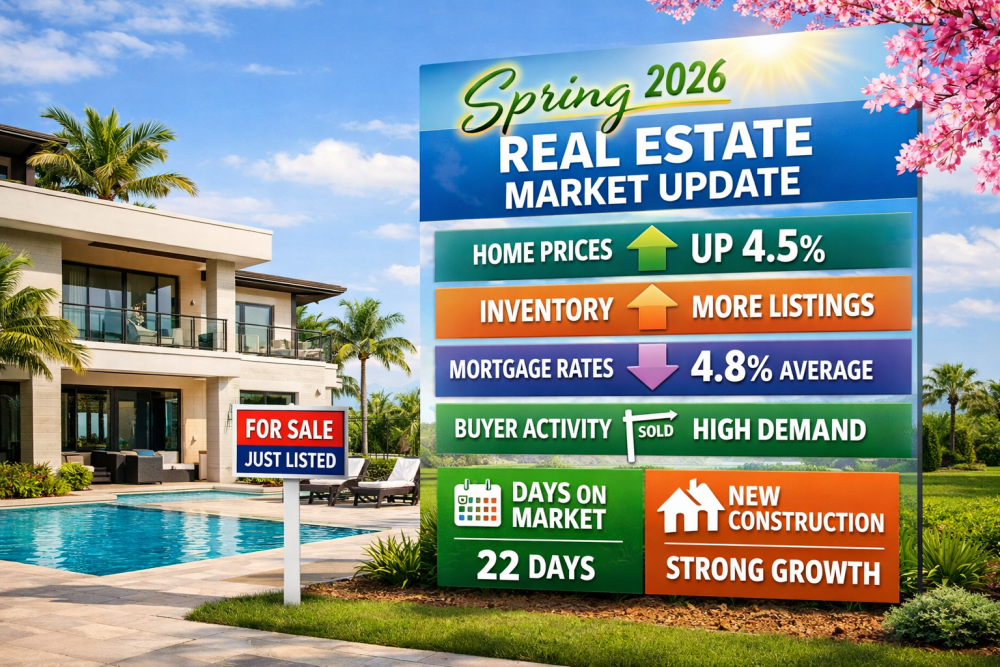
The Big Picture: A Market Finding Its Footing
The defining story of this spring is normalization. Mortgage rates have settled into a range that buyers have, by now, had time to adjust to psychologically. Inventory has loosened compared to the extreme shortages of 2021 and 2022, giving buyers choice again without flooding the market. And sellers — who spent the last two years hoping rates would drop dramatically before listing — are finally coming off the sidelines.
That combination is producing something we haven't seen in a while: a market where good homes still sell, but they have to be priced right, presented well, and marketed intentionally. Gone are the days when you could list anything on a Thursday and expect ten offers by Sunday. What replaces that is, in my view, a healthier rhythm — one where preparation matters, strategy matters, and the right agent genuinely moves the needle.
Quick Take
The 2026 spring market rewards preparation over speed. Buyers have time to make good decisions. Sellers need to come to market with the price, condition, and marketing dialed in on day one.
For Sellers: The Three Things That Matter Most This Spring
1. Price It Like You Mean It
The single biggest mistake I'm seeing sellers make in 2026 is anchoring their price to what their neighbor got in 2022. That market is gone. Buyers in today's environment are informed, patient, and allergic to overpricing. A home priced 5% over market will sit. A home priced 10% over market will sit and then sell for less than it would have if it had been priced correctly from day one, because stale listings signal problems.
Price it based on what's selling right now, in your specific neighborhood, in your specific condition bracket. Not what listed. What sold and closed — and in what condition.
2. Condition Is the New Leverage
When inventory was scarce, buyers overlooked things. Peeling paint, tired carpet, a dated kitchen — none of it mattered if the alternative was losing the house. Today, buyers have options. That means condition has returned as a major driver of both days on market and final sale price.
You don't need to renovate. But you do need to declutter, deep clean, touch up paint, and handle the obvious deferred maintenance before photos. The ROI on those pre-listing improvements, in this market, is unusually high.
3. Marketing Still Wins
Professional photography, drone where appropriate, a compelling listing description, targeted digital promotion, and a strong open house strategy — these fundamentals have never mattered more. The difference between "listed on MLS" and "marketed to the buyer pool that's actually looking in your price range" is thousands of dollars and weeks of time.
For Buyers: Your Leverage Has Quietly Returned
If you've been waiting to buy, this spring is worth a serious look. Here's why:
- You can negotiate again. Contingencies, repairs, closing cost credits, rate buydowns — all of it is back on the table in most price segments. The "waive everything and hope" era is over.
- You can see a home twice. Second showings, inspections, even sleeping on a decision overnight — these are normal again. Use that time. Make good decisions.
- Seller concessions are meaningful. Many sellers are offering credits toward rate buydowns, which can lower your effective monthly payment in a way that outperforms a straight price reduction.
- Inventory is the best it's been since 2019. You don't have to settle for a home you don't love. But don't wait for perfect either — when a good one hits, it still moves.
"The best time to buy a home is when you find the right home, at a payment you can comfortably carry, with a plan to stay long enough to benefit from appreciation. Everything else is noise."
The Rate Conversation
Buyers ask me every week: should I wait for rates to drop? My honest answer: maybe, maybe not — but that shouldn't be the center of your decision. Here's the framework I give clients.
If rates drop significantly in the next 12 to 24 months, you can refinance. You keep the home you love, locked in at today's price, and you lower your payment when the window opens. If rates don't drop — or drop only slightly — you've still locked in a home at today's pricing before the next wave of buyers returns and pushes prices back up. History suggests that when rates do fall meaningfully, the buyer pool floods back in and home prices rise quickly. Marrying the house while dating the rate isn't a slogan; it's genuinely the right framework for most buyers right now.
What We're Watching for the Rest of 2026
A few signals I'm keeping an eye on over the next two quarters:
- Whether the current rate range holds, drops modestly, or surprises in either direction
- How quickly move-up sellers re-enter the market once they feel confident about their next purchase
- Insurance and property tax pressures, particularly for Florida owners, which continue to affect affordability in ways that don't show up in the sticker price
- New construction incentives, which have been aggressive and are pulling some buyer demand away from the resale market
The Bottom Line
This is not a market to sit out — on either side. For sellers, the buyers are real, but they're discerning. Price right, present well, and market thoughtfully. For buyers, the window of negotiating leverage is open right now in a way it may not be a year from now. Don't confuse "take your time" with "wait indefinitely."
Every neighborhood is its own micro-market, and the numbers that matter for your decision are the ones in your zip code, your school zone, your price bracket. If you want a straight answer about where your specific home or target neighborhood stands today, that's a conversation I'm happy to have — no pressure, no pitch, just a realistic read.
Thinking about making a move this spring?
Let's talk through where you stand. Whether you're two months out or two years out, having the right information now saves real money later.
Schedule a ConversationRyan Solberg is a licensed real estate broker with MaxLife Realty. He works with buyers, sellers, and investors across the region and writes regularly about local market conditions.
© 2026 MaxLife Realty. All rights reserved.